20 Genius Narrow Entryway Ideas to Maximize Every Inch of Space
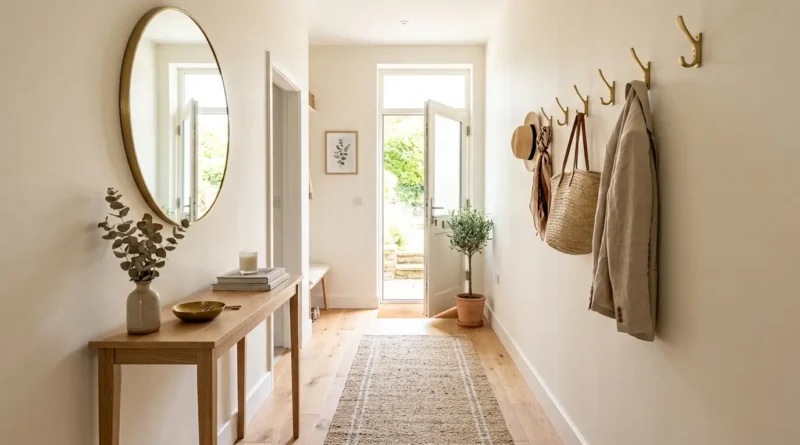
Some homes hand you a wide, welcoming foyer with room for a table and two chairs. Most of us get a strip of hallway barely wide enough to open the front door without bumping the wall behind it. If that sounds like your entryway, you are far from alone, and the good news is that narrow does not have to mean boring or cluttered. A tight entryway can still hold your shoes, your coats, your keys, and a bit of personality if you pick the right pieces and use your wall space wisely. This list walks through 20 ideas built specifically for skinny hallways and small foyers, covering everything from slim furniture to smart wall storage. None of these require knocking down a wall or hiring a contractor. Most can be set up over a weekend with basic tools and a trip to a home store. By the end, your narrow entryway will finally work as hard as the rest of your home.
1. Slim Console Table
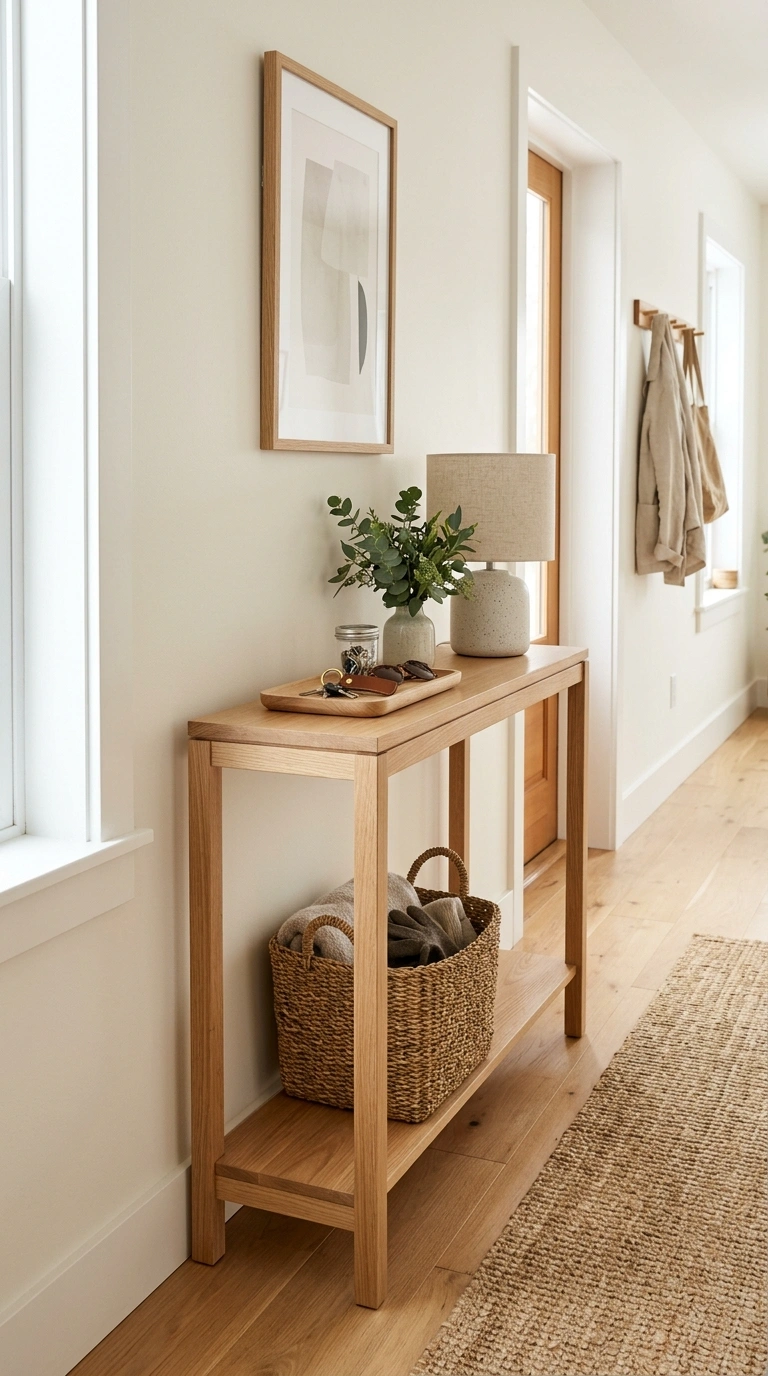
A narrow console table, usually no more than ten to twelve inches deep, gives you a landing spot for keys and mail without eating up your walking space. Choose one with a bottom shelf so you can slide in a basket or a pair of shoes underneath, turning a single piece of furniture into two levels of storage. Wood tones like walnut or oak pair well with most entryway styles, while a white or black painted finish works better in more modern homes. Place a small tray on top to corral loose items like sunglasses and hand sanitizer so they do not spread across the whole surface. Add a low, slim lamp if the entryway lacks overhead lighting, since a warm glow makes even the narrowest hallway feel more welcoming the moment someone walks through the door. Measure your hallway width carefully before buying, leaving at least two feet of clear walking space on the opposite side.
2. Wall-Mounted Coat Hooks
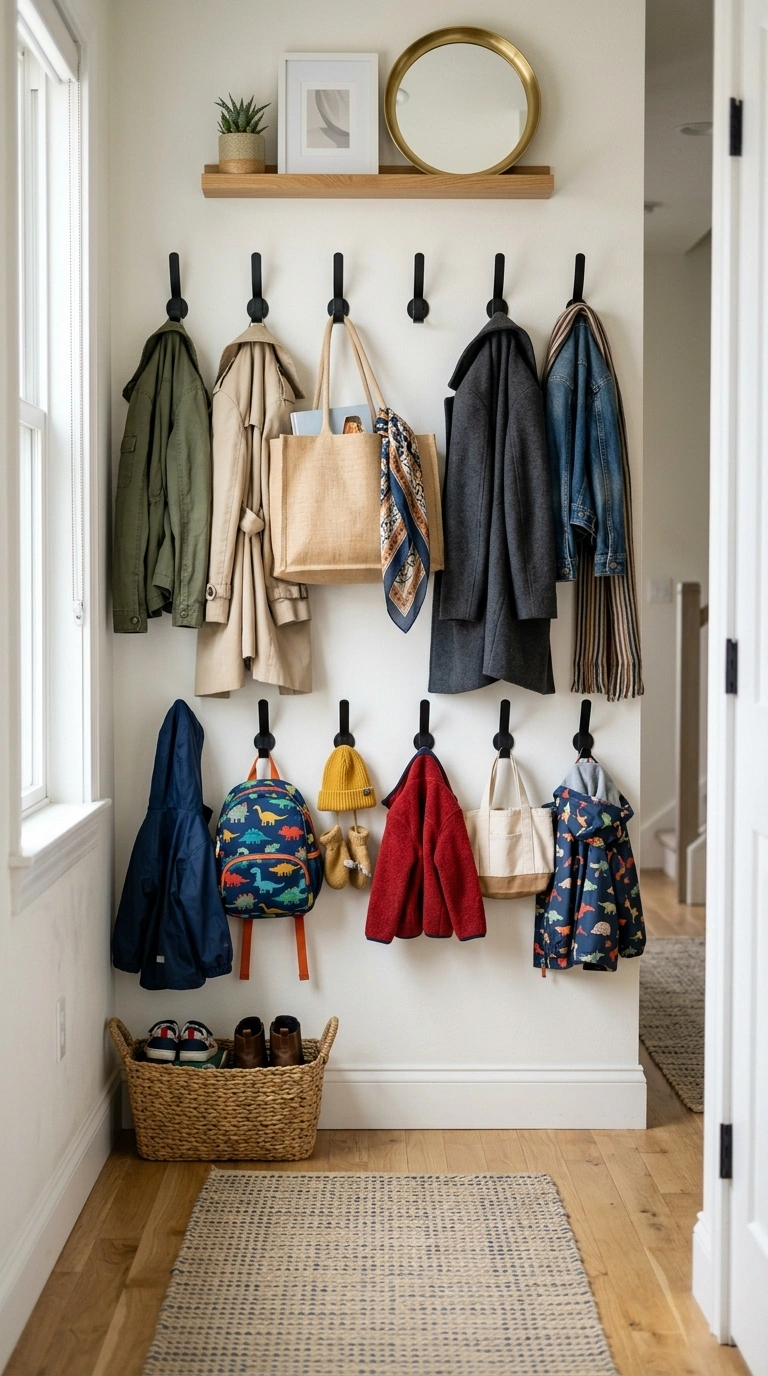
When there is no room for a closet or a coat rack, a row of wall mounted hooks solves the problem using almost no floor space at all. Install them at a height that works for the whole household, and space them evenly so coats and bags do not crowd into each other. Choose hooks in a finish that matches your door hardware or light fixtures, like matte black or brushed brass, so they read as an intentional design choice rather than an afterthought. A row of five or six hooks along one wall can hold jackets, bags, umbrellas, and even a hat or two, keeping all of it off the floor and chairs elsewhere in the house. For families with kids, add a second lower row of hooks at child height so little ones can hang up their own backpacks and coats, building an easy daily habit without any extra reminders.
3. Vertical Shoe Rack
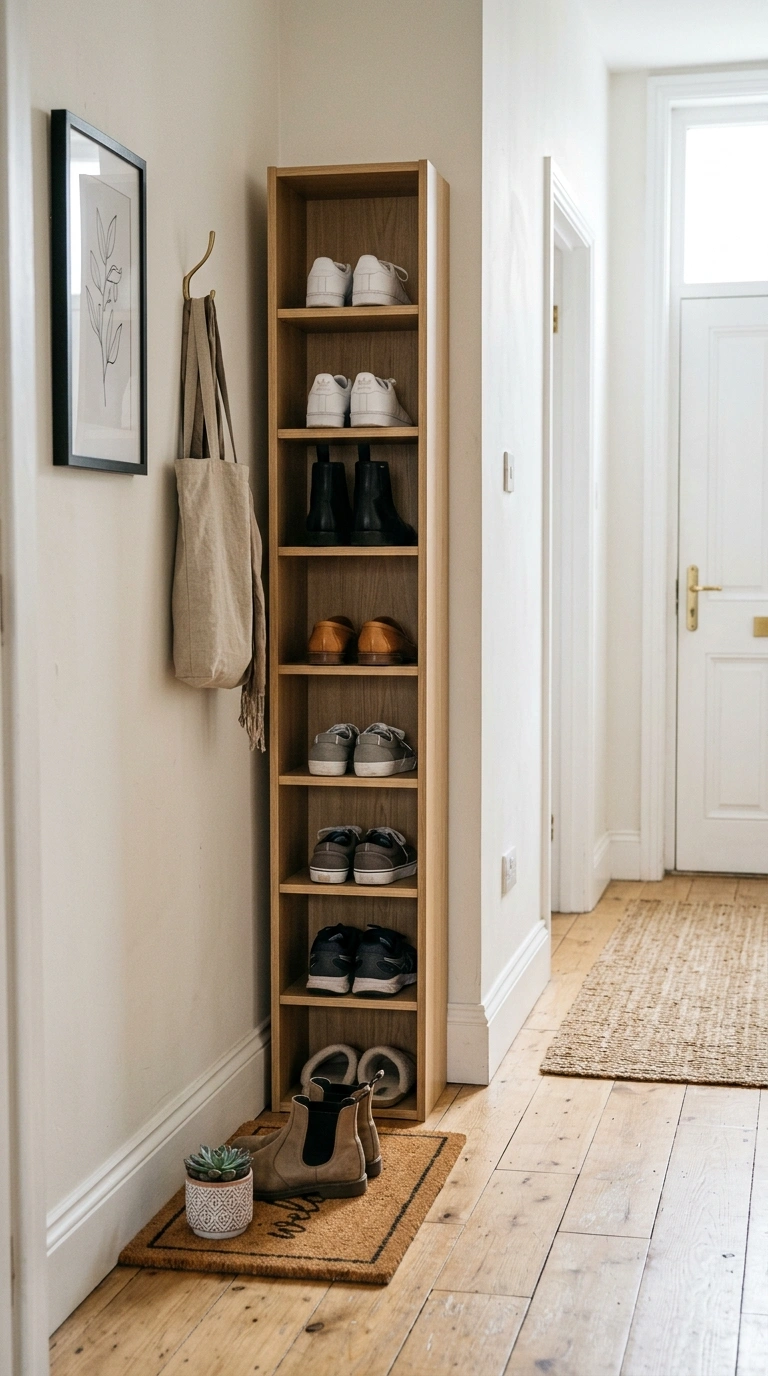
Traditional shoe racks eat up floor space that a narrow entryway simply does not have, so a vertical shoe rack is the better fit. Look for a slim tower style rack that stacks shoes in rows against the wall instead of spreading them out across the floor. Some versions tuck neatly behind a door or into a corner, using dead space that would otherwise go to waste. Choose an open design so shoes air out between wears, or a closed cabinet style if you prefer a cleaner look with doors that hide the contents completely. Keep only the current season’s shoes in the entryway rack and store off season pairs elsewhere, like a closet shelf, to avoid overloading the small space. A slim rack like this can typically hold eight to twelve pairs of shoes in a footprint barely wider than a single doormat.
4. Bench With Storage
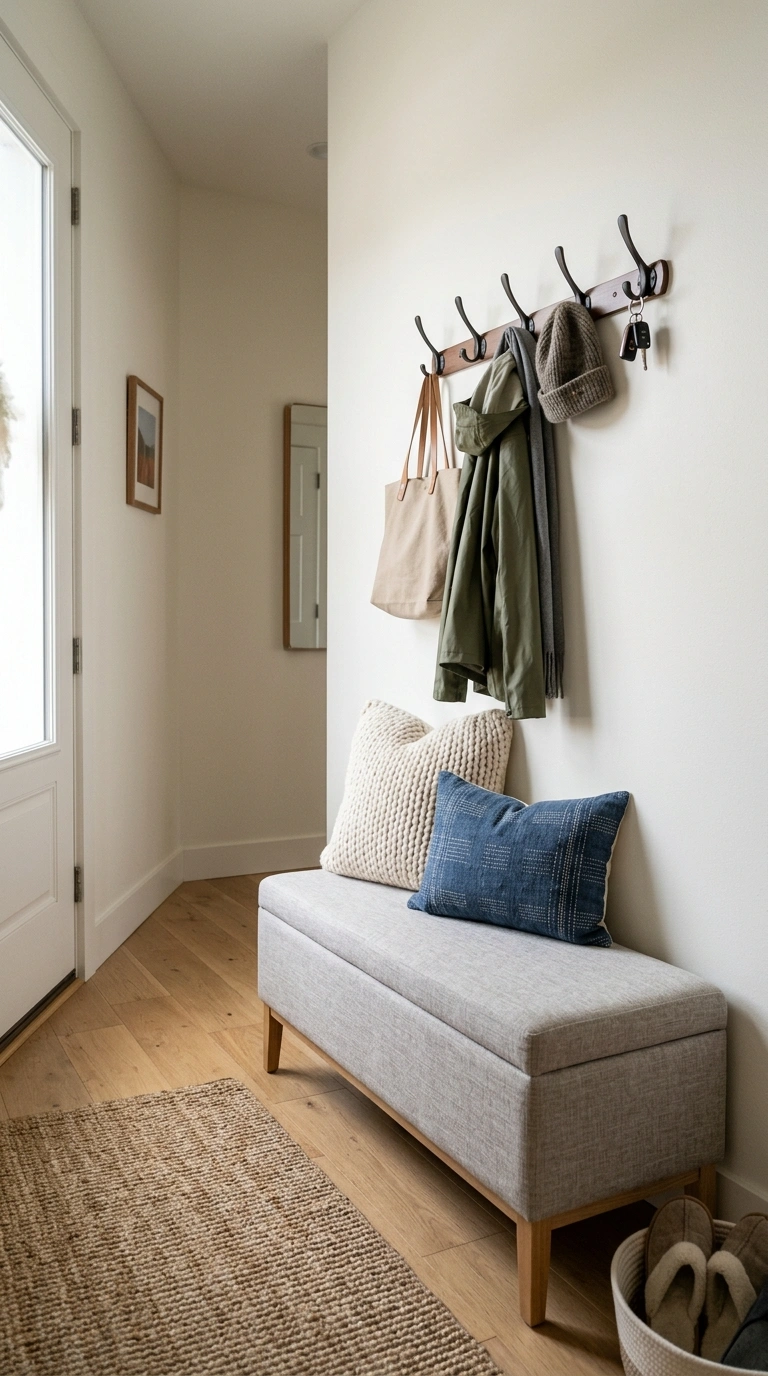
A slim storage bench gives you a spot to sit while putting on shoes and a hidden place to stash items like gloves, scarves, and extra shoes. Choose a bench no deeper than sixteen inches so it fits comfortably against a narrow wall without blocking the walkway, and look for a lift up seat or built in cubbies for the storage portion. Upholstered tops in a durable fabric like performance linen or faux leather hold up well to daily use and add a soft texture next to all the hard surfaces typical of an entryway. Placing the bench under a window or beneath a row of wall hooks creates a natural, organized zone for getting ready to leave the house. Top it with a cushion and a small throw pillow for a homier feel, and you have created a functional seat that also looks like a designed piece of furniture rather than pure storage.
5. Round Mirror Accent
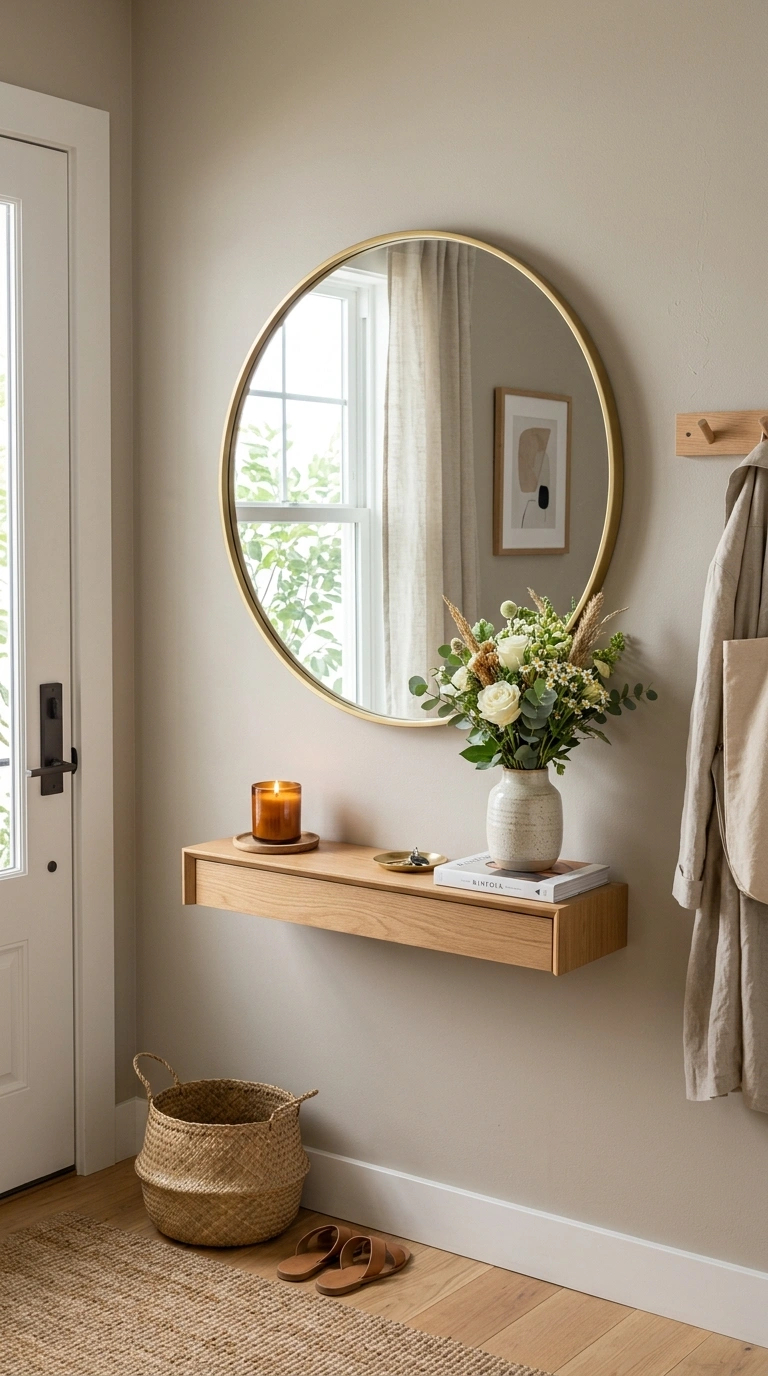
A round mirror hung near the front door does two important jobs in a narrow entryway, it gives you a last minute look before heading out and it bounces extra light around a space that often lacks windows. The round shape is especially good for tight hallways since it has no sharp corners to catch on coats or bags passing by. Choose a frame finish that complements your hooks or console table, like a warm brass or a matte black ring, and hang it at eye level so it is genuinely useful rather than purely decorative. Pairing the mirror with a small shelf or console underneath gives you a spot to set down a candle or a small vase of flowers. Since narrow entryways often feel dim, a mirror placed across from a window or doorway can noticeably brighten the whole space by reflecting whatever natural light does make it in.
6. Floating Shelf Ledge
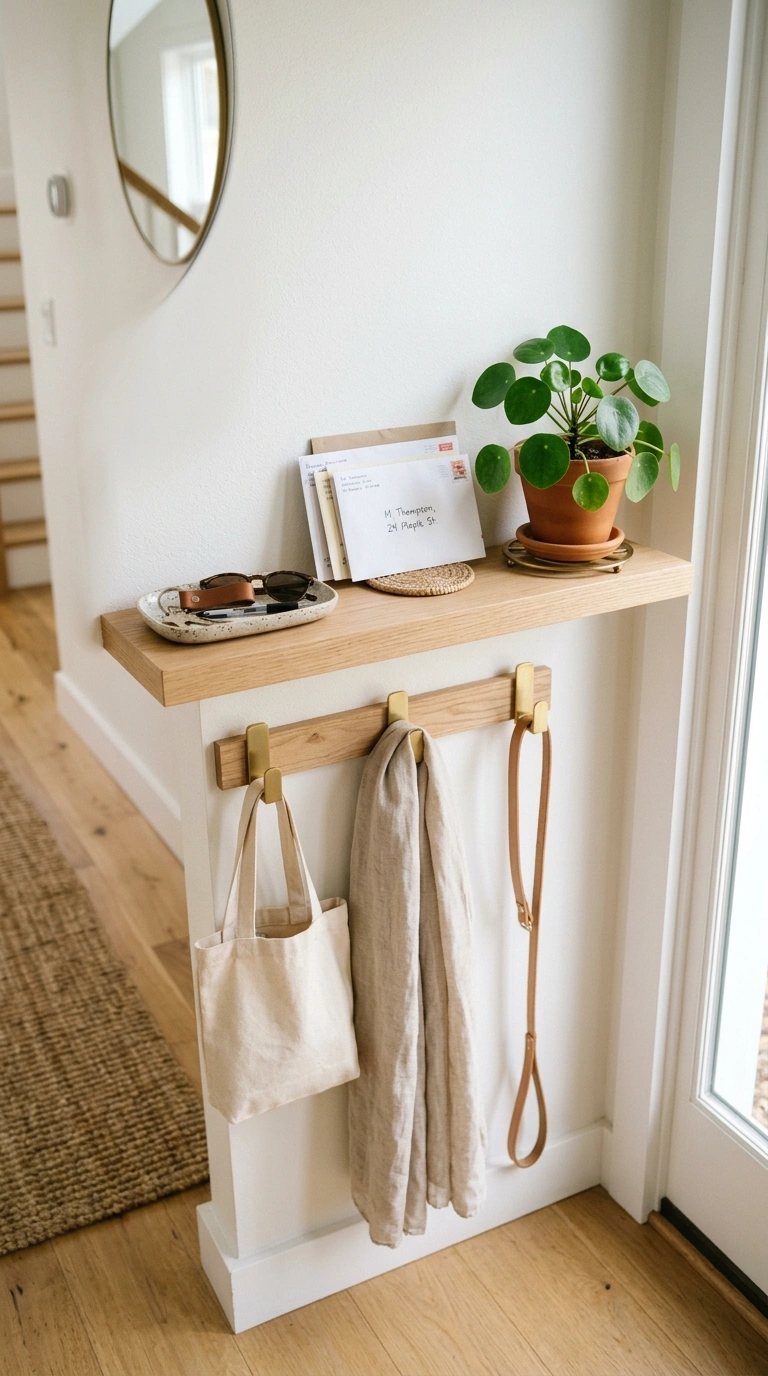
When there is no floor space left for furniture, a floating shelf mounted at waist or chest height becomes the entryway’s main surface. Choose a shelf about six to eight inches deep so it stays out of the way of anyone walking past, and mount it securely into wall studs since it will hold daily items like keys and mail. Style it with a small catchall tray, a stack of mail, and a single plant or candle to keep the surface looking tidy rather than cluttered. A row of hooks mounted just below the shelf turns this single wall section into a complete entryway station, covering both surface space and hanging storage in a footprint of just a few inches deep. This setup works especially well in apartment hallways or narrow mudroom style entries where a full console table simply will not fit through the available floor plan.
7. Woven Basket Storage
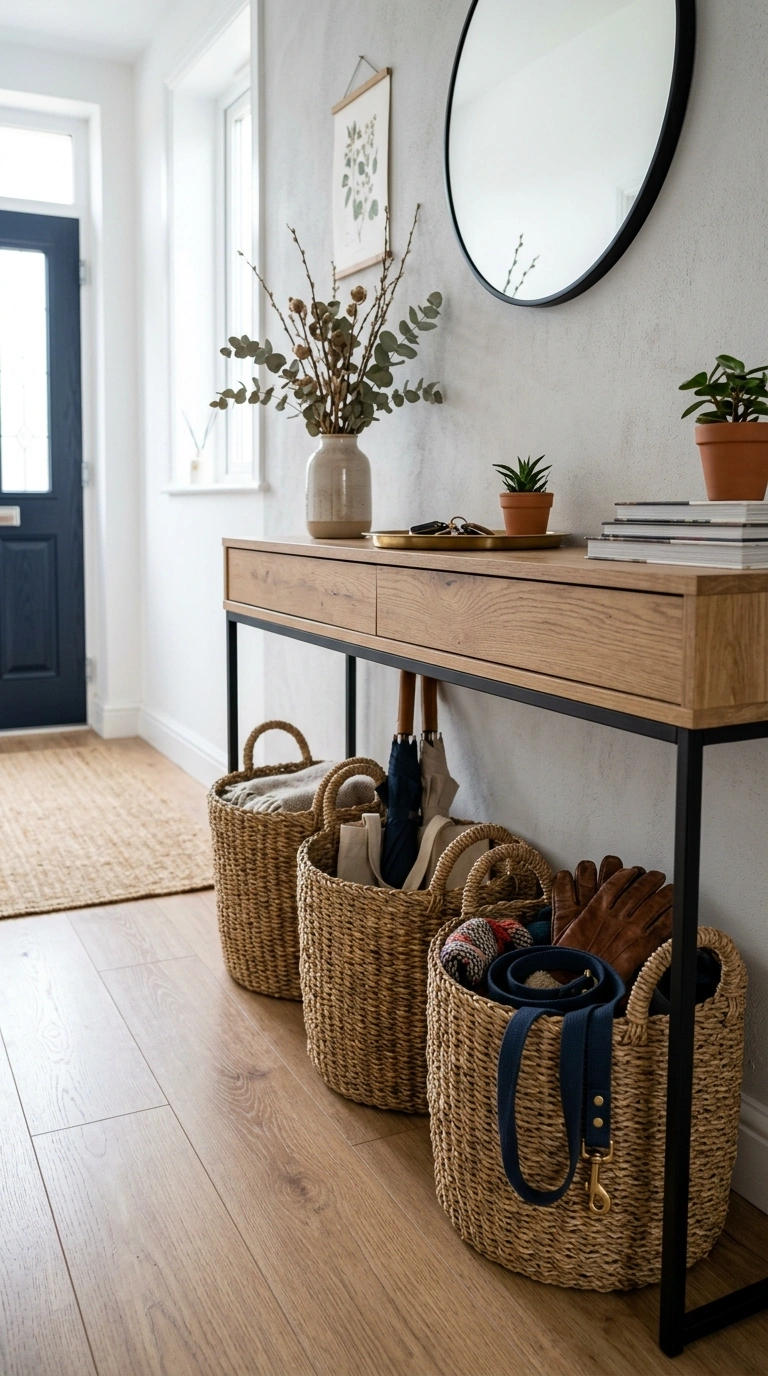
Baskets are the unsung heroes of small entryway storage, since they hold odds and ends without needing any hardware or installation. Place two or three woven baskets on the floor beneath a console table or bench, and use them to sort items like winter gloves, dog leashes, or outdoor toys into their own designated spots. Choose baskets with handles so they are easy to pull out and carry to another room when needed, and pick a natural material like seagrass or rattan for a warm, textured look that softens the straight lines typical of narrow hallways. Label each basket if multiple family members share the space, helping everyone find their own items quickly on the way out the door. Stacking two smaller baskets on a shelf works just as well in entryways too narrow for floor baskets, keeping the same organizing benefit in an even smaller footprint.
8. Runner Rug Path
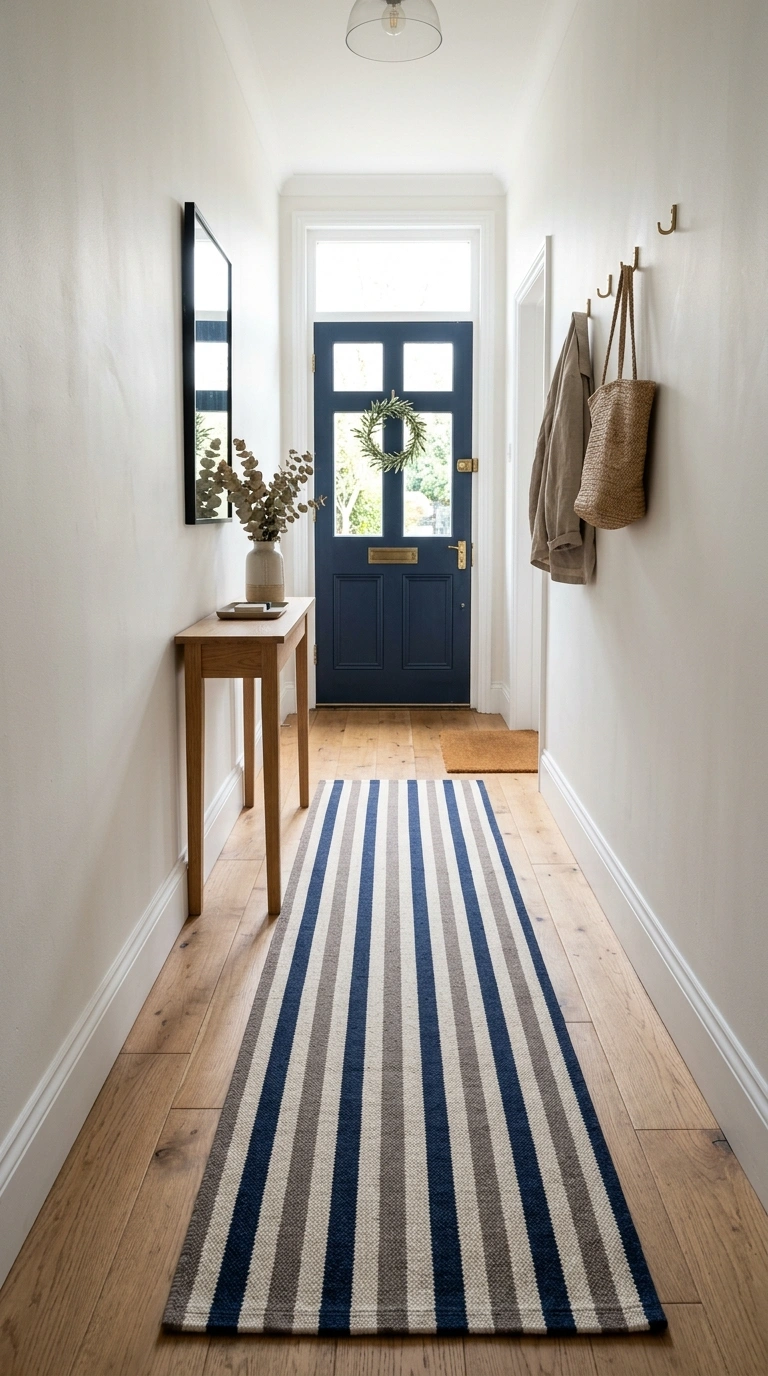
A long, narrow runner rug does more than protect your flooring from daily foot traffic, it visually elongates a tight hallway and adds warmth underfoot. Choose a rug about two to three inches narrower than your hallway on each side, leaving a small border of visible flooring for a clean, framed look. Patterns with a linear design, like stripes or a repeating geometric print, tend to work especially well in narrow spaces since they lead the eye down the length of the hall rather than across it. A low pile rug is easier to keep flat and reduces tripping risk in a space people pass through quickly and often. Add a thin rug pad underneath to prevent slipping and to extend the rug’s lifespan, since entryway rugs see more wear than almost any other rug in the house.
9. Umbrella Stand Corner
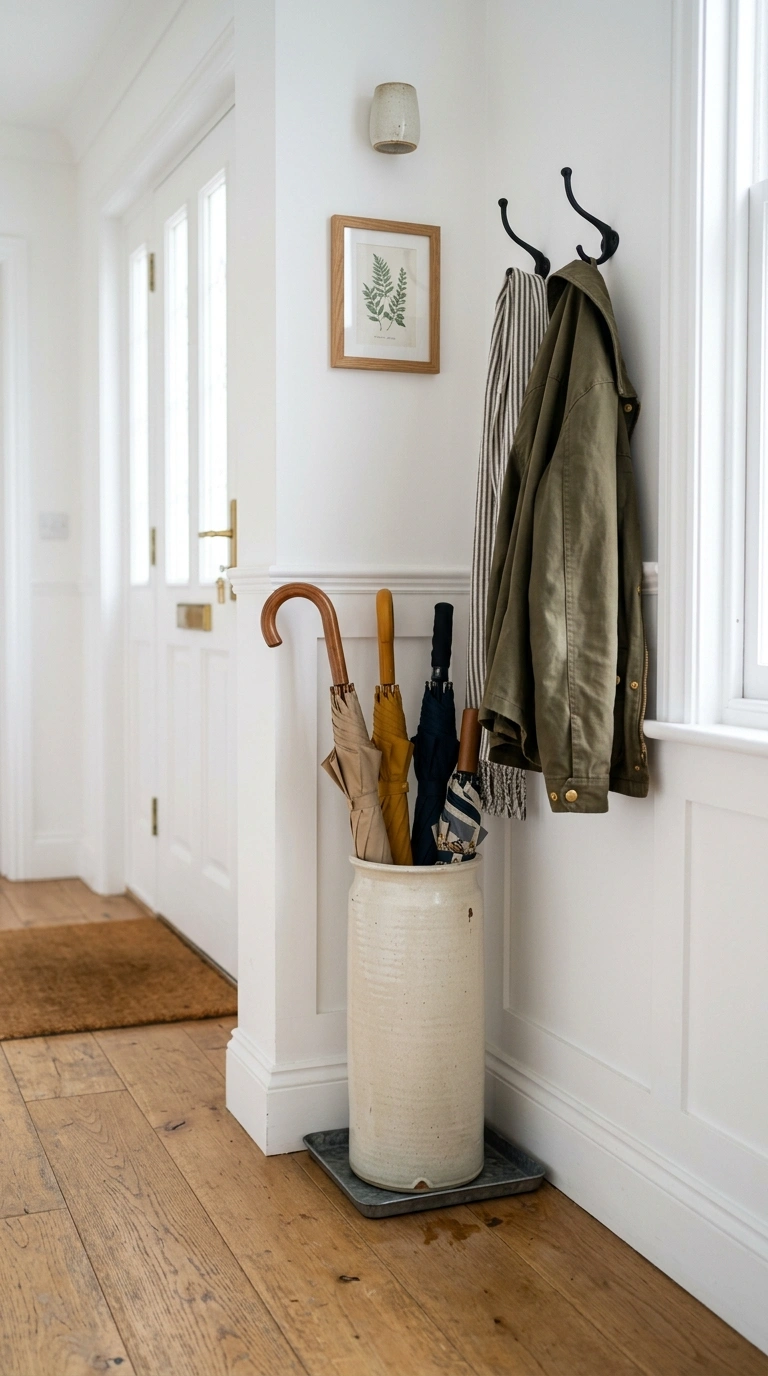
A dedicated umbrella stand keeps wet umbrellas from dripping across your floor and gives them one clear home instead of leaning against random walls. Choose a tall, slim stand in ceramic, metal, or woven material that fits into a corner without blocking the walkway, and place a small tray or mat underneath to catch drips before they reach the flooring. This spot works especially well tucked beside a front door or under a coat hook, combining wet weather gear into one organized zone. Choose a stand with a weighted base so it does not tip over when umbrellas are added or removed throughout the day. In warmer months, the same stand can hold a couple of decorative branches or dried grasses, letting this small corner adapt to the season instead of sitting empty when rain gear is not needed.
10. Wall Hooks Row
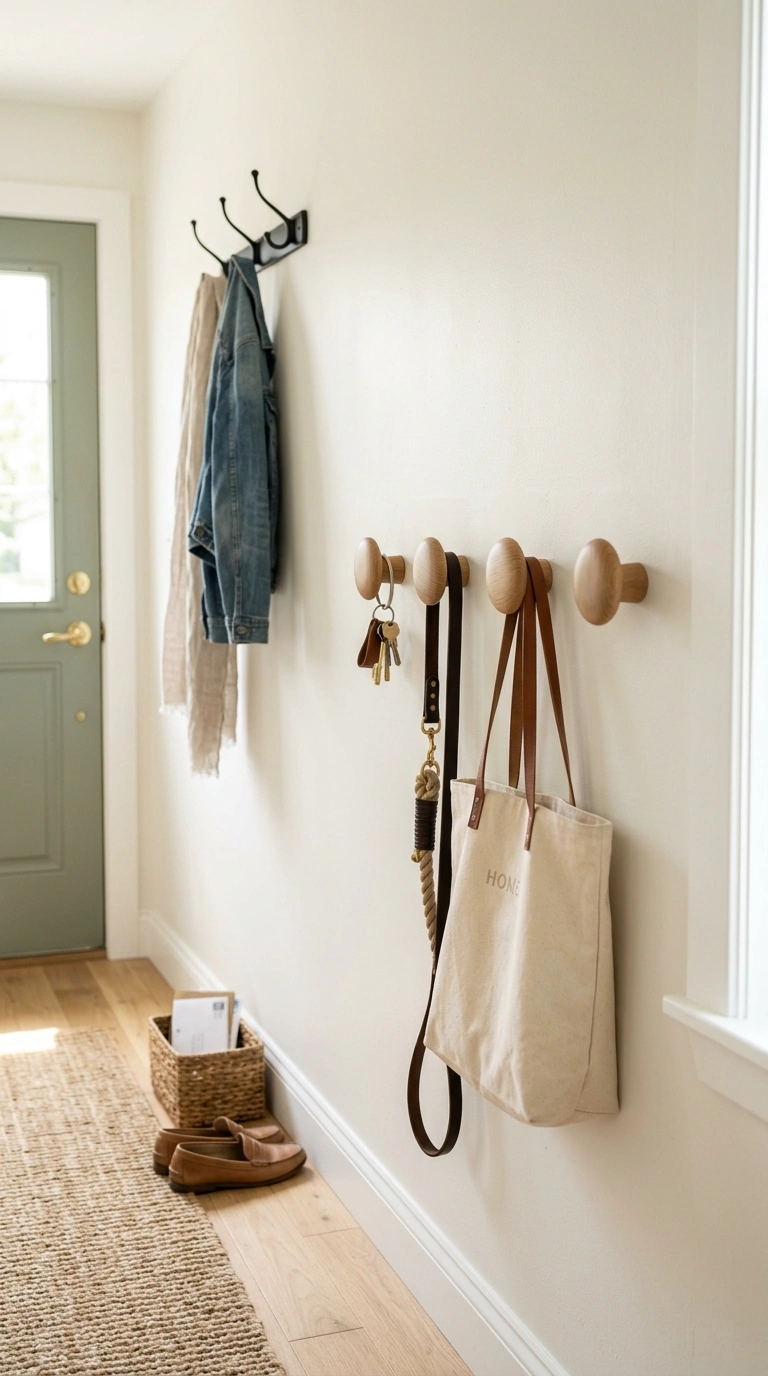
Beyond coats, a second row of hooks near the door can be dedicated entirely to bags, keys, and dog leashes, keeping these small daily items from disappearing into drawers or getting lost on the counter. Mount a short rail with three or four hooks at a slightly lower height than your coat hooks, positioned near the spot where you naturally pause before leaving. Choose hooks with a rounded edge so bag straps do not snag or stretch over time. Grouping these smaller items separately from coats keeps the entryway organized by category, making the morning routine faster since everything has one predictable spot. A small chalkboard or whiteboard tag above each hook can help kids or guests remember exactly where each item belongs, which is especially useful in busy households with more than one person sharing the same hooks.
11. Ceiling Pendant Light
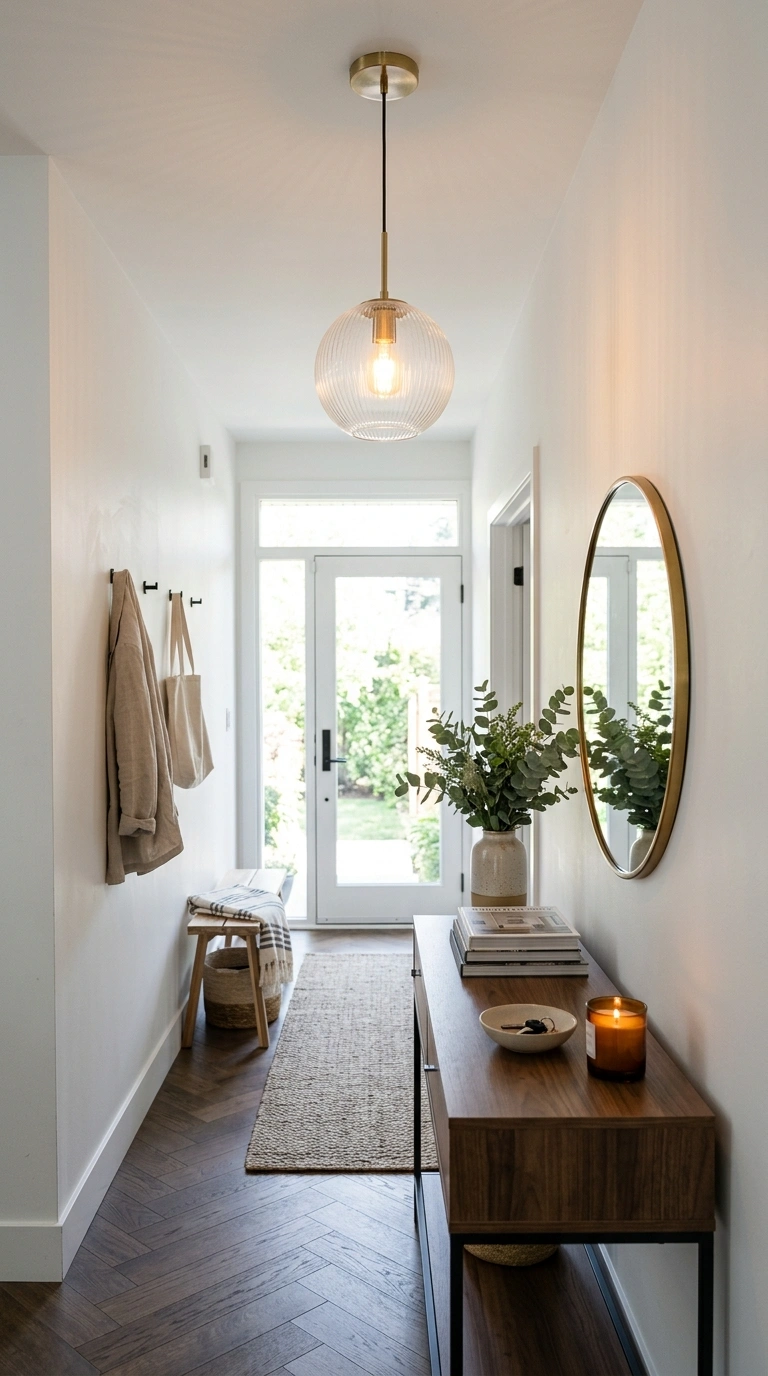
Many narrow entryways rely only on a single dim overhead bulb, which makes the space feel even smaller and darker than it actually is. Swapping in a pendant light with a warm bulb instantly upgrades both the lighting quality and the overall style of the space. Choose a slim pendant, like a simple globe or a linear drum shade, that hangs close to the ceiling so it does not interfere with anyone walking underneath in a tight hallway. A warm toned bulb around 2700 kelvin gives off a cozy, welcoming glow rather than a harsh white light. If rewiring is not an option, a plug in pendant kit lets you hang a stylish fixture from an existing outlet without any electrical work. Good lighting here does more than look nice, it makes the entryway feel genuinely usable after dark instead of just a shadowy pass through space.
12. Statement Wallpaper Wall
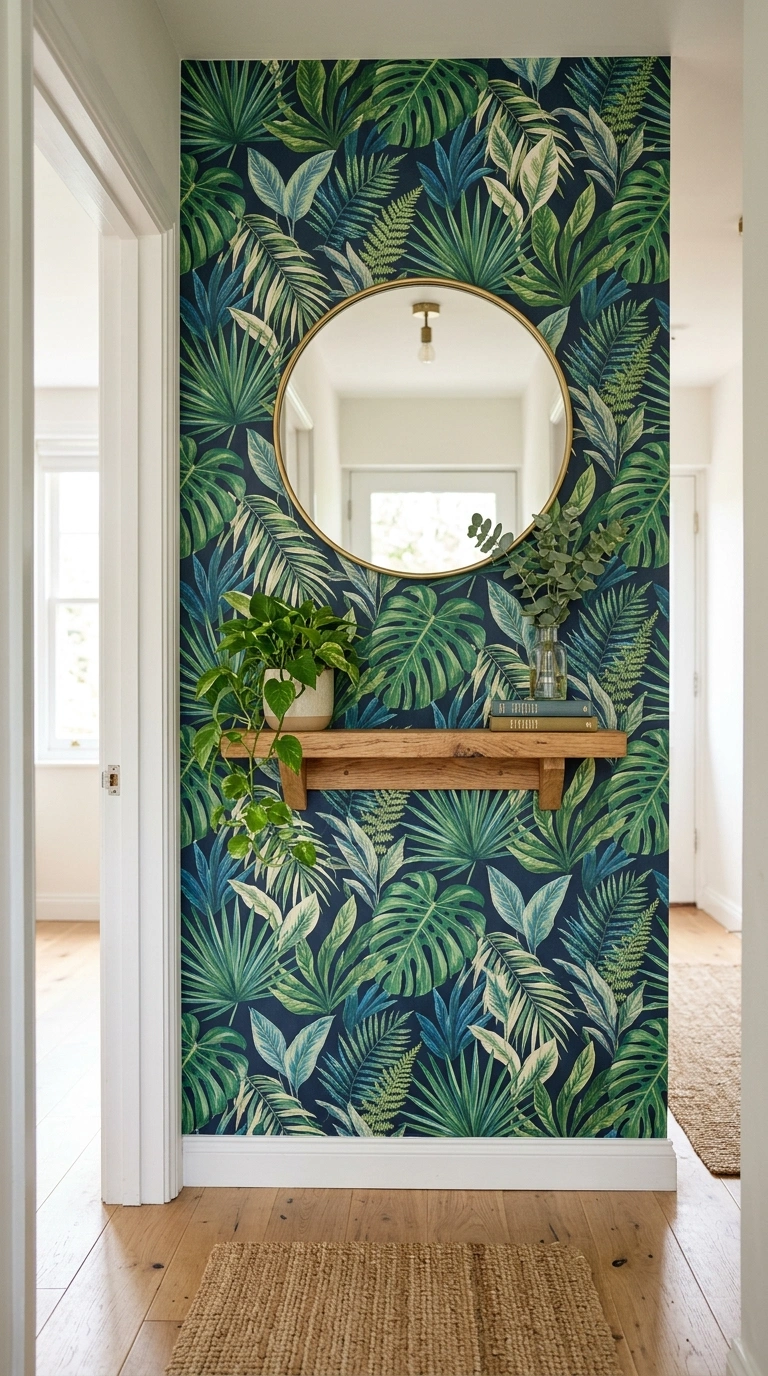
Since narrow entryways rarely have much wall space for large furniture, that same limited wall becomes the perfect spot for a bold wallpaper moment. Choose a pattern with some visual weight, like a botanical print, a geometric design, or a rich solid color, and apply it to the one wall guests see first when they walk through the door. Because the space is small, even a striking, saturated pattern rarely feels overwhelming the way it might in a larger room. Removable wallpaper is a great option for renters, offering the same visual impact without a long term commitment. Pair the wallpaper with simple, understated furniture and hooks elsewhere in the entryway so the wall pattern stays the clear focal point rather than competing with too many other busy elements in such a tight space.
13. Slim Shoe Cabinet
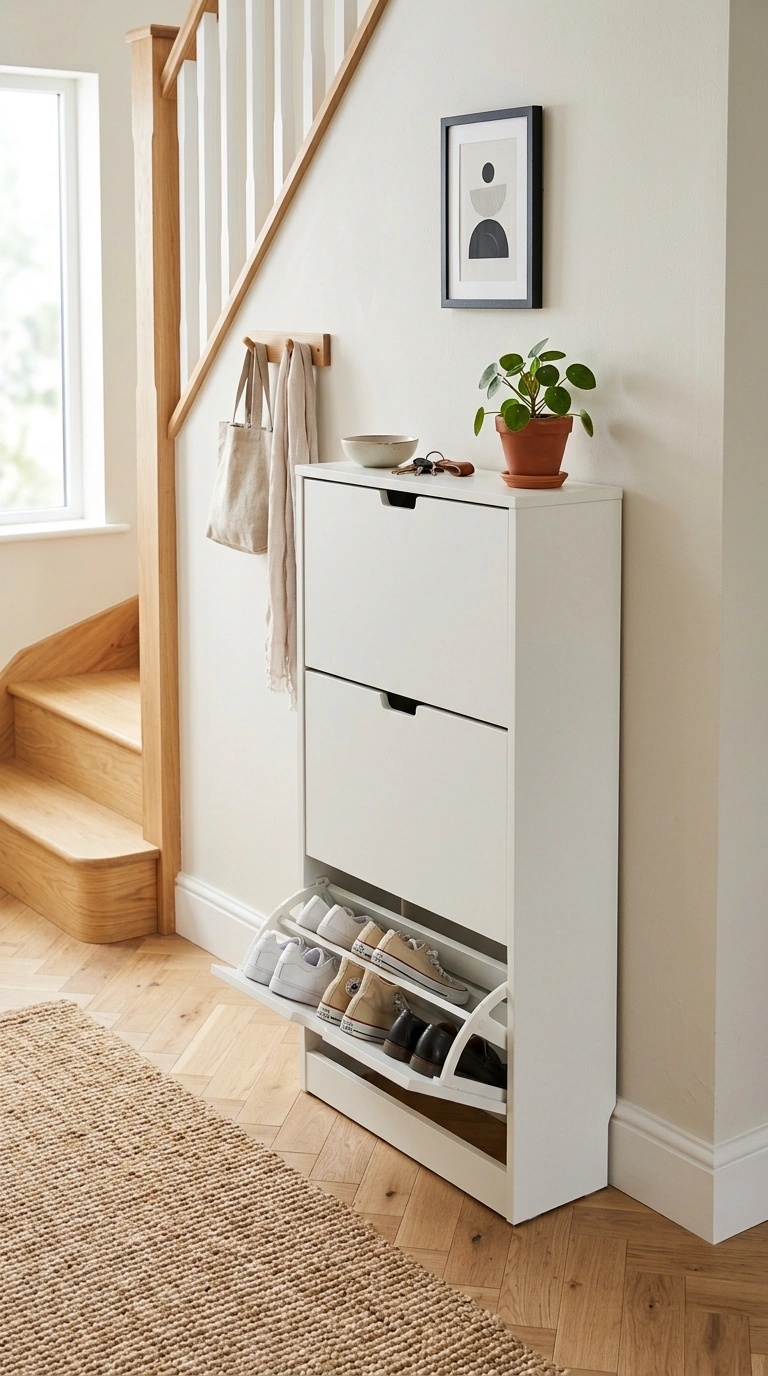
For households that prefer a closed, tidy look over open shoe racks, a slim shoe cabinet offers the same storage with doors that hide the mess completely. Look for cabinets as narrow as six to eight inches deep, designed specifically for tight entryways and hallways, with tilted internal shelves that let shoes slide in at an angle for easier access. Choose a finish that matches your existing trim or door color for a built in look, even though the cabinet is fully freestanding. A cabinet with a flip down door that doubles as a small shelf gives you a spot to set down keys or mail for just a moment before opening the main storage area. This option works particularly well in homes where guests use the same entryway as the family, since it keeps everyday shoe clutter completely out of sight.
14. Hanging Key Rack
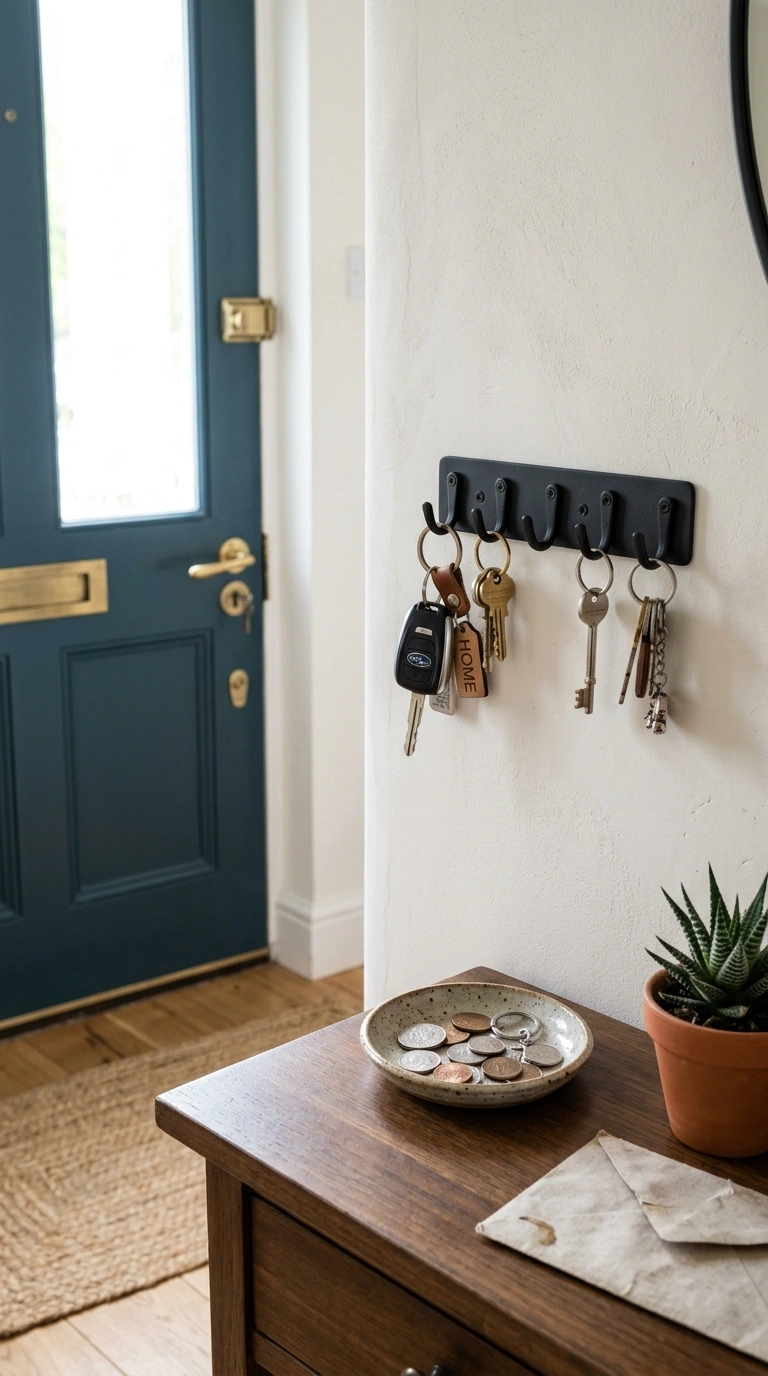
A small wall mounted key rack solves one of the most common household frustrations, the last minute scramble to find your keys on the way out the door. Choose a rack with individual hooks for each household member, or a labeled version with separate spots for house keys, car keys, and spare sets. Mount it at eye level right beside the door so it becomes a genuine habit rather than another surface that gets ignored. Pairing the key rack with a small shallow dish underneath gives you a spot for loose change or a garage door opener that does not have its own hook. Choose a finish that matches your other entryway hardware, like matte black or brushed nickel, so this small but useful piece blends naturally into the rest of the space instead of standing out as an obvious add on.
15. Corner Plant Stand
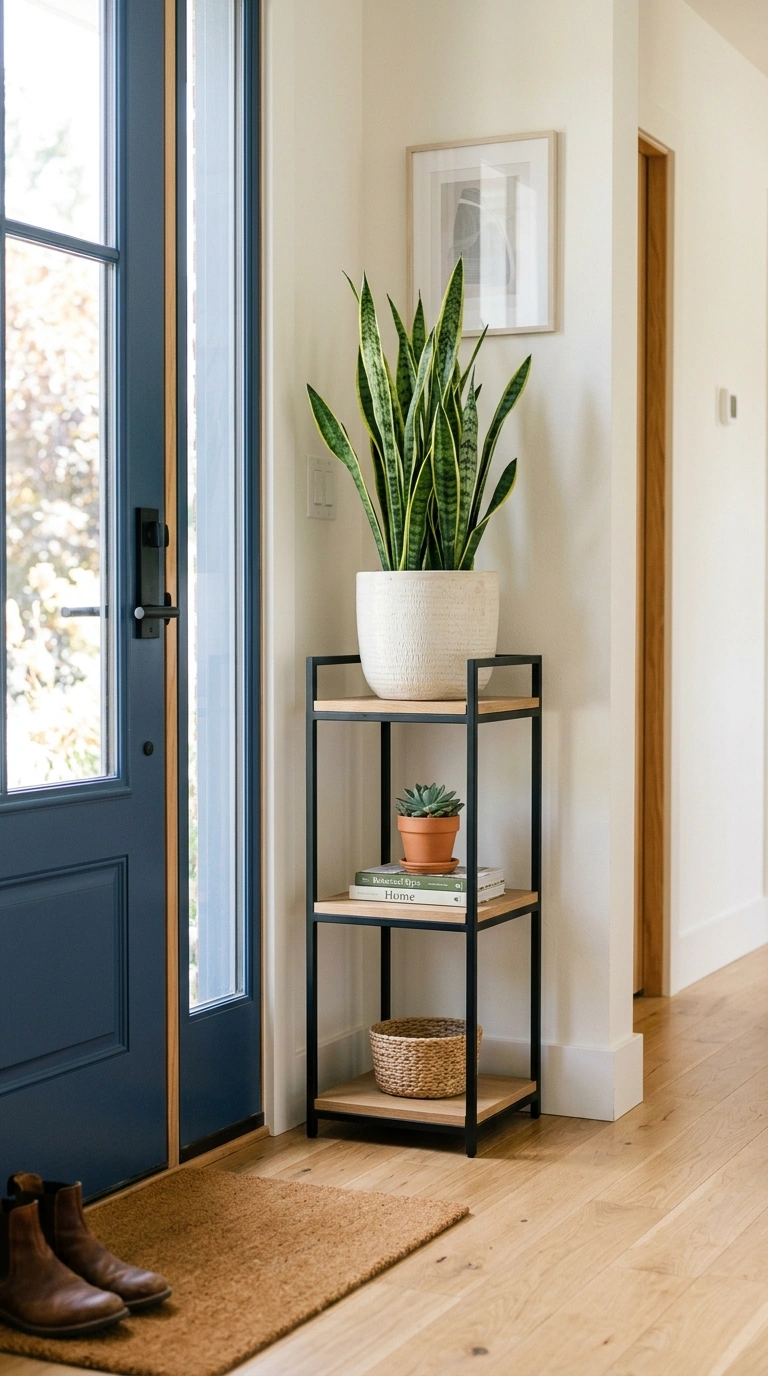
A tall, narrow plant stand tucked into an unused corner brings a bit of life and color into an entryway that otherwise consists mostly of hard surfaces and neutral tones. Choose a plant that tolerates lower light, like a snake plant or a ZZ plant, since entryways often lack direct sunlight throughout the day. A stand with a small footprint but some height draws the eye upward, which helps a narrow space feel taller rather than cramped. Place it near the door but out of the direct walking path so it does not become an obstacle for people carrying bags or groceries. A faux version works just as well if natural light is limited or if watering reminders tend to slip through the cracks of a busy schedule, giving the same visual softness without the maintenance.
16. Mudroom Cubby Wall
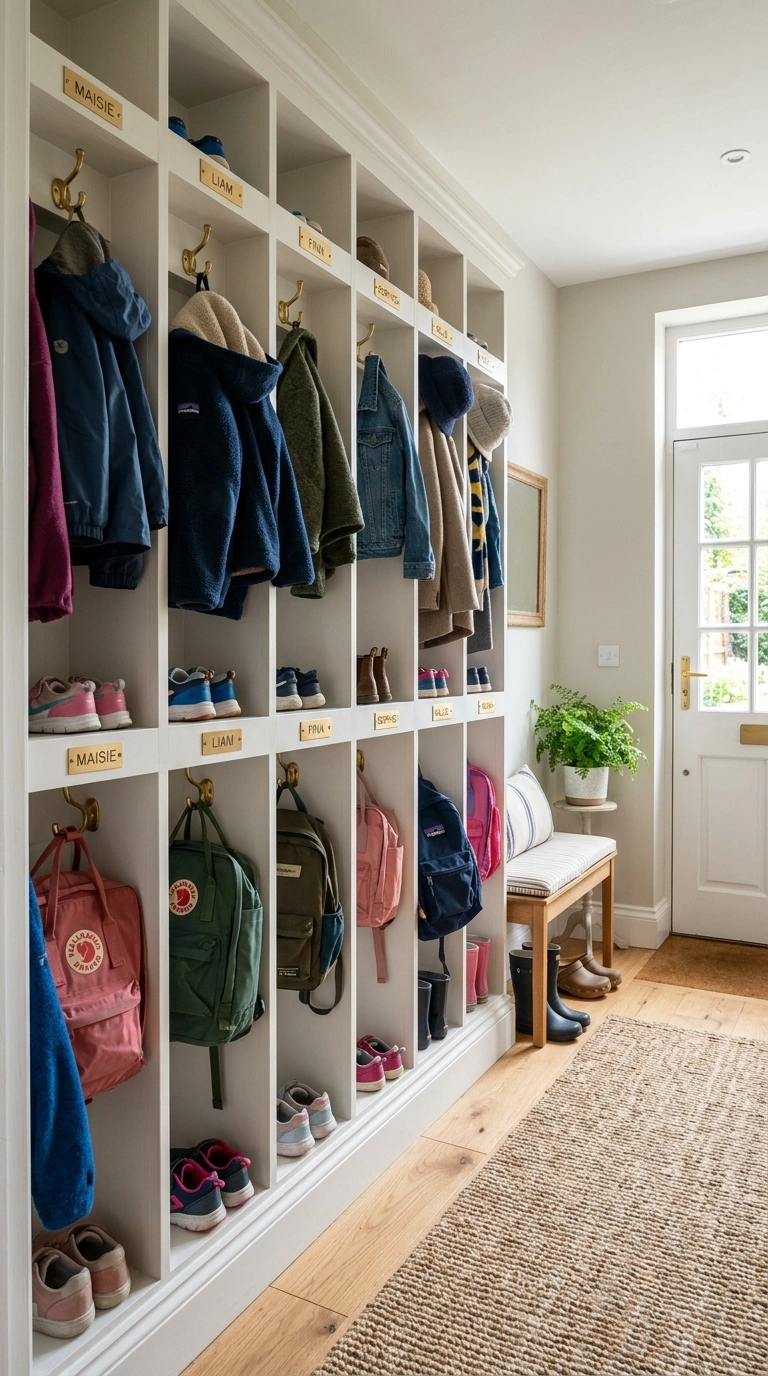
For entryways that double as a mudroom, a wall of small cubbies gives every family member their own dedicated storage zone in one organized system. Choose a cubby unit sized to fit your specific hallway width, with individual compartments for shoes, bags, and outdoor gear stacked above one another rather than spread across the floor. Label each cubby with a name or initial for younger kids, turning the whole system into an easy daily routine instead of a source of clutter and misplaced items. Adding a hook above each cubby lets coats and backpacks hang directly above each person’s storage section, keeping everything for one family member grouped together in a single vertical column. This setup works especially well for families with kids coming home from school, since it turns unpacking backpacks and shoes into a quick, independent habit.
17. Wall Art Trio
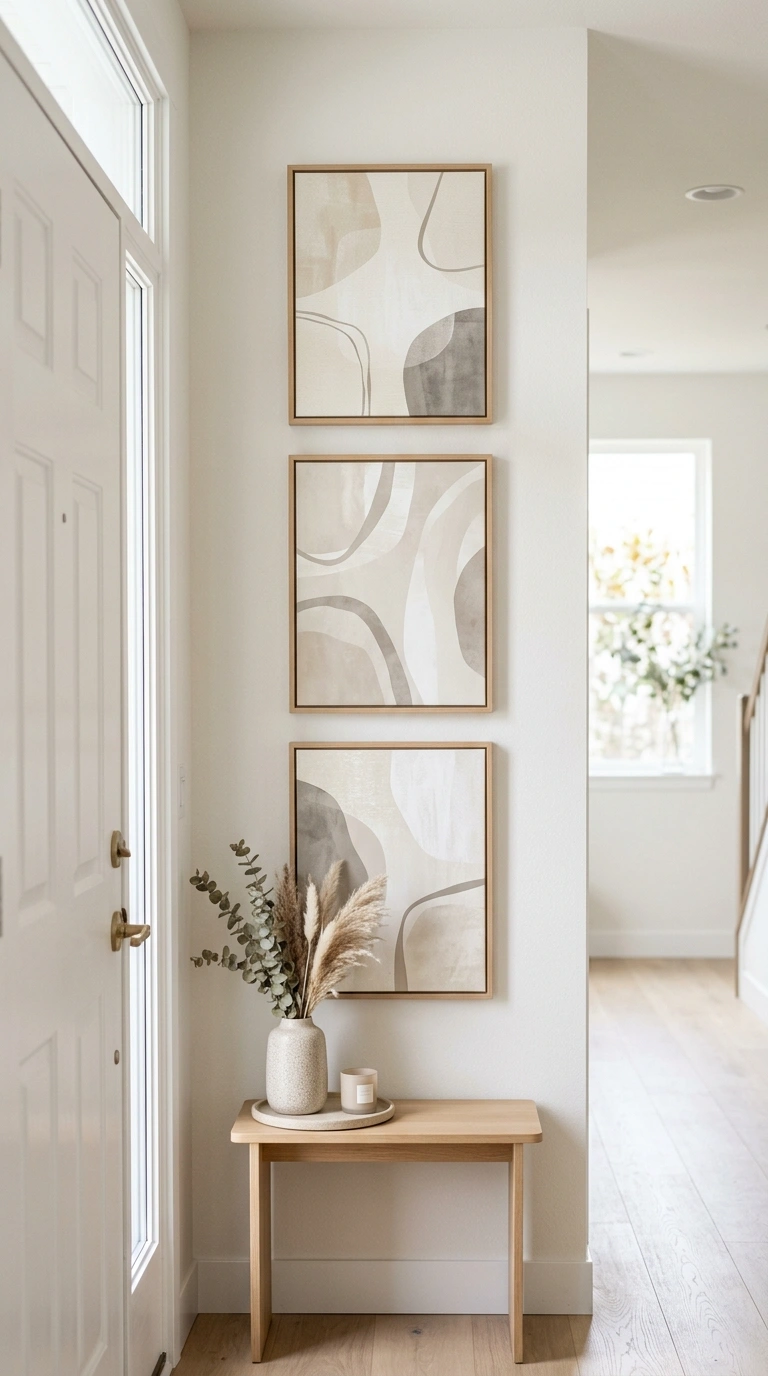
A narrow entryway wall is a great spot for a small collection of framed art, since it fills empty vertical space without requiring any floor footprint at all. Choose three pieces that share a common color palette or theme, and hang them in a vertical column rather than a horizontal row to match the natural shape of a tall, narrow wall. This vertical arrangement draws the eye upward, which helps the entryway feel taller and more open than a wide horizontal grouping would in the same space. Keep frames slim and simple so they do not stick out too far from the wall in a space where people are passing closely by. This small gallery becomes the first thing guests notice when they step inside, giving even the tightest entryway a bit of personality and warmth before they even reach the main living space.
18. Bench Cushion Seat
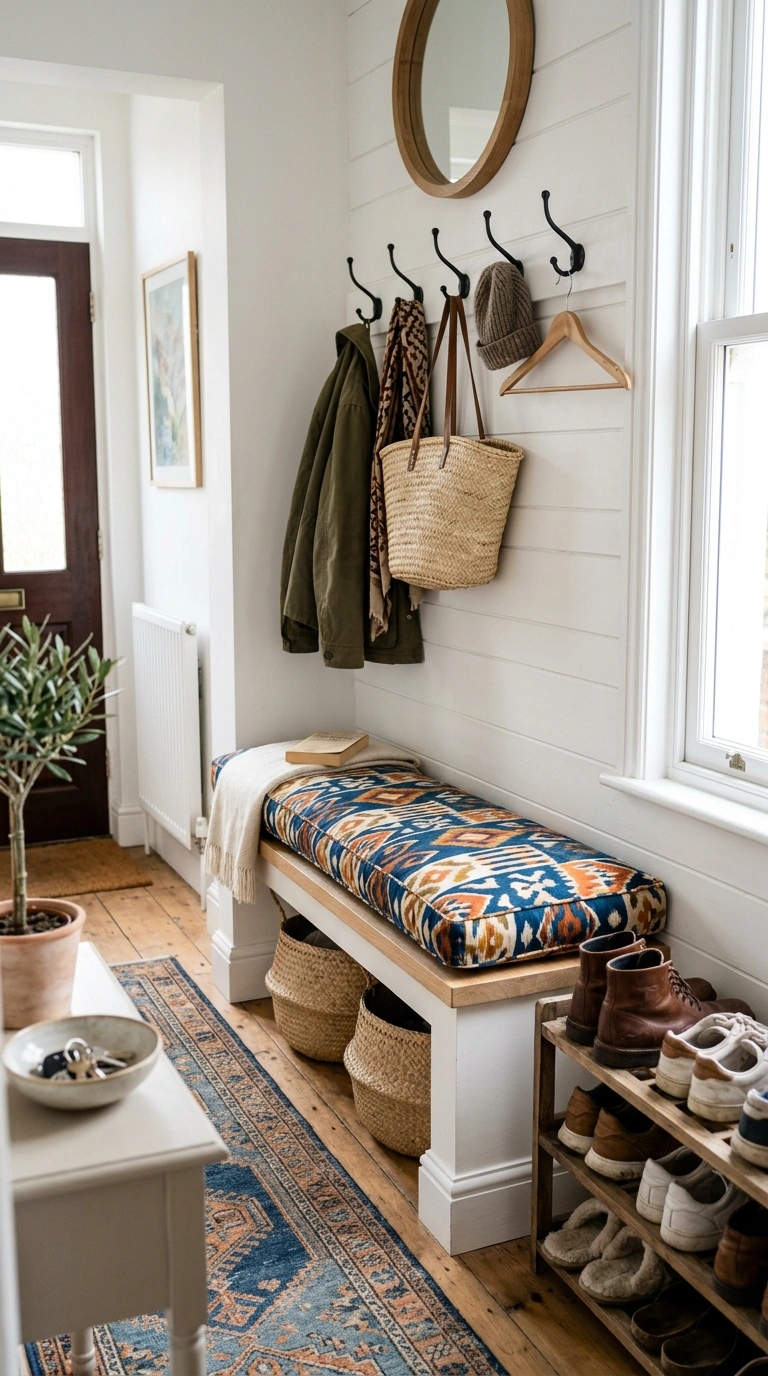
If a full storage bench will not fit, a simple built in ledge or narrow shelf topped with a cushion can still provide a spot to sit while putting on shoes. Choose a cushion in a durable, wipeable fabric since entryway seating sees dirt and moisture more than furniture anywhere else in the home. A cushion in a bold color or pattern can also serve as a small pop of personality in a space that is often dominated by neutral tones and practical storage pieces. Secure the cushion with ties or a non slip pad underneath so it does not shift every time someone sits down. Even a narrow eight inch ledge becomes genuinely useful once it is cushioned, giving anyone who is juggling bags or a young child a quick, stable place to sit for a moment before heading out the door.
19. Doormat Layering Trick
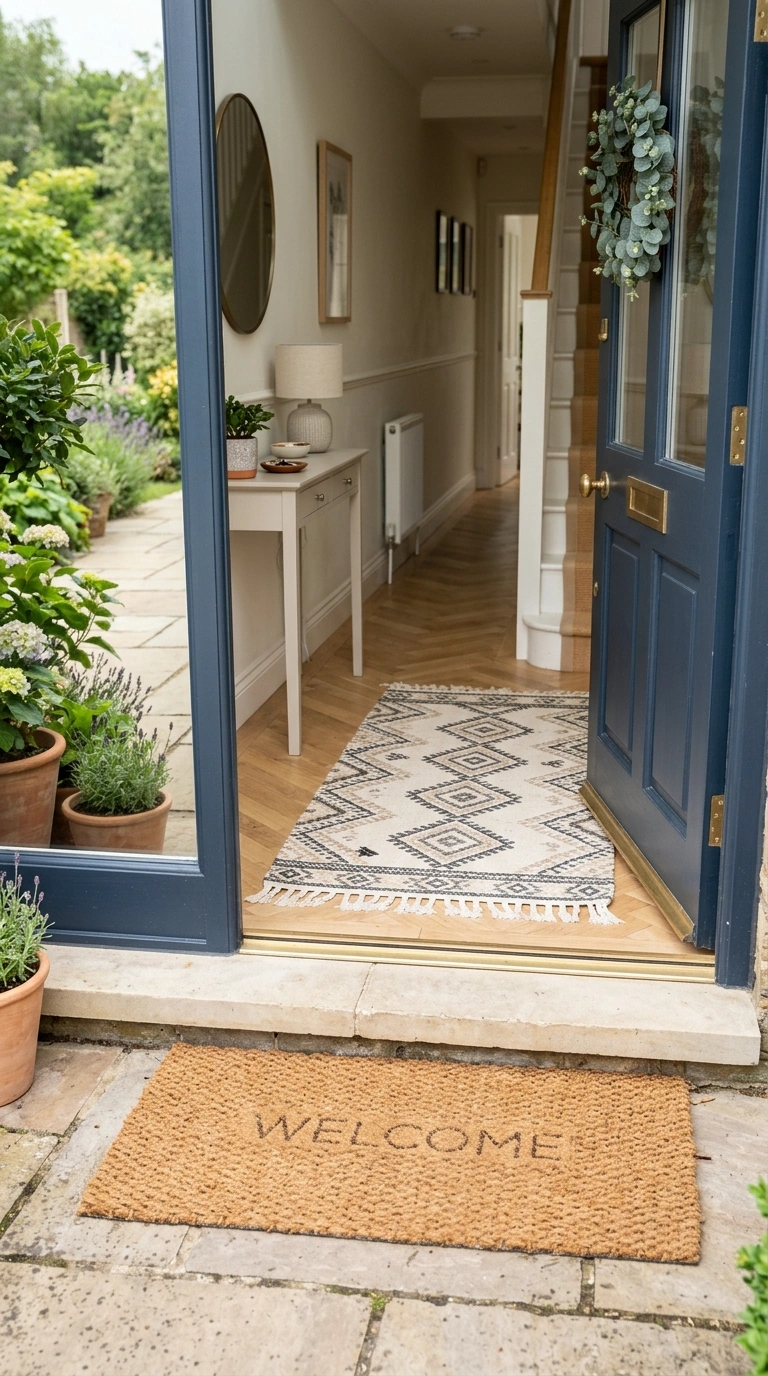
Layering two doormats, one just inside the door and one just outside, does more work than a single mat ever could in catching dirt, rain, and debris before it spreads through the rest of the house. Choose a coarse, textured mat for the outdoor side to scrape off mud and grit, then a softer, more decorative mat just inside for the final wipe and a bit of added style. This layered approach is especially useful in narrow entryways, where a single small mat often does not cover enough ground to make a real difference. Pick a pattern or color for the indoor mat that complements your runner rug or console table, tying the whole space together visually. Shake out both mats weekly and swap in a fresh pair during muddy or snowy seasons to keep your narrow entryway looking clean no matter the weather outside.
20. Narrow Bookshelf Ledge
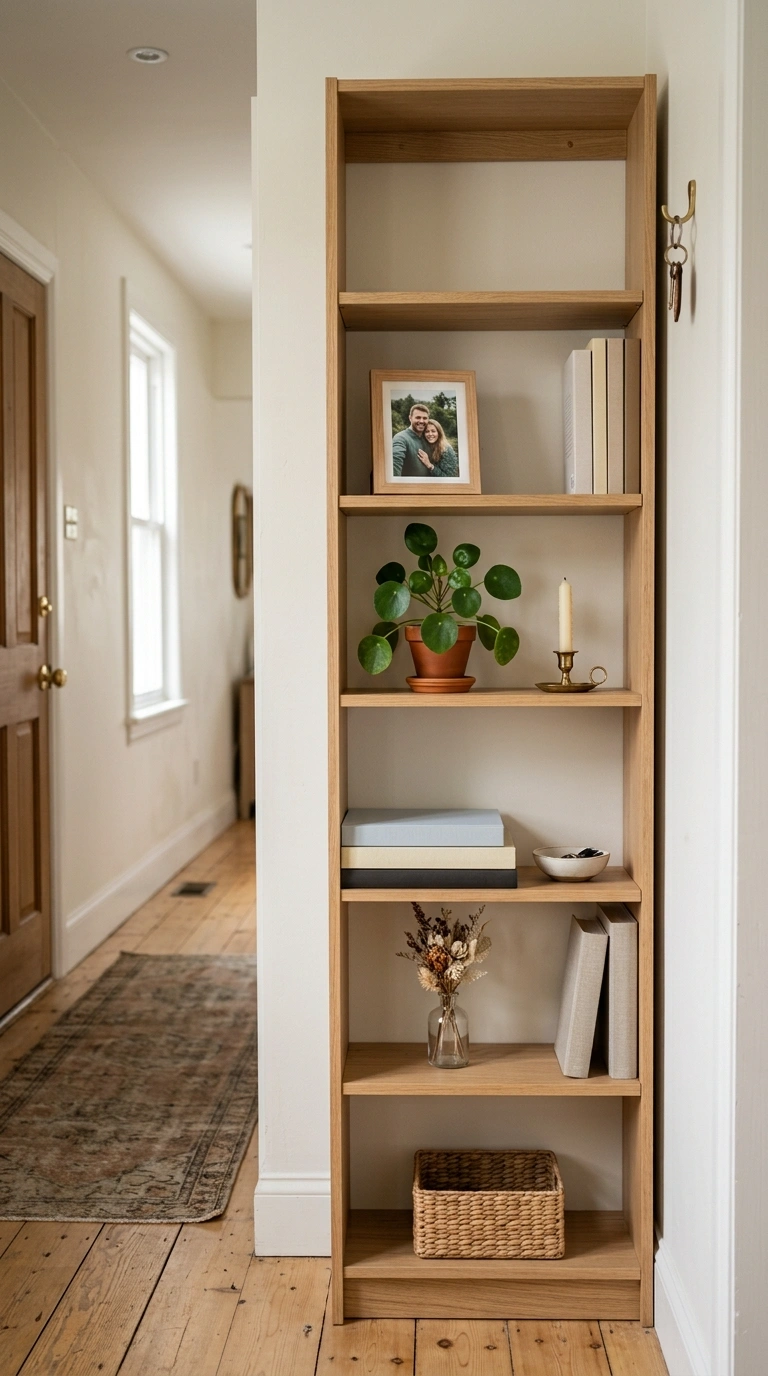
A tall, slim bookshelf, sometimes just six to eight inches deep, can fit into even the tightest entryway corner and adds both storage and a bit of personality. Use the shelves to display a few favorite books, a small plant, and a framed photo or two, rather than packing it full and making the space feel cluttered. This piece works especially well at the end of a narrow hallway, filling what would otherwise be an awkward, empty corner with something both useful and good to look at. Choose an open backed shelf if the unit sits away from the wall, or a flat backed version if it will be pushed flush against it. Keeping the top shelf slightly emptier than the rest draws the eye upward and gives the whole narrow space a taller, more open feeling the moment someone walks through the front door.
Frequently Asked Questions
How do I make a narrow entryway look bigger? Use a round mirror to bounce light around the space, choose vertical storage like tall shelves or hooks instead of wide furniture, and stick to a light, neutral color palette that keeps the walls from closing in visually.
What furniture fits in a narrow entryway? Look for pieces under twelve inches deep, like a slim console table, a narrow bench, or wall mounted shelves, so there is still enough clear walking space left for people to pass through comfortably.
How can I add storage to an entryway with no closet? Wall mounted hooks, a vertical shoe rack, and woven baskets under a console table all add real storage without needing a built in closet, and most of these options take up very little floor space.
What is the best rug for a narrow hallway entryway? A long, low pile runner rug that leaves a small border of visible flooring on each side works best, since it protects the floor without making an already tight space feel even narrower.
Do I need a bench in a small entryway? A bench is helpful but not required, since a cushioned ledge or a slim shelf can offer a similar spot to sit while putting on shoes if there is not enough room for a full bench.
Conclusion
A narrow entryway can still be one of the most useful rooms in the house once you pick furniture and storage built for its actual size. Start with one or two ideas from this list, see how they work for your daily routine, and add more over time. Before long, that tight little hallway will feel just as organized and welcoming as the rest of your home.