23 Beautiful White and Brown Bedroom Ideas for a Cozy Look
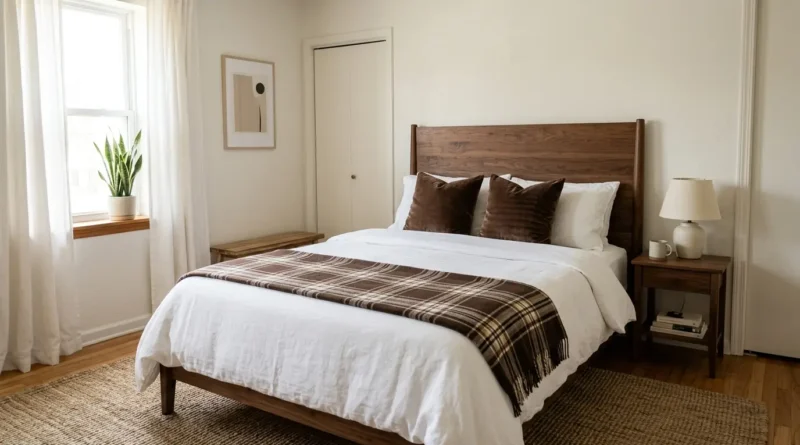
Brown had a bad reputation for about fifteen years. People stripped it out of their homes and replaced everything with gray, and then rooms started feeling cold. Brown is back now, and paired with white it does something gray never managed. It makes a bedroom feel like a place you want to be at nine at night, not just a place that photographs well. The reason the combination works is simple. White gives your eyes a rest. Brown gives the room weight and warmth. You need both or the space tips too far one way, either sterile or heavy. The trick is knowing how much brown to use and where to put it. These twenty three ideas cover headboards, bedding, furniture, walls, and small details, and each one can be layered into a room you already have without starting over.
1. Walnut Wood Headboard
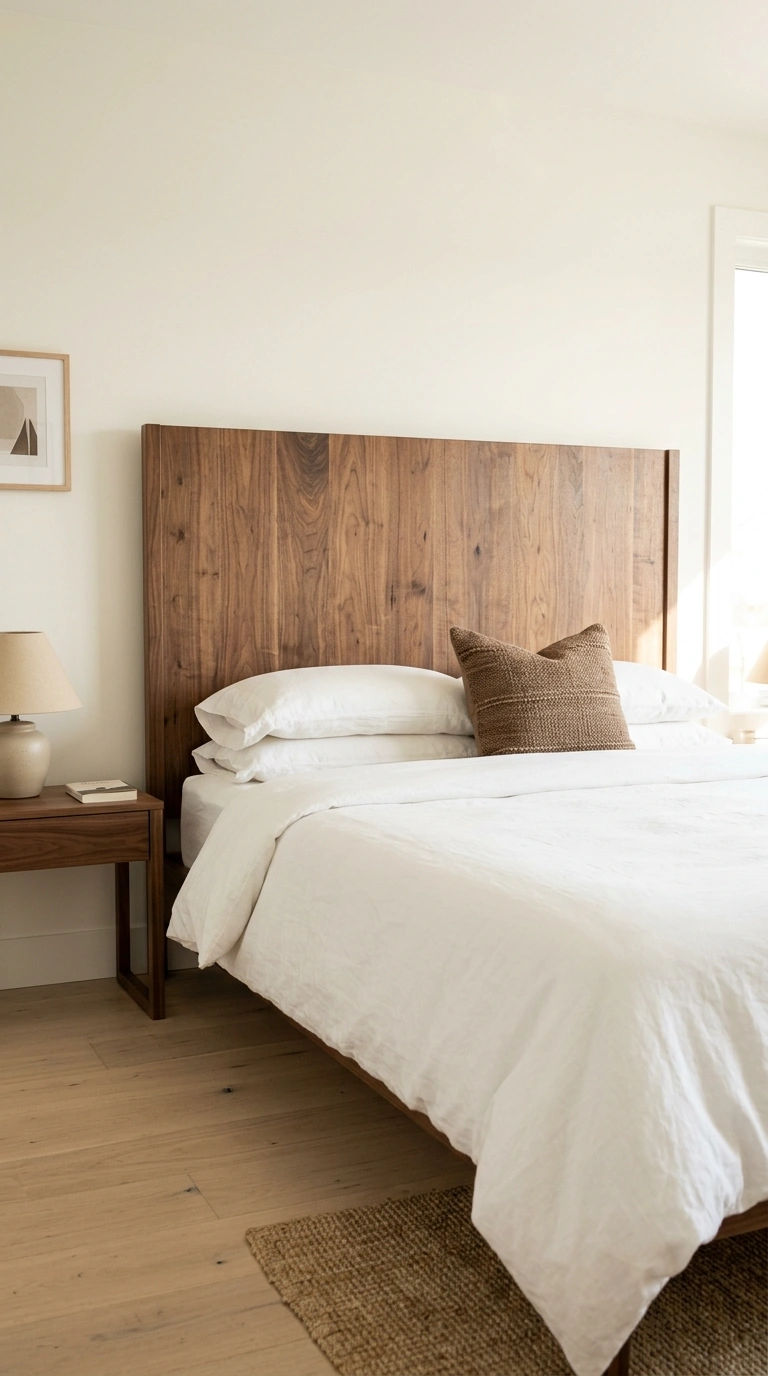
A solid walnut headboard is the fastest way to anchor a white bedroom. Against pale walls and white bedding, the deep brown grain becomes the thing your eye lands on first, and everything else can stay quiet. Look for a headboard with a visible grain pattern rather than a flat stained finish, because that natural variation is what gives the room warmth. Height matters more than people expect. A headboard that reaches at least forty inches above the mattress fills the wall properly and makes the bed feel substantial. Slatted, panel, or simple rounded shapes all work. Keep the bedding entirely white or cream so the wood stays the star. If your walls are already a warm white, the walnut will read rich and slightly red. Against cooler white, it looks darker and more dramatic. Add one brown leather or woven pillow near the headboard to echo the tone and tie the whole bed together.
2. Crisp White Bedding
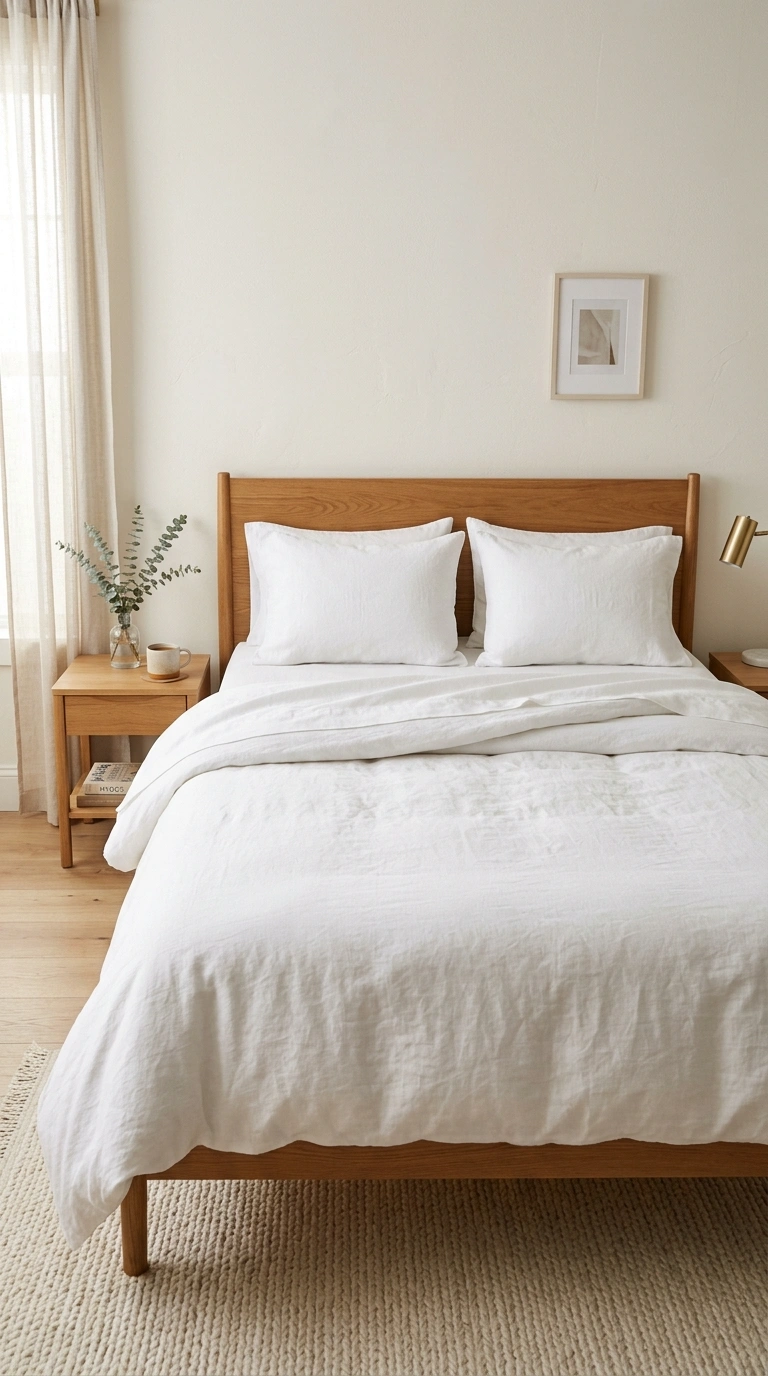
White bedding is the foundation this whole color scheme sits on, but not all white reads the same. Washed linen in a soft white has visible texture and creases beautifully, which keeps the bed from looking like a hotel display. Cotton percale is crisper and cooler to the touch. Pick one and stick with it rather than mixing both, since the texture difference shows. Layer a white fitted sheet, a white flat sheet folded back about twelve inches, and a white duvet with a slightly puffy fill. That fold back line is what makes a bed look properly made. Once the white base is in place, every brown item you add reads as intentional. Keep the duvet slightly oversized so it drapes past the mattress edges instead of sitting tight. Wash in warm water and skip the fabric softener, which coats linen fibers and dulls that soft handfeel over time.
3. Brown Leather Bench
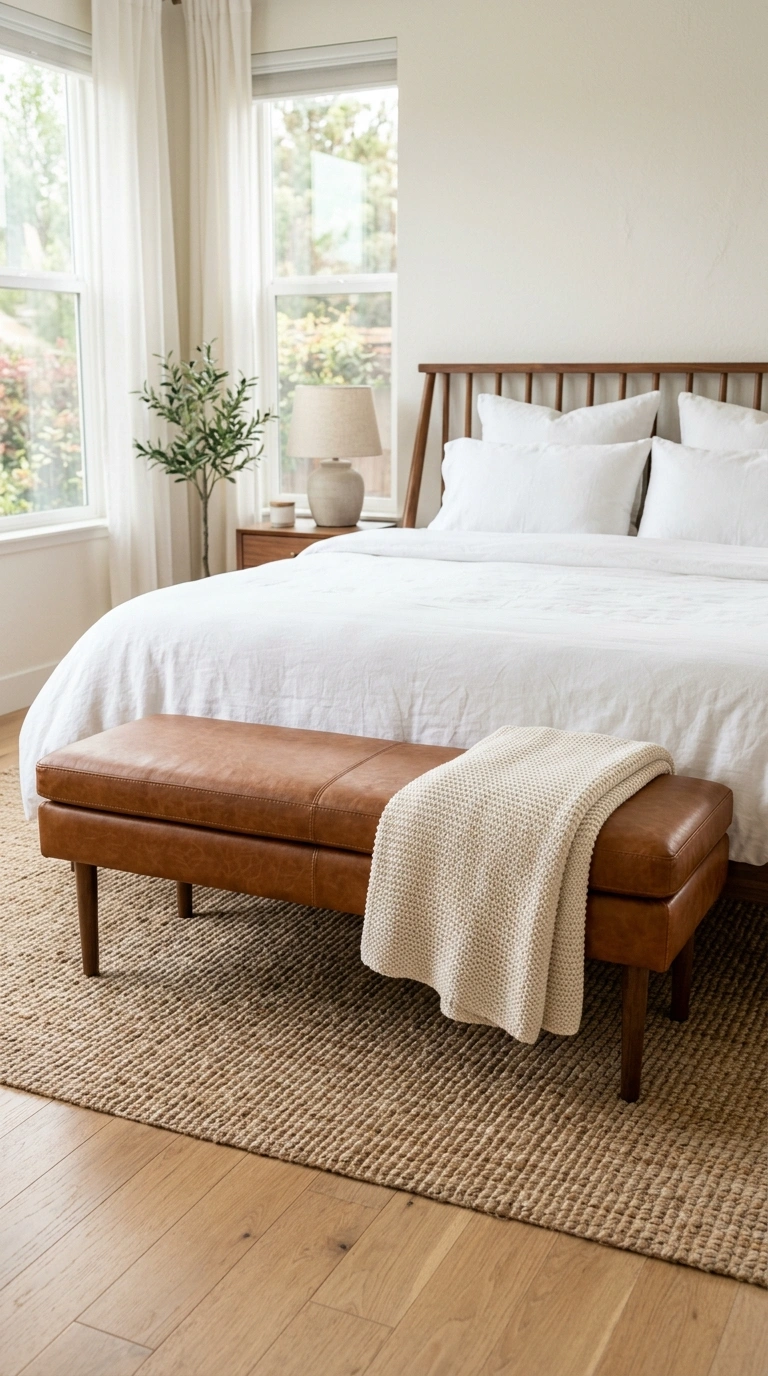
A leather bench at the foot of the bed pulls the brown from the headboard down into the room. Choose a bench about two thirds the width of your bed so it looks balanced, and keep the height just below the mattress top. Tan or caramel leather brings warmth without heaviness, while a darker cognac leather feels richer and hides wear better. Leather ages well in a bedroom because nothing spills on it, and small scuffs only improve the look. Practically, the bench is where you sit to put on shoes and where the extra blanket lives during the day. Style it with one folded cream throw draped over a corner, never centered, and nothing else. If a full bench is out of budget, two matching leather ottomans side by side do the same job and can be moved apart when you need extra seating.
4. Layered Jute Rug
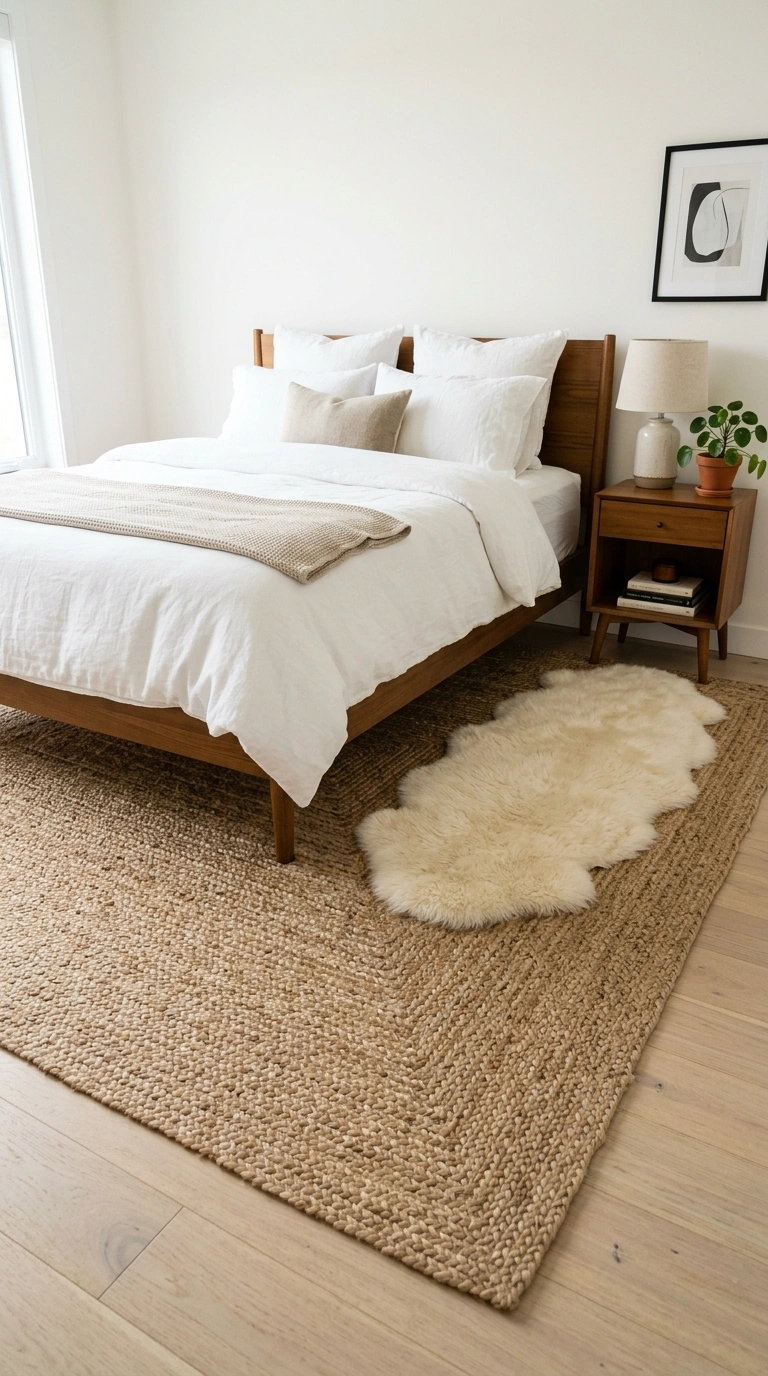
A large jute rug under the bed adds brown to the floor without adding a single piece of furniture. The natural fiber color sits somewhere between tan and light brown, and the woven texture catches light in a way flat carpet cannot. Size it so it extends at least eighteen inches past each side of the bed, which usually means a nine by twelve for a queen. Jute can feel rough underfoot, so layer a smaller sheepskin or cream washable rug on the side where you get out of bed. That layered look also adds depth. Vacuum jute with the beater bar off so the fibers do not fray. If your floors are already dark wood, the rug will lighten the room. If you have light or gray flooring, jute is what keeps the floor from looking cold. It is one of the hardest working pieces in a neutral bedroom.
5. Warm White Walls
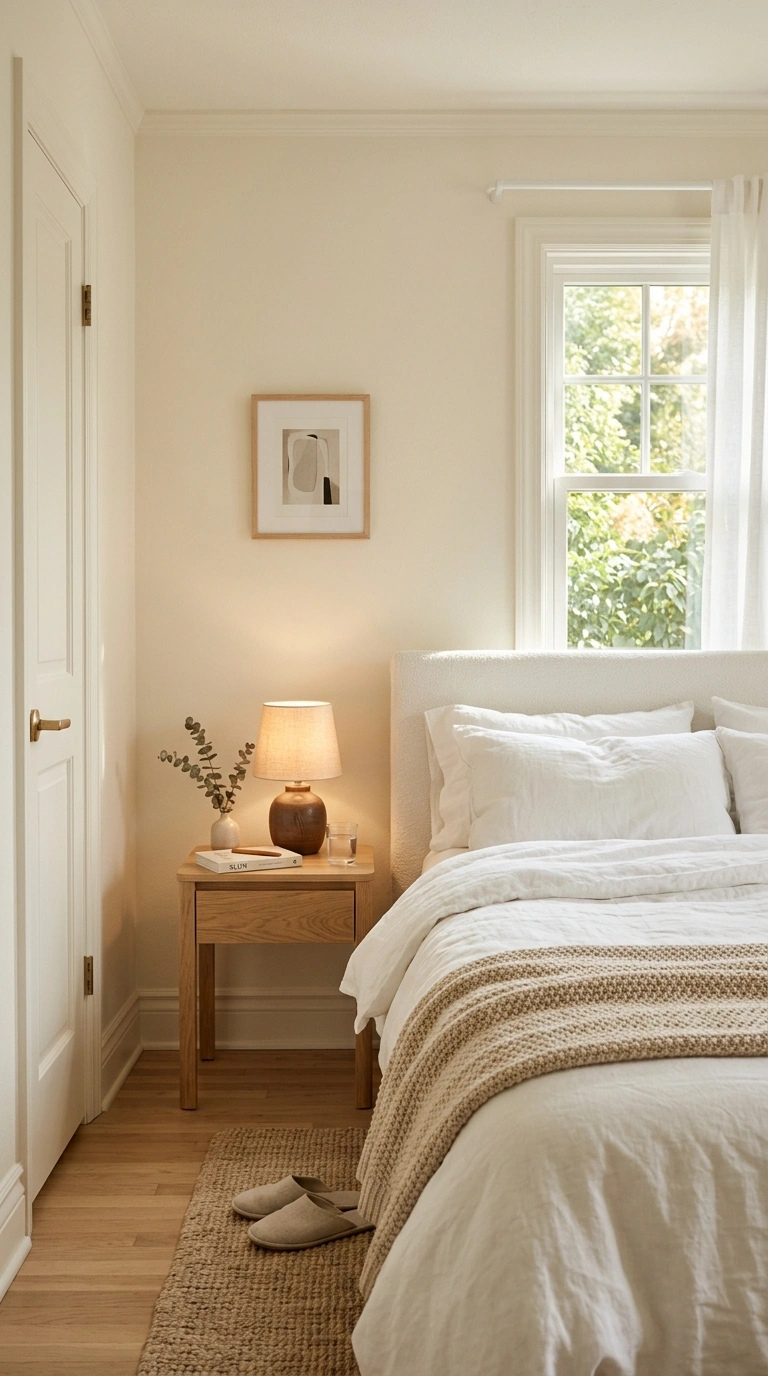
The white you choose for the walls decides whether the brown in the room reads cozy or muddy. Cool whites with blue or gray undertones fight against warm wood and can make brown furniture look dull. A warm white with a slight cream or greige base does the opposite, making wood tones look richer and skin tones look better in the morning light. Test three samples on the wall that gets the least sun, since that is where undertones show most honestly, and look at them at night under your lamps too. Matte or eggshell finish suits a bedroom because it absorbs light softly instead of bouncing it. Paint the trim and door the same white as the walls in a slightly harder finish for a seamless, calm look. This single choice costs a weekend and paint money, and it makes every other brown element in the room work harder.
6. Cane Dresser Front
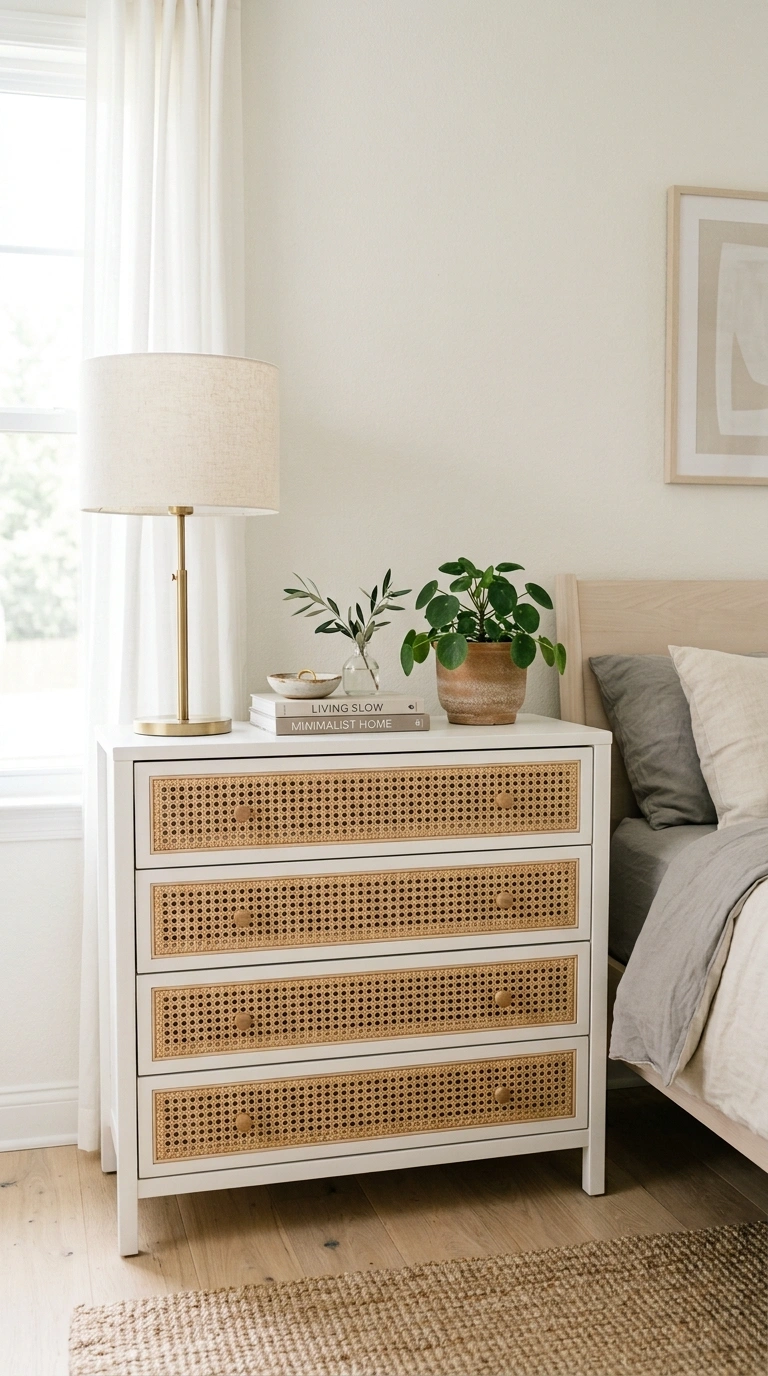
A dresser with cane webbing panels brings in light brown at exactly the right weight. The woven cane is see through, so unlike a solid dark dresser it never feels like a block sitting against the wall. Look for a piece with a white or pale painted frame and natural cane inserts on the drawer fronts, or a full wood dresser where only the panels are cane. Place it on the wall opposite the bed so it becomes the second thing you notice after the headboard. On top, style it in a simple triangle, a tall lamp with a cream shade on one side, a short stack of two books with a small ceramic dish, and a low plant. Leave real empty space between them. Cane is delicate, so keep it out of direct afternoon sun which dries and cracks the fibers, and dust it with a soft brush rather than a cloth.
7. Chocolate Velvet Pillows
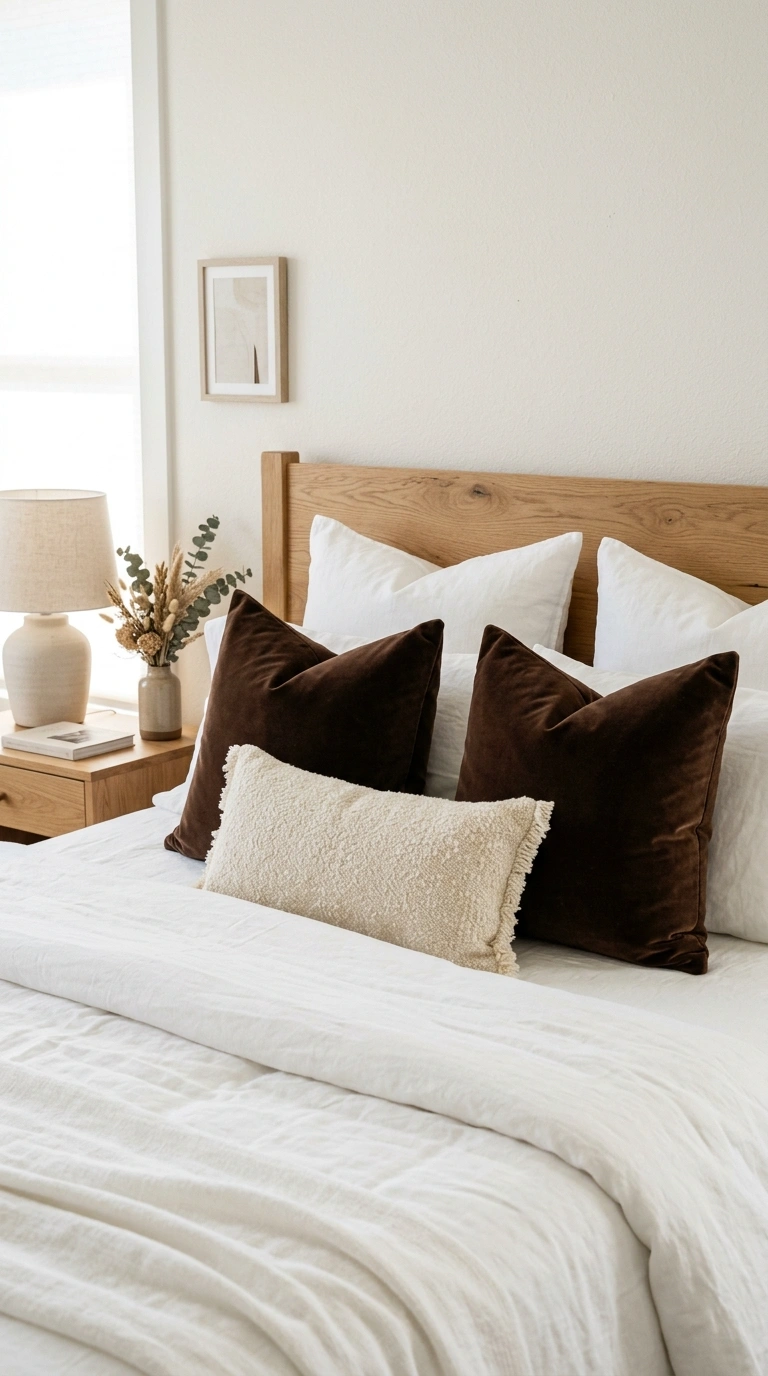
Two deep brown velvet pillows against white bedding change the whole mood of a bed. Velvet reflects light differently as you move past it, so a chocolate velvet cushion looks almost black in shadow and warm brown where light hits. That shift is what makes the color feel expensive. Use twenty inch square covers over slightly larger inserts so the pillows look full instead of limp. Two is usually the right number on a queen bed, placed in front of your sleeping pillows. Add one lumbar pillow in a cream boucle or a subtle brown stripe in front of those. Skip anything with a busy pattern here, since texture is doing the work already. Velvet covers with a hidden zipper are worth the extra few dollars because visible zippers cheapen the look instantly. Swap these seasonally if you like. In summer, a linen cover in the same tone keeps things lighter.
8. Wood Beam Ceiling
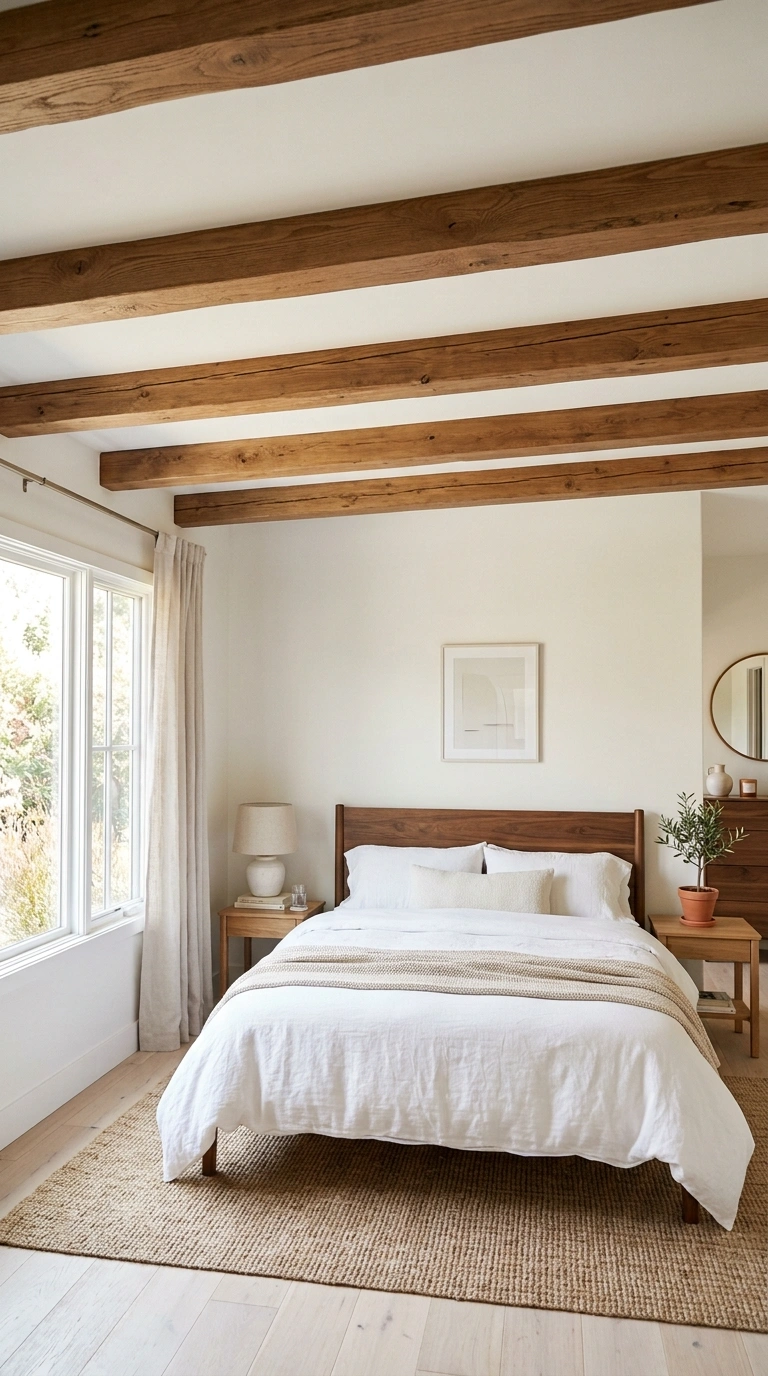
If your bedroom ceiling is plain white and the room feels a little flat, faux wood beams fix that fast. Lightweight hollow beams in a medium brown stain mount with adhesive and a few screws, and they weigh little enough that one person can hold them in place. Run three or four beams across the shorter dimension of the room, spaced evenly, about two to three feet apart. The eye reads the rhythm and the ceiling suddenly has structure. Choose a stain that relates to your headboard or flooring, though it does not need to match exactly. Slightly different brown tones in one room look more natural than a perfect match. Keep the ceiling itself white so the beams stand out clearly. This works especially well in rooms with standard eight foot ceilings, where it adds character without making the room feel lower than it is.
9. White Linen Curtains
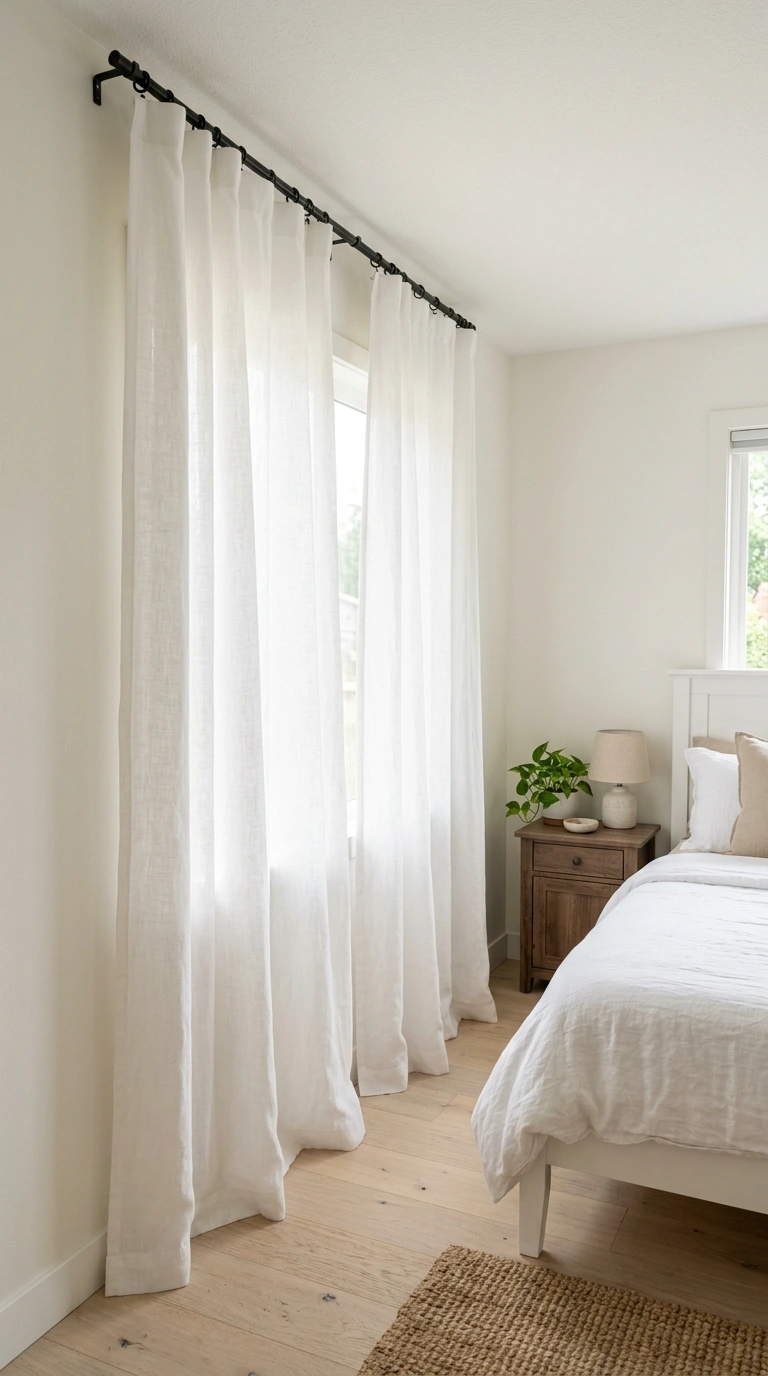
Floor length white linen curtains soften every hard edge in a bedroom. Hang the rod about six inches below the ceiling, not just above the window frame, and let the panels stop a half inch off the floor. That extra height makes the window and the whole wall look taller. Use panels wide enough that they look gathered when closed, roughly two times the window width in total fabric. Unlined linen filters morning light into a soft glow, which is lovely if you wake naturally. If you need darkness, add a separate blackout roller shade inside the frame and keep the linen purely decorative. A matte black or oiled bronze rod adds a small dark accent and stops the white panels from disappearing into white walls. Steam the panels once after hanging, then let the natural creases come back, since that slightly relaxed look is part of the appeal.
10. Mixed Brown Nightstands
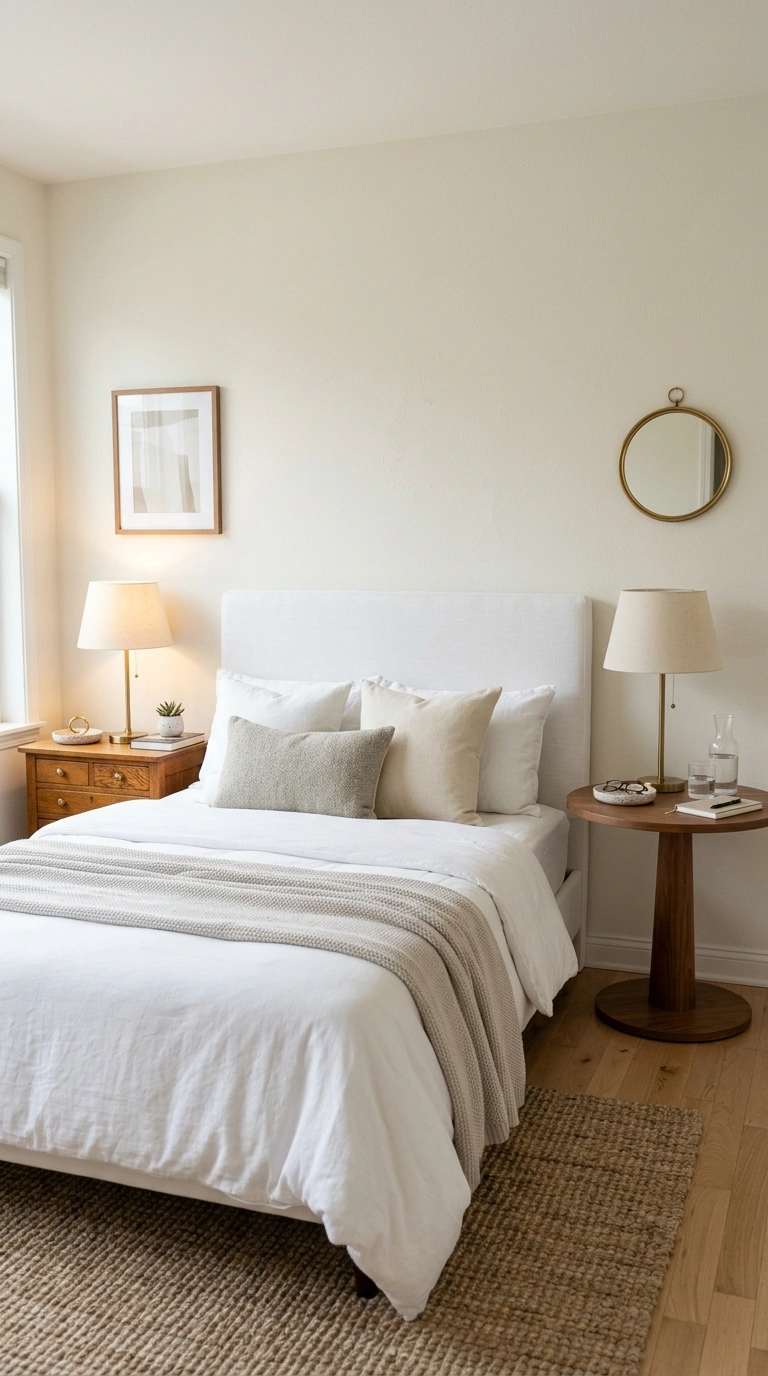
Matching nightstand sets can make a bedroom feel like a furniture catalog. Using two different brown pieces on either side of the bed instantly makes the room look collected over time. The rule that keeps it from looking random is simple. Keep the heights within a couple of inches of each other and keep the tops roughly level with the top of your mattress. One side could be a small vintage oak chest with drawers, the other a simple walnut pedestal table. Different shapes are fine. What ties them together is the styling. Put a similar lamp on each, or the same small cream dish on both. Different brown tones, one lighter and one deeper, actually help the mixed look read intentional. Check local secondhand listings for solid wood pieces, which are usually cheaper than new particleboard and can be sanded and oiled back to life in an afternoon.
11. Woven Basket Storage
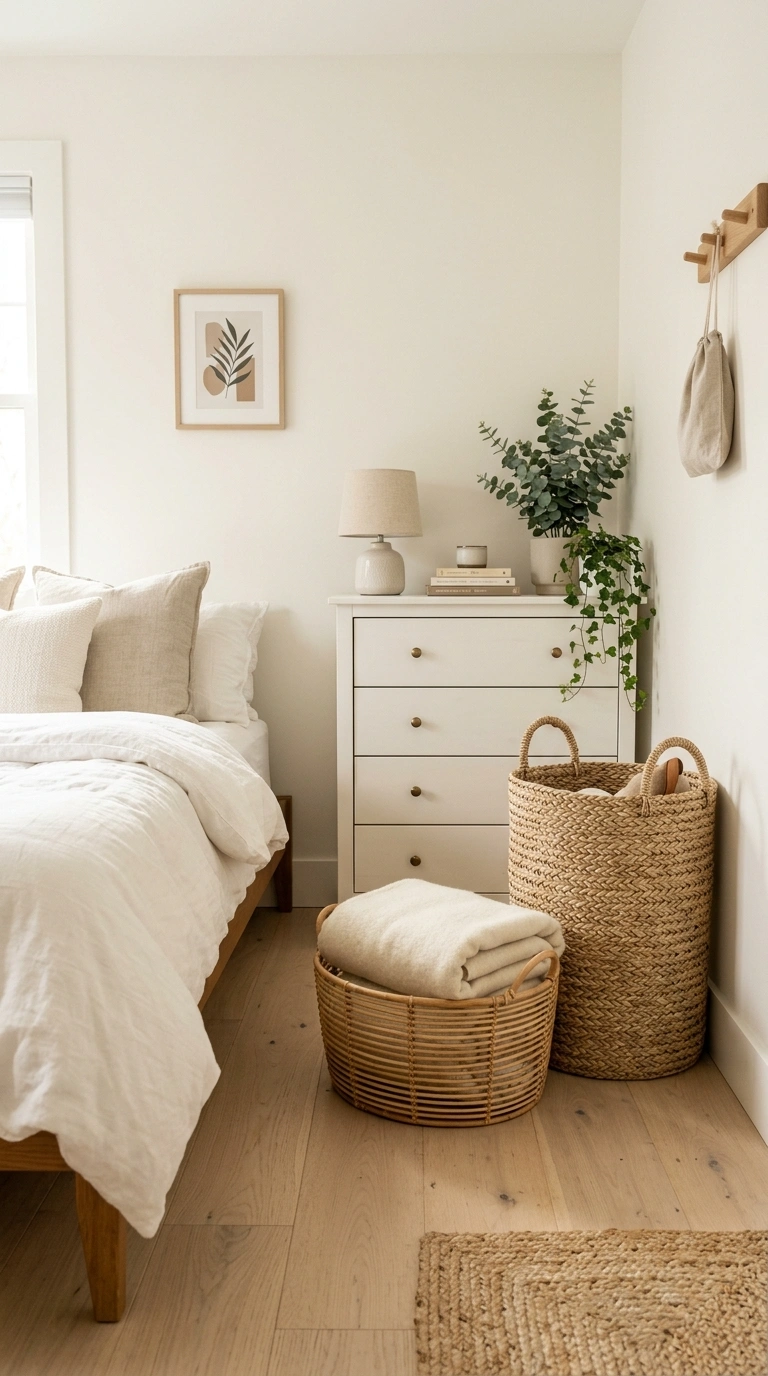
Large woven baskets in natural brown fiber solve two problems at once. They hold the extra blanket, the laundry, or the shoes you keep by the door, and they add texture in a room that might otherwise be all smooth surfaces. Put one tall basket in a corner beside the dresser, and a wider low basket tucked partly under a bench or beside the bed. Seagrass, water hyacinth, and rattan all work, and slightly different weaves in the same room look better than identical ones. Baskets with a fabric liner protect knitwear from snagging. Keep the number to two or three, since more than that starts to look like storage overflow rather than styling. If your room is small, choose baskets with a lid so the contents stay hidden and the tops can hold a folded throw. They cost little and they instantly warm up a white bedroom.
12. Brown Plaid Throw
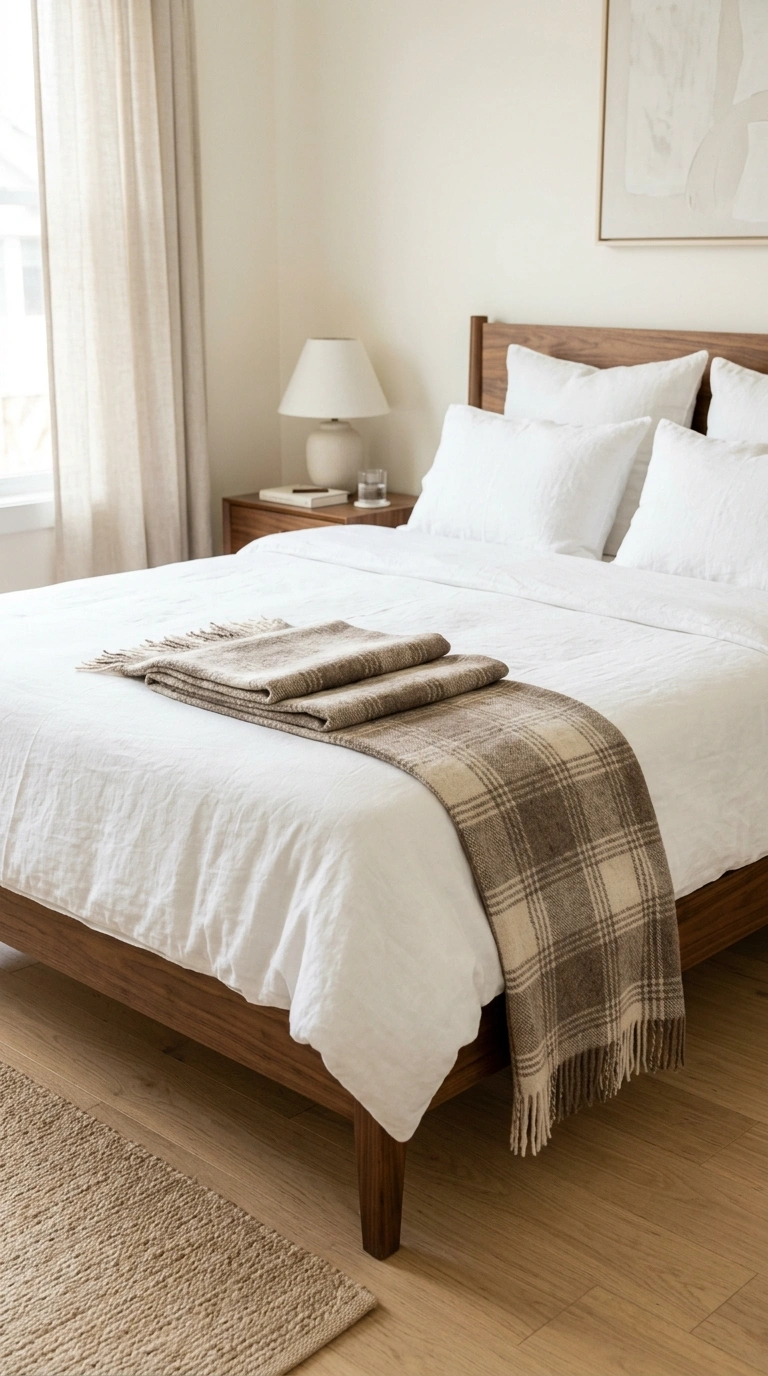
A brown plaid or check throw folded at the end of the bed does more than it seems. Pattern is what keeps an all neutral room from feeling flat, and a soft check in brown and cream reads as pattern without competing with anything. Choose a wool or wool blend throw around fifty by sixty inches so it drapes properly. Fold it in thirds lengthwise and lay it across the bottom third of the bed, letting one side hang a little longer than the other. That slight asymmetry looks more natural than a perfectly centered fold. In colder months, the throw actually gets used, which is the point. In summer, swap the wool for a lightweight cotton check in the same tones. If your bed already has brown velvet pillows, keep the plaid subtle and low contrast so the two patterns do not argue with each other.
13. Soft Cream Lampshades
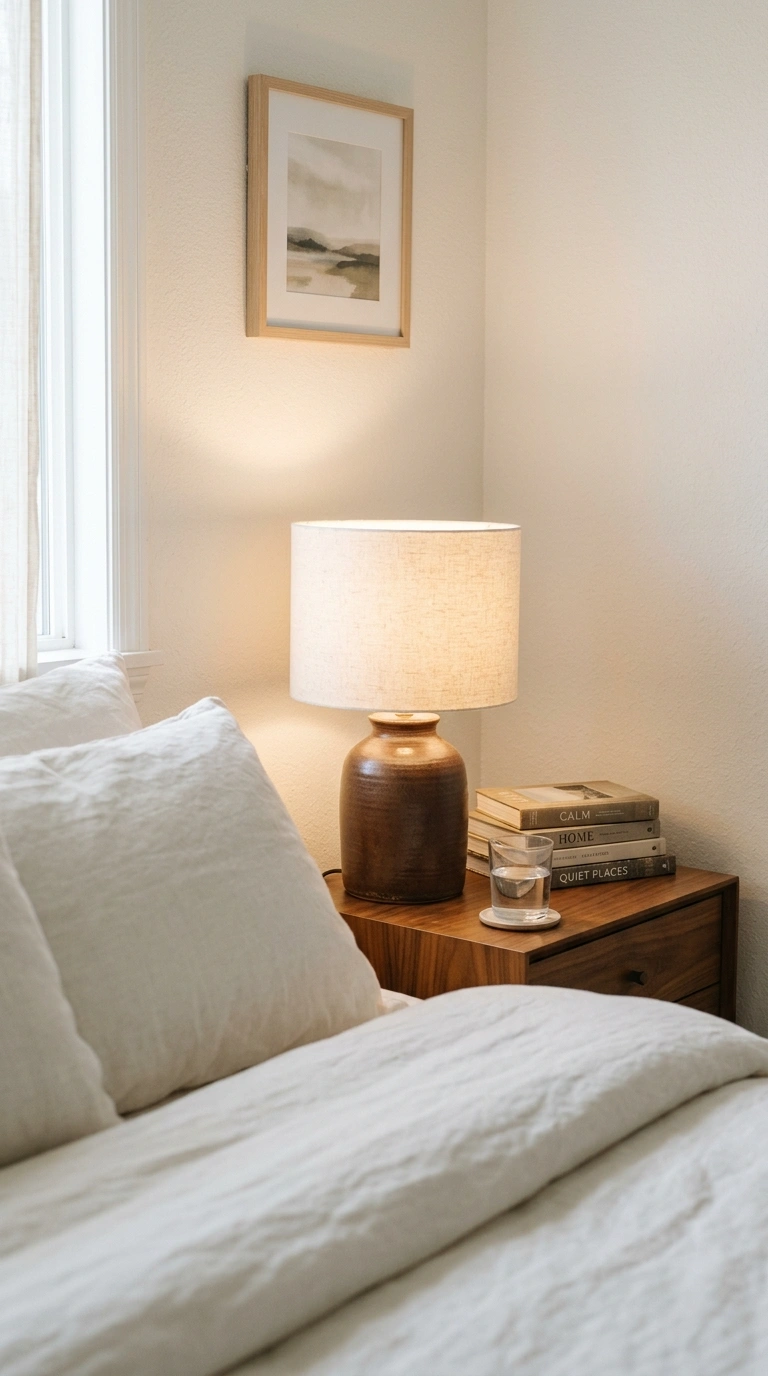
Lamp shades control the color of the light in your bedroom, which is half of how cozy the room feels at night. A cream or oatmeal linen shade filters light into a warm tone, while a bright white or plastic shade throws light that feels harsh. Pair a cream shade with a base in brown ceramic, turned wood, or antique brass. Two matching lamps on the nightstands create symmetry, which the eye finds restful right before sleep. Choose a bulb around 2700K and put it on a dimmer or use a three way bulb so you can drop the light down in the evening. Shade size matters, roughly the height of the base and a bit wider at the bottom, or the lamp looks off balance. If a shade has a visible harp and a plain finial, swapping in a small wood or brass finial is a two minute upgrade that looks surprisingly custom.
14. Wooden Picture Ledge
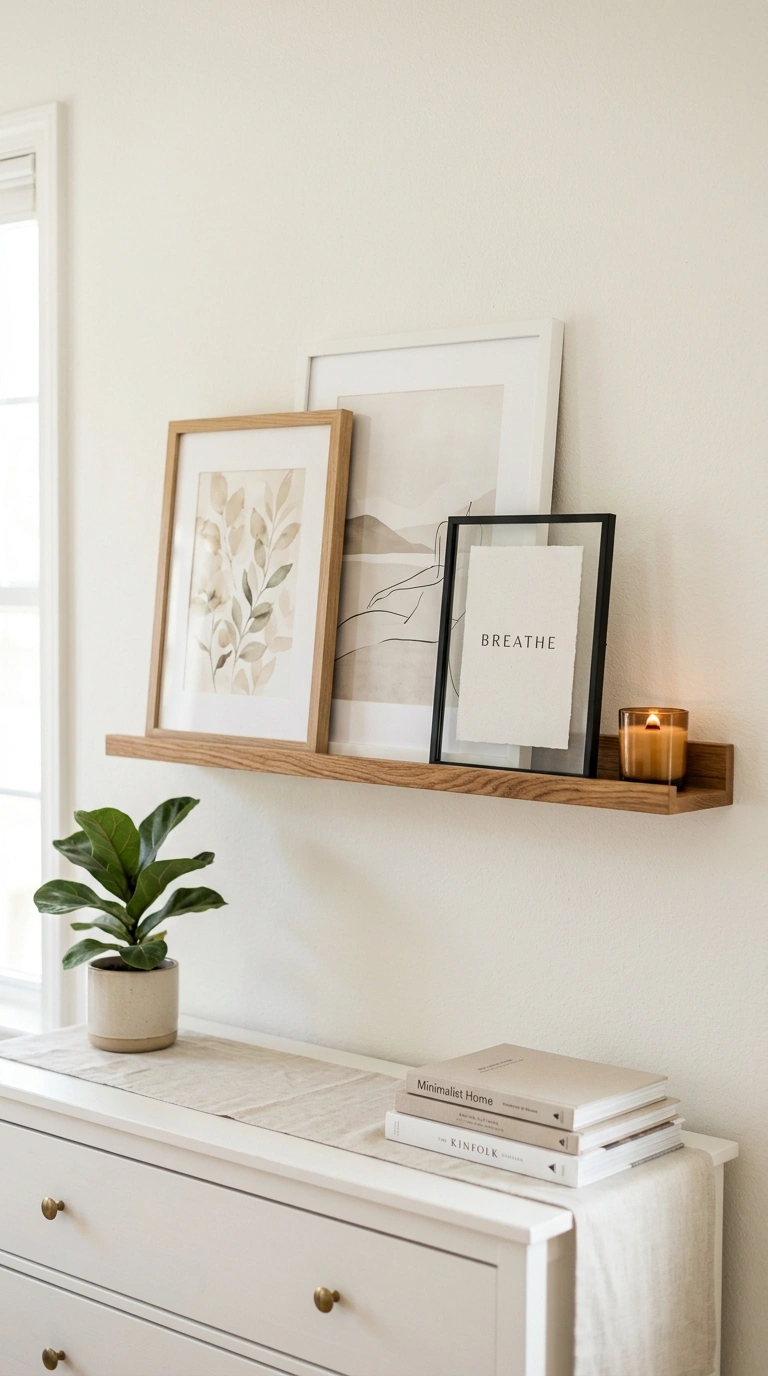
A narrow wood ledge mounted above a dresser or beside the bed gives you a place for art that can change whenever you want. Use a solid oak or walnut ledge around four inches deep with a small lip at the front, mounted at eye level. Lean three or four frames on it, overlapping slightly, in a mix of sizes. Keep the frames in white, cream, or light wood and the art itself simple, a black and white photograph, a soft abstract in beige, a pressed botanical print. Overlapping is what makes a ledge look styled rather than lined up like a shelf in a store. Add one small object at the end, a short candle or a tiny ceramic vase, to break the straight line. Since nothing is nailed to the wall, you can rearrange the whole display in two minutes. It suits renters especially well since it needs only two anchors.
15. Two Tone Wardrobe
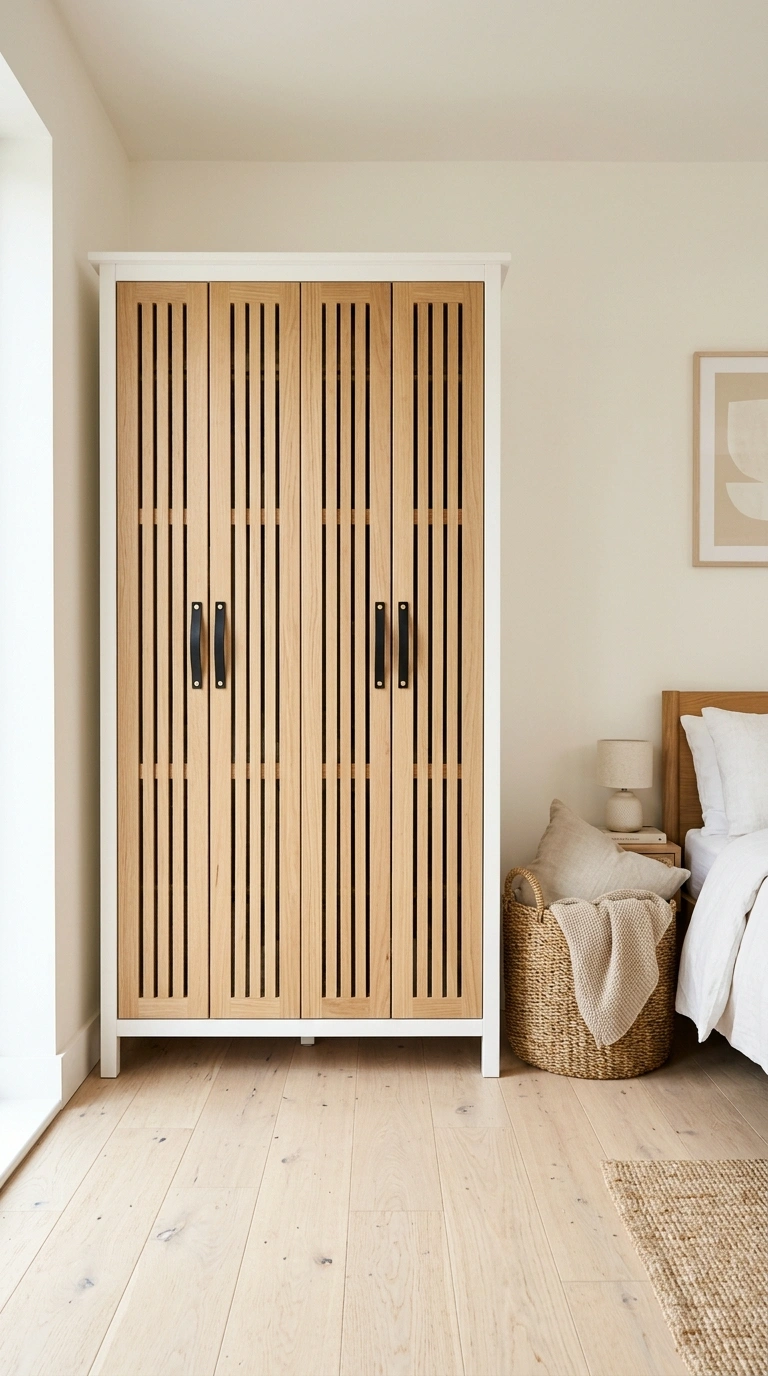
A wardrobe or armoire with a white painted body and natural wood doors gives you brown and white in a single piece of furniture. This works beautifully in bedrooms without a built in closet, where the wardrobe is unavoidably the biggest object in the room. The white frame keeps it from looking like a heavy box, while the wood doors give it warmth and stop it from disappearing into the wall entirely. Look for slatted, cane, or plain flat wood doors depending on how much texture you want. Simple black or leather pull handles suit the style. Place it on the wall you see least from the doorway so it does not dominate the first view of the room. Inside, matching velvet hangers make the interior look calm whenever you open the doors. If you already own a plain wardrobe, painting only the frame white is a weekend project with a big payoff.
16. Brown Accent Wall
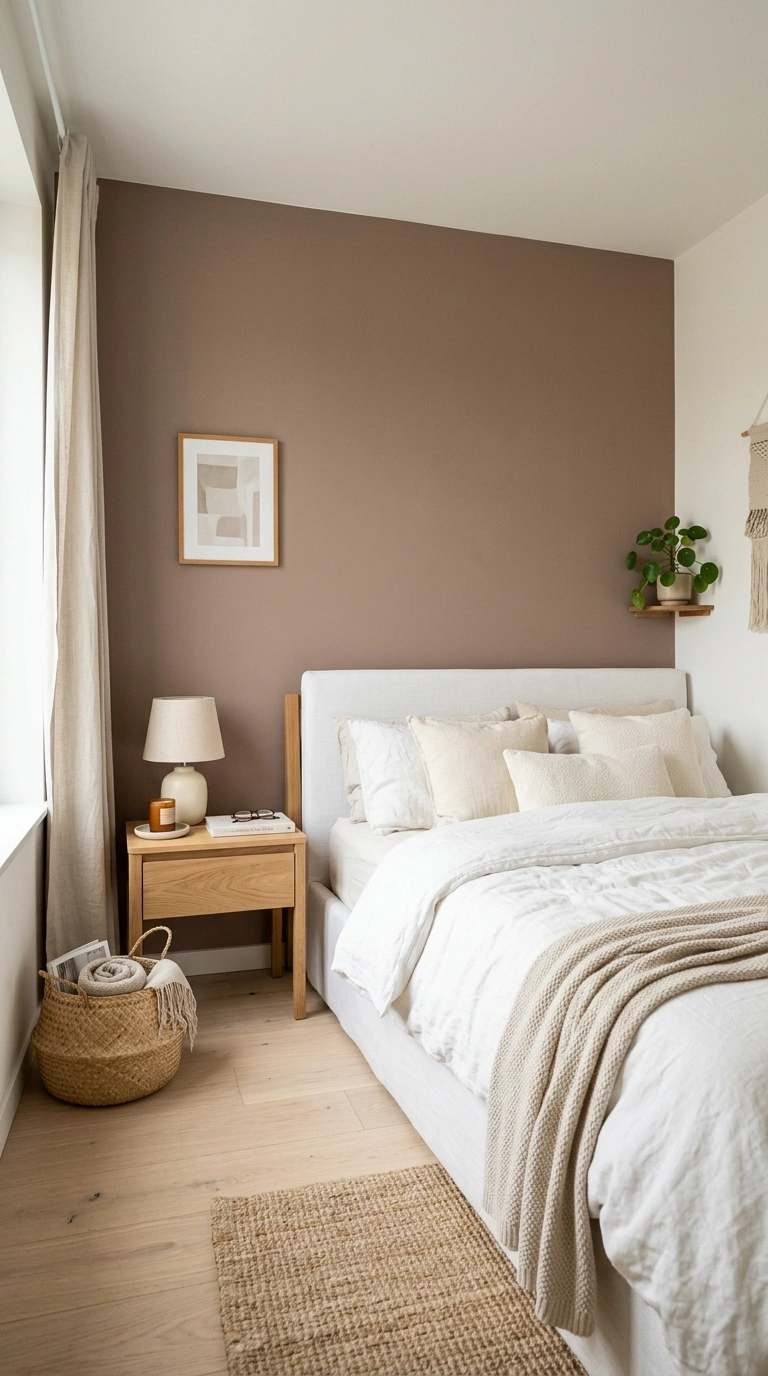
Painting the wall behind the bed a warm brown makes the bed feel tucked into the room. Choose a soft, dusty brown with a hint of gray rather than a deep chocolate, since the lighter shade keeps the room from feeling closed in. Paint only the headboard wall and leave the other three in your warm white, which lets the brown read as a deliberate backdrop instead of a color change. Matte finish is the right choice here because it absorbs light and gives the color depth. White bedding against a brown wall creates strong, clean contrast, and the bed appears to glow slightly. Carry a little brown elsewhere in the room, a wood frame or a basket, so the wall does not stand alone. This is a one day project that costs under fifty dollars, and it is the single biggest change you can make to a plain white bedroom.
17. Rattan Pendant Light
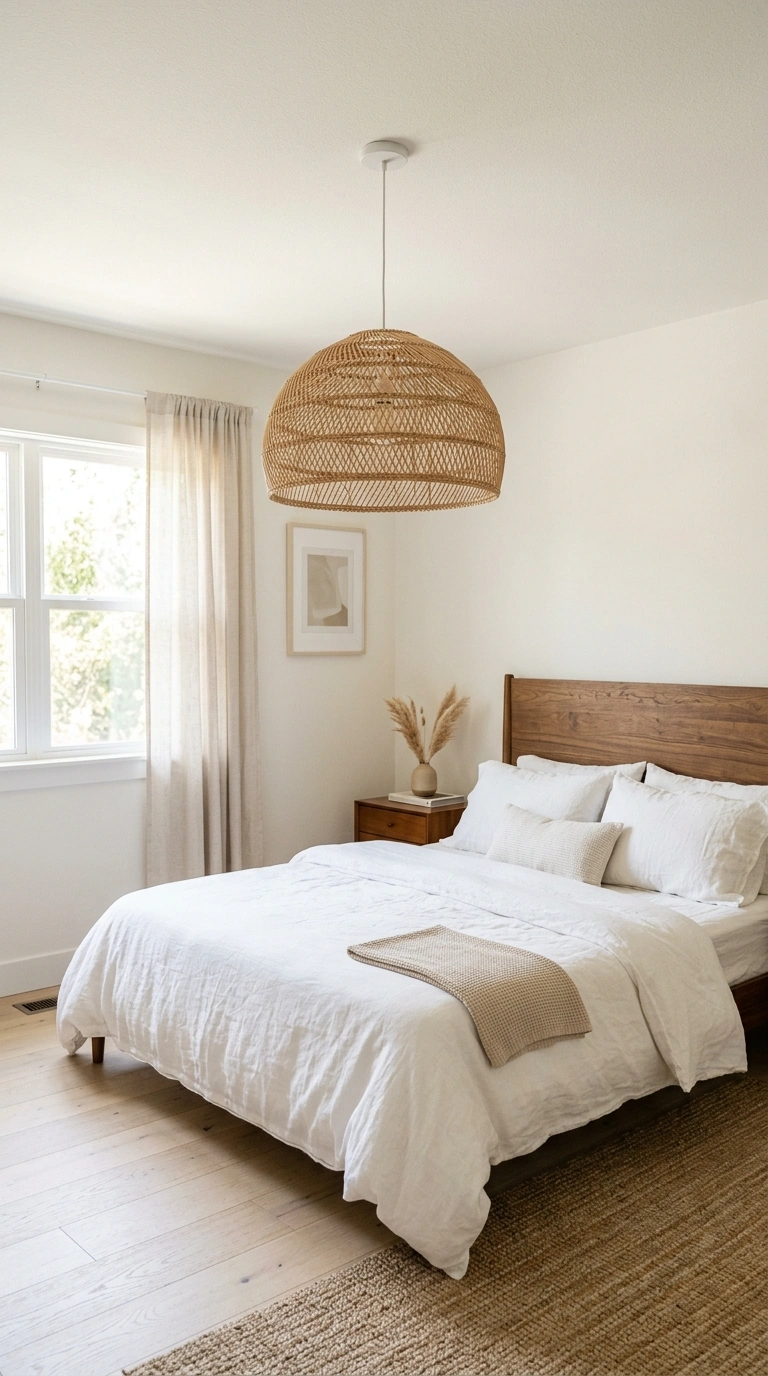
Swapping a flush ceiling fixture for a woven rattan pendant adds a big piece of brown texture overhead where nothing else competes with it. The open weave throws patterned shadows on the ceiling at night, which is a lovely detail people notice without knowing why. Hang it centered over the bed or slightly off center over a reading chair, with the bottom of the shade at least seven feet from the floor. Choose a pendant around sixteen to twenty inches wide in a standard bedroom, larger if your ceilings are high. Natural rattan, seagrass, and bamboo all sit in the right color family. Use a warm bulb inside, and consider a fabric covered cord in black or natural for a cleaner look than plain white plastic. If you cannot rewire, a plug in pendant with a hook and a cord run along the ceiling works, especially if the cord matches the wall.
18. White Slipcover Chair
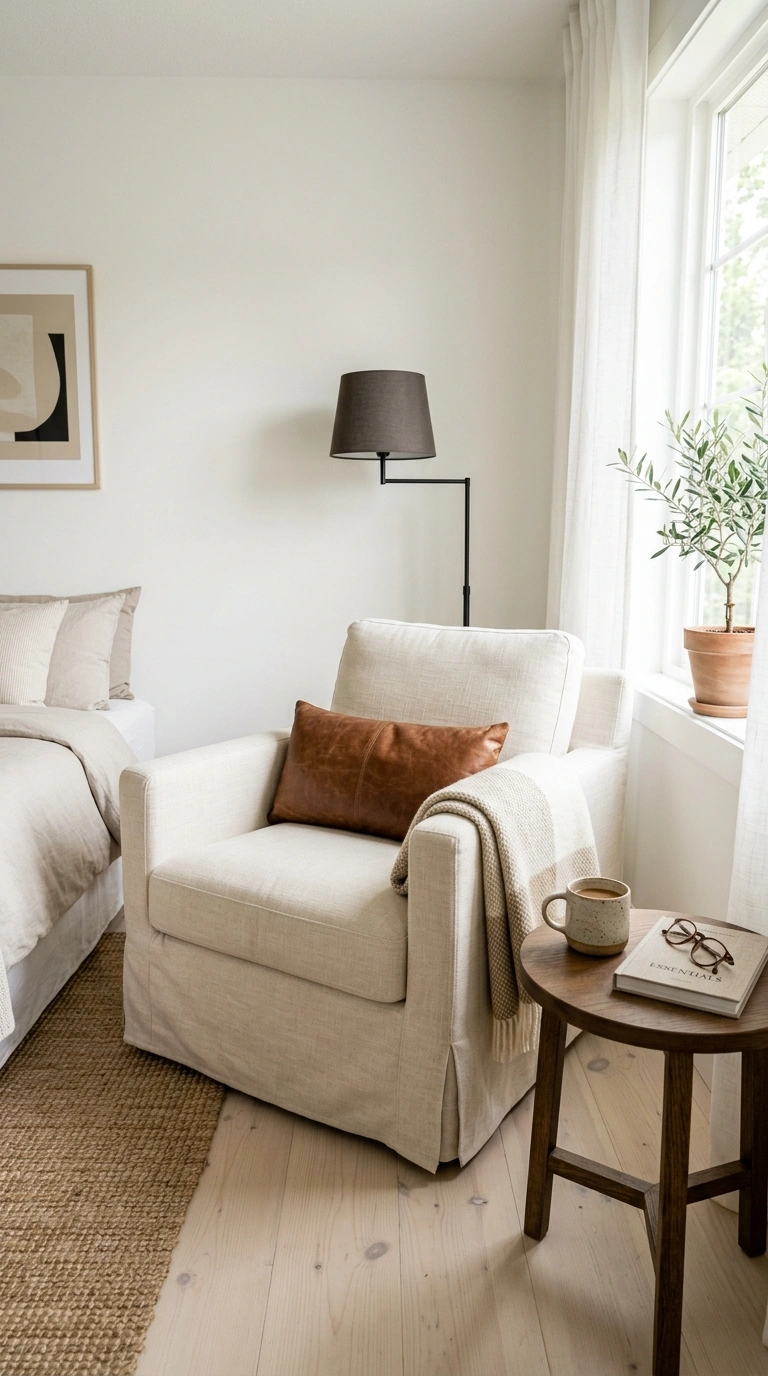
A comfortable chair in the corner turns a bedroom into a room you use during the day rather than only at night. A white or cream slipcovered armchair is the practical choice because the cover comes off and goes in the wash, which matters more than people expect in a bedroom where lotion, coffee, and pets exist. Pair it with a small round side table in dark wood and a floor lamp. Add one brown leather or woven cushion to link it to the rest of the room. Place the chair at a slight angle in the corner rather than square to the wall, which always looks more inviting. If the corner gets natural light, this becomes the spot where you actually read. Keep a folded throw over one arm. A chair like this only works if it is comfortable, so sit in it before buying rather than choosing on looks alone.
19. Wood Slat Panel
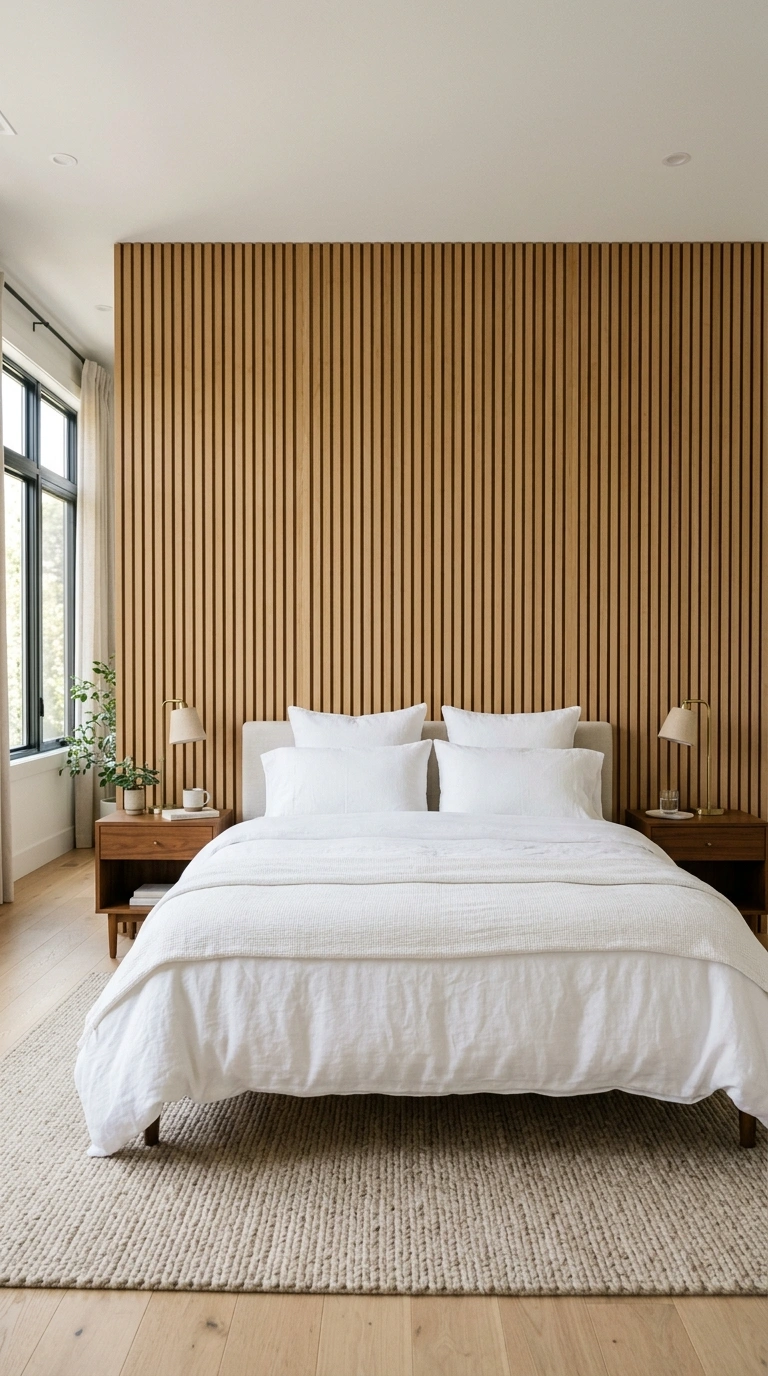
A vertical wood slat panel behind the bed acts as a headboard and a feature wall at the same time. Thin strips of oak or walnut mounted vertically with a small even gap between them create rhythm and shadow that a flat painted wall cannot. Panels come as pre made acoustic slat sheets with a felt backing, which are easy to cut and mount with adhesive plus a few screws, or you can make your own from thin lumber. Run the panel from floor to ceiling behind the bed, roughly the width of the bed plus the nightstands, so it frames the sleeping area. The felt backing on the ready made panels also softens sound slightly, which is a real benefit in a bedroom with hard floors. Keep everything else on that wall bare. The texture is the decoration, and hanging art on top of it only makes both elements compete.
20. Neutral Gallery Wall
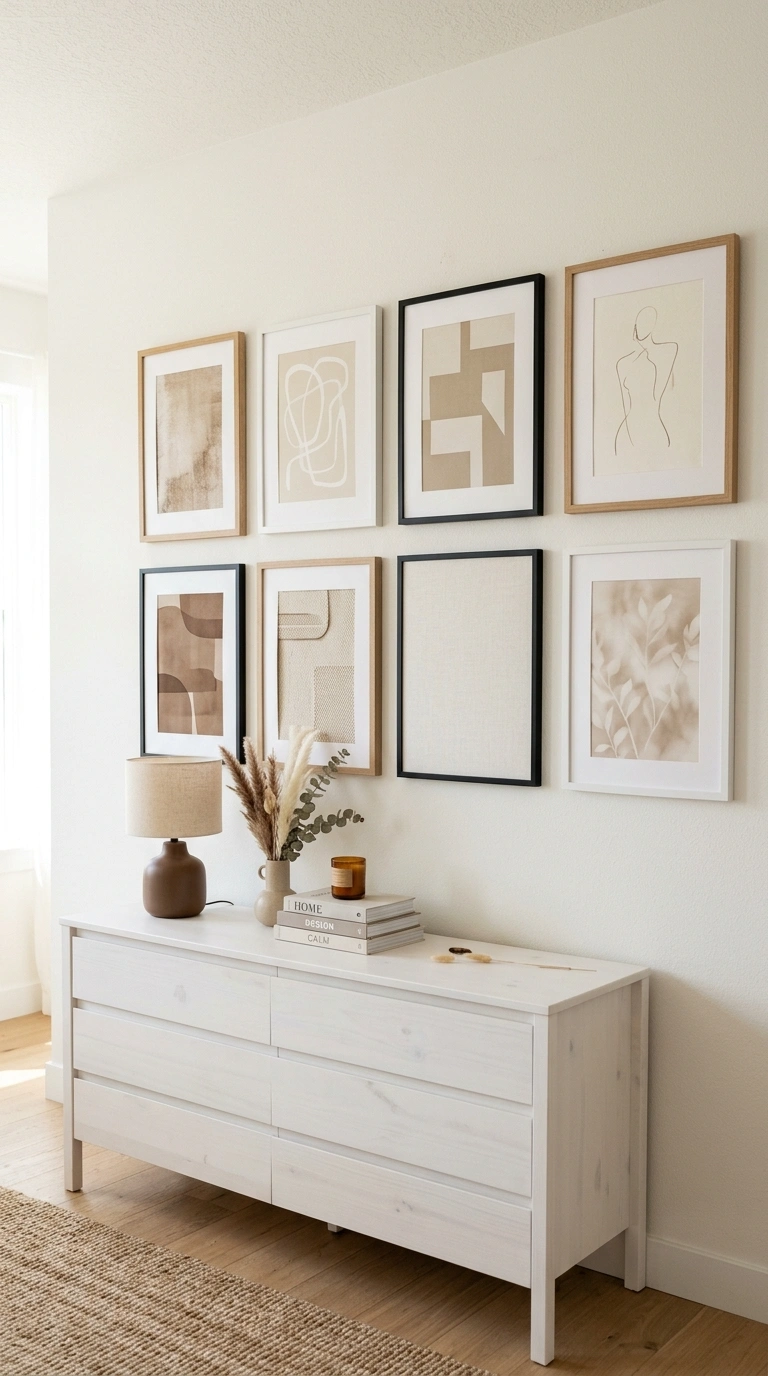
A gallery wall in a white and brown bedroom works when the palette stays tight. Choose art in cream, beige, black, and soft brown only, and mix frame types between white painted, natural oak, and thin black metal. Six to nine pieces is enough. Lay them on the floor first and arrange them until the outer shape reads as a rough rectangle, then keep two inches of space between every frame. Hang the whole arrangement so its center sits at about fifty seven inches from the floor, which is standard eye level. Above a dresser, the gallery should be roughly the width of the furniture below it. Mix subjects for interest, a landscape photograph, a simple line drawing, a textile piece, and one blank neutral canvas that gives the eye a place to rest. Use picture hanging strips for lighter frames so you can adjust without patching holes.
21. Layered Bed Skirt
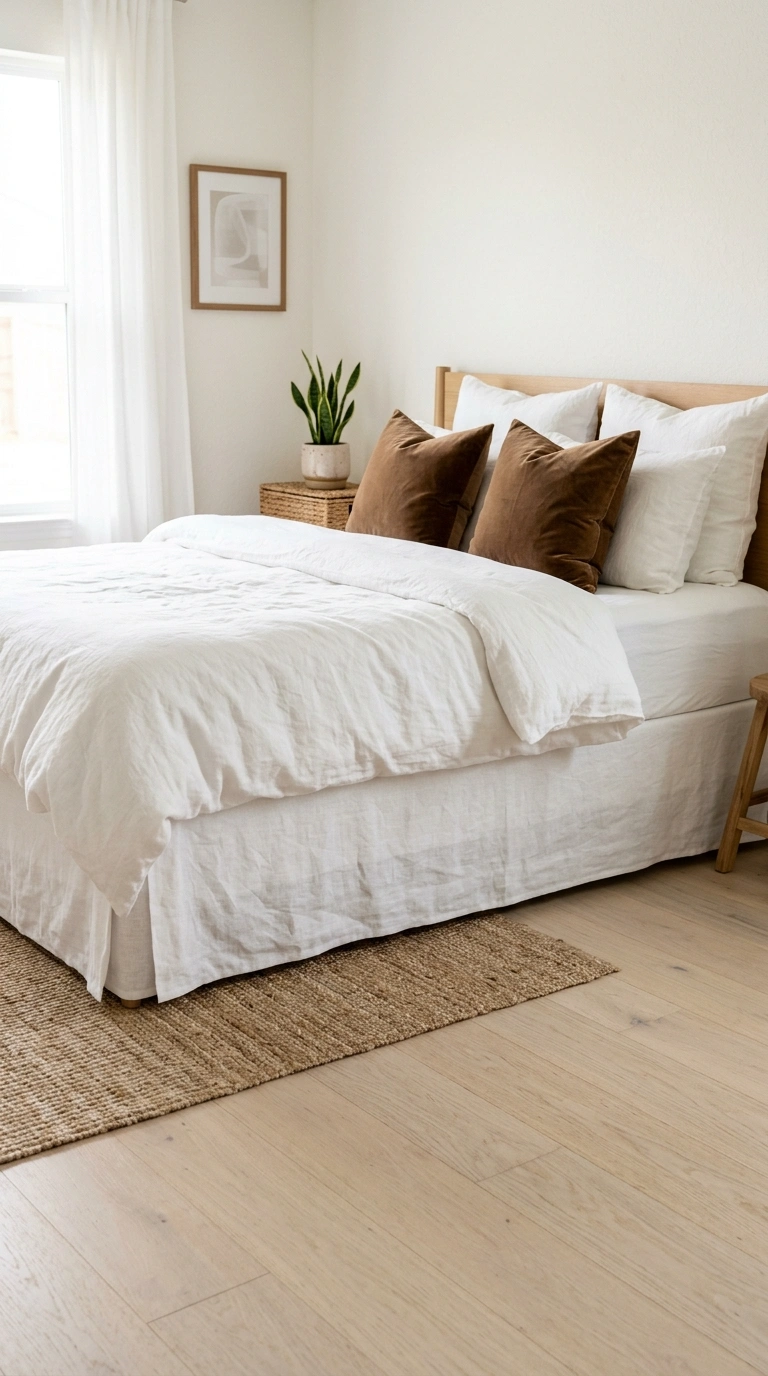
A bed skirt sounds old fashioned but a modern linen version hides the boxspring and under bed storage while adding one more soft layer to the bed. Choose a flat panel style in white or oatmeal linen with a straight, slightly rumpled drop rather than a ruffled or gathered one, which is what dates the look. The drop should stop about a half inch above the floor. Under a white duvet and brown pillows, the skirt closes the bottom of the bed so it reads as one complete piece from across the room. It also means the plastic bins of winter clothes under your bed stay invisible. Look for a wrap style skirt that attaches with velcro if you do not want to lift the mattress to install it. Wash it with your sheets so the tones stay consistent, since white fabrics age at different rates.
22. Vintage Leather Trunk
An old leather or wood trunk used as a side table brings real age into a room full of new things. The worn brown surface has a depth that new furniture cannot copy, and every scuff adds character. Use it beside the bed if it is the right height, at the end of the bed in place of a bench, or in a corner with a lamp on top. Inside, it stores spare bedding or seasonal clothes, which makes it genuinely useful rather than decorative. Look for trunks at flea markets, estate sales, and secondhand listings. Check the hinges and the smell before buying, since a musty interior takes real work to fix. Clean leather with a barely damp cloth and finish with a leather conditioner. Style the top simply, a stack of two books and a small lamp or a candle. One piece like this keeps a neutral bedroom from feeling brand new.
23. Potted Green Plants
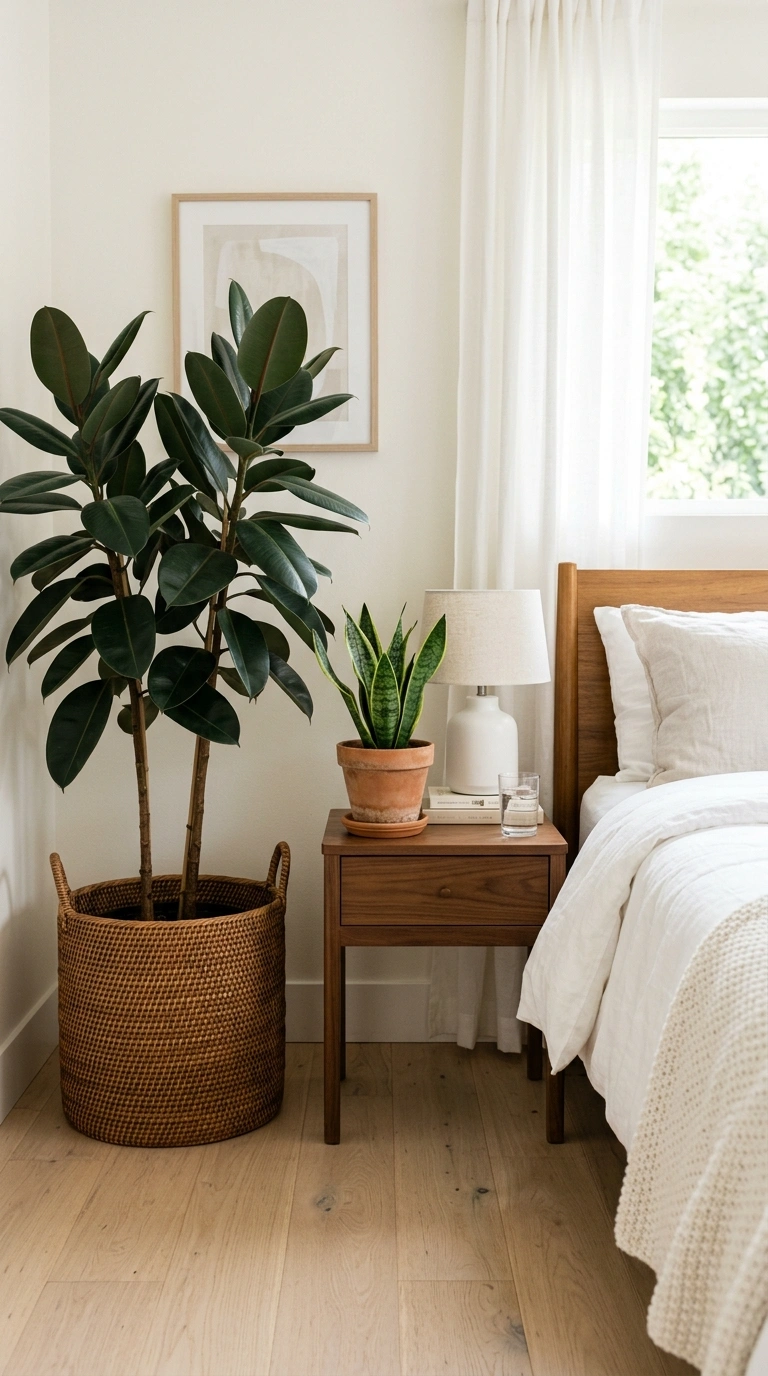
A white and brown room needs one more color to feel alive, and green is the natural answer. Choose plants with large simple leaves rather than fussy ones, since bold shapes read well against plain walls. A fiddle leaf fig or a rubber plant in a corner gives height, a pothos trailing from a dresser adds movement, and a small snake plant on a nightstand survives almost anything. Put them in terracotta or woven brown baskets rather than bright ceramic pots so the containers stay inside the palette. Two or three plants is plenty in a bedroom. Match the plant to your light honestly, since a fig in a dark corner will drop leaves within weeks and look worse than no plant at all. If your bedroom has very little natural light, a single well made faux plant in a real terracotta pot is a fair compromise that nobody notices.
Frequently Asked Questions
Does brown and white work in a small bedroom?
Yes, and often better than dark schemes. Keep the walls, bedding, and curtains white so the room stays open, then bring brown in through the headboard, a rug, and a few smaller pieces. The white surfaces carry the light while the brown adds depth.
What shade of brown looks best with white?
Warm mid browns like walnut, caramel, and tan work most easily. Very dark chocolate brown can look heavy unless you have good natural light, and cool grayish browns tend to read flat next to white. Pick a brown with a touch of red or yellow in it.
How much brown should I use in the room?
A useful guide is roughly seventy percent white or cream, twenty five percent brown, and five percent for a darker accent like black hardware or a green plant. That ratio keeps the room warm without feeling dim.
Can I mix different wood tones in one bedroom?
Mixing is usually better than matching. Keep the undertones similar, all warm or all cool, and repeat each tone at least twice in the room so it looks planned. Two or three different wood tones is a comfortable limit.
How do I keep white bedding looking clean?
Wash weekly in warm water, treat spots before they set, and dry on low to avoid yellowing. Keep a separate throw on top for lounging so the duvet itself stays cleaner, and skip fabric softener which builds up and dulls white fabric over time.
Final Thoughts
White and brown works because it is honest. Wood looks like wood, linen looks like linen, and nothing is trying too hard. Add a few pieces at a time and let the room come together slowly. The best neutral bedrooms almost never happen in one weekend.