25 Beautiful DIY Painted Desk Ideas for a Fresh New Look
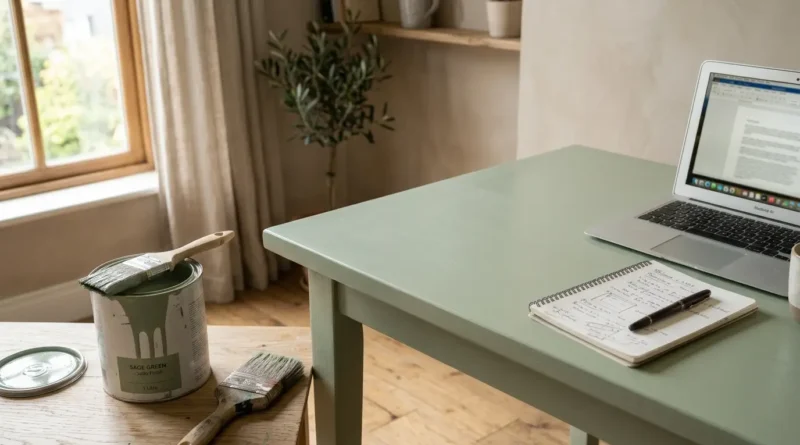
That old desk sitting in your garage or thrift store find does not have to stay boring brown wood forever. A can of paint and a free afternoon can turn a tired desk into the focal point of a room. This roundup covers 25 painted desk ideas, from soft sage green to bold navy blue, plus a few fun techniques like ombre fades and stencils. Every idea here works on almost any desk shape, whether it has drawers, a simple flat top, or turned wooden legs. You will find the paint colors, finishes, and small details that make each look come together. Pick a color that matches your room, tape off your lines, and give your desk a fresh new life without spending money on new furniture.
1. Soft Sage Green Desk
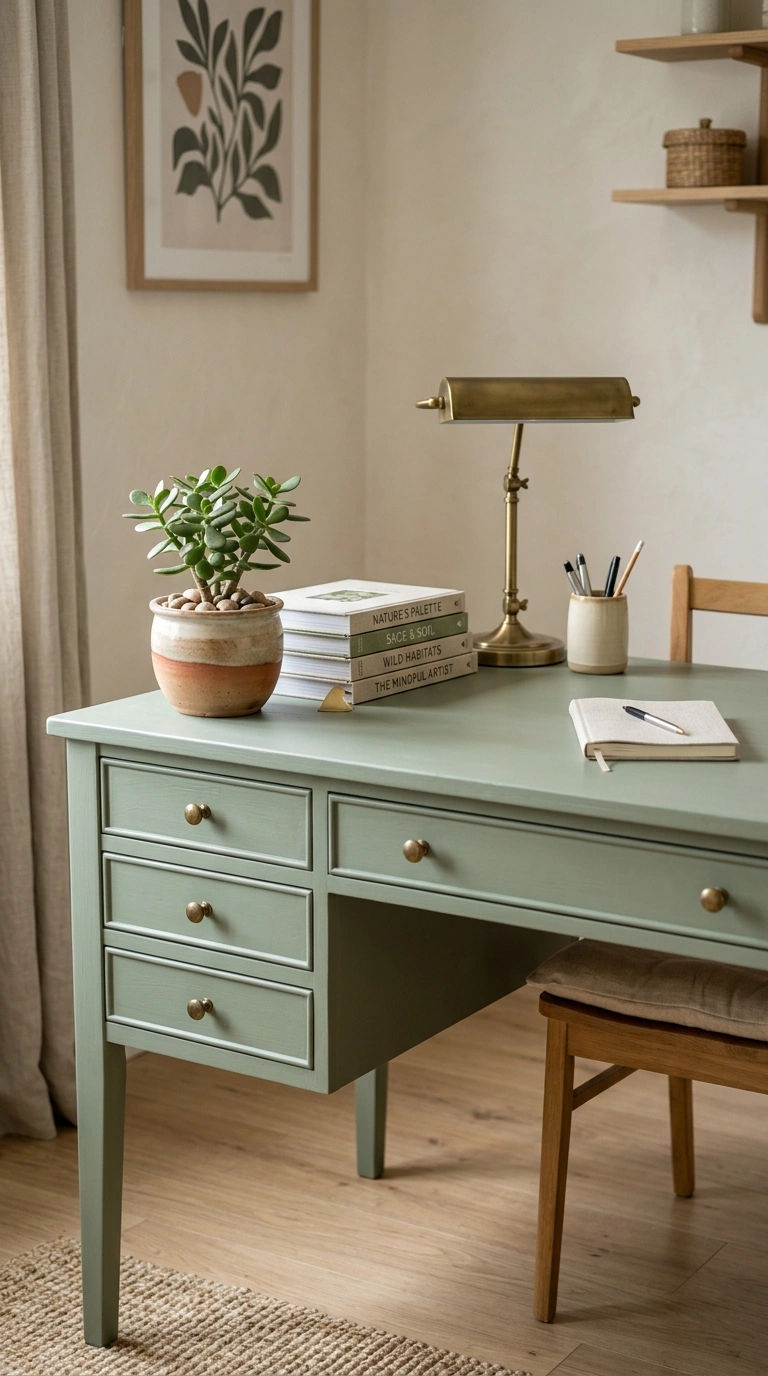
A soft sage green paint job turns a plain wood desk into a calming focal point that still works with almost any room color scheme. Sand the desk lightly first to help the paint stick, then apply two thin coats of a chalk-style paint in a muted sage tone, letting each coat dry fully before adding the next. Leave the original wood knobs in place, or swap them for simple brass pulls to add a small metallic contrast against the green.
A clear wax or matte sealant on top protects the paint from scratches and coffee cup rings without adding shine. This color works especially well in bedrooms or home offices with a lot of natural light, since sage green tends to look fresh rather than dark even in smaller rooms. Pair the finished desk with a woven basket or a small potted plant on top to lean into the natural, earthy feel the color already brings to the space.
2. Two-Tone Black Wood
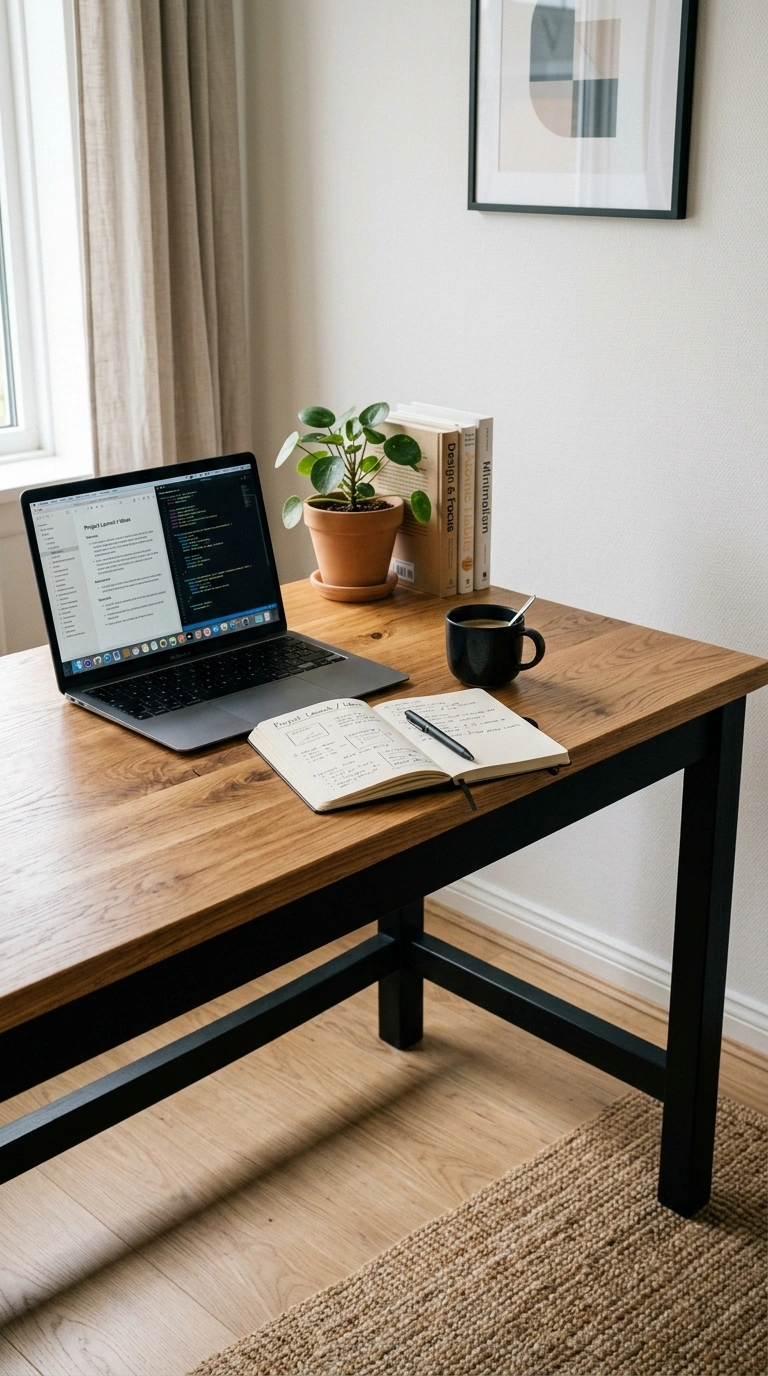
Painting only the desk’s legs black while leaving the wood top in its natural finish creates a strong, modern contrast without covering up wood grain you actually want to keep. Tape off the top edge carefully with painter’s tape before painting the legs, using a matte black paint for a soft, non-shiny finish. Two coats usually cover the legs fully, but let the first coat dry completely before adding the second so the color stays even.
Once the paint is dry, sand the natural wood top lightly and apply a fresh coat of wood oil or clear sealant to bring back its shine. This look works well with mid-century or modern bedrooms, since the black legs give the desk a lighter, almost floating appearance even though the wood top stays warm and grounded. It is also a good option if your desk has some marks or stains on the legs that you want to hide without repainting the whole piece.
3. Classic White Chalk Paint
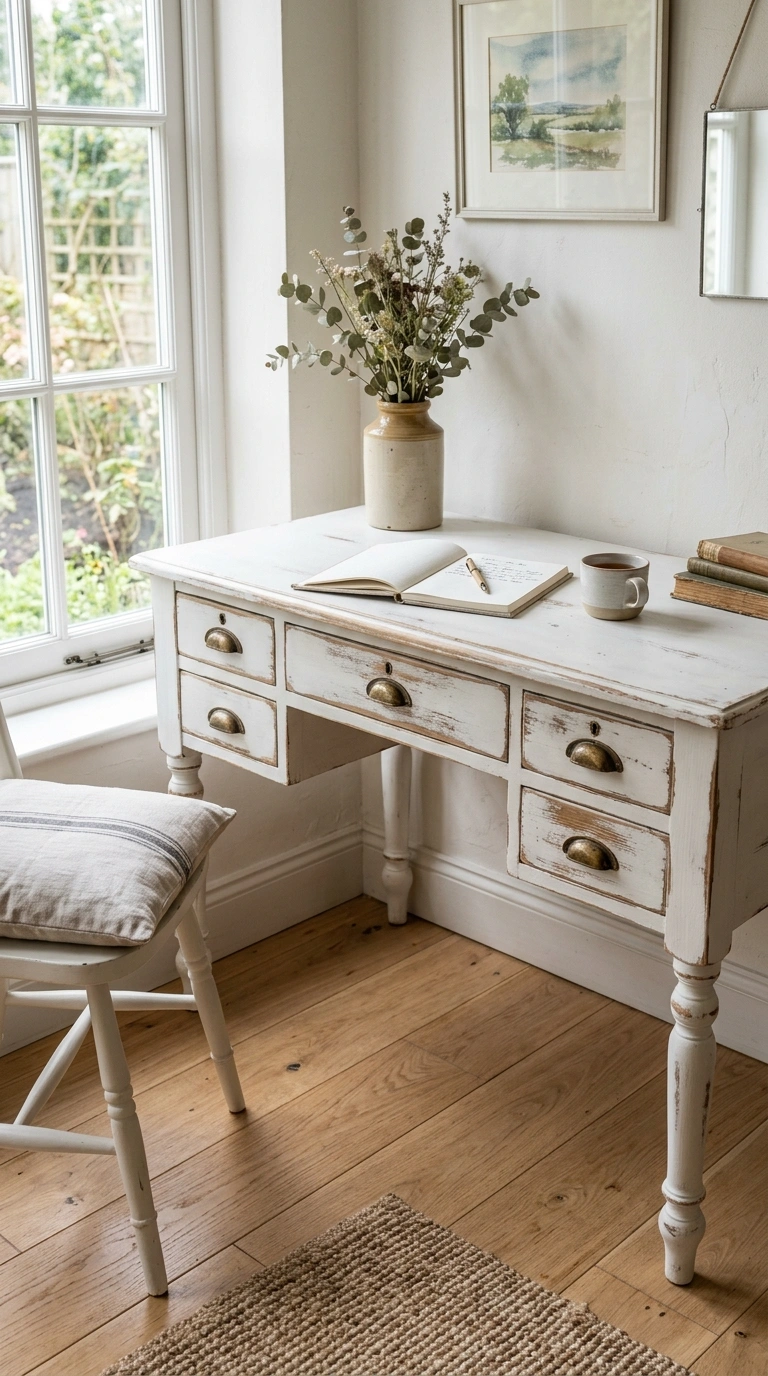
White chalk paint is one of the easiest ways to refresh an old, dated desk since it covers almost any wood color or old varnish in just two coats. Clean the desk first to remove dust and oil, then apply the chalk paint with a wide flat brush, working in the direction of the wood grain for a smoother finish. Chalk paint dries with a soft, slightly chalky texture, which gives the desk a farmhouse or cottage feel rather than a glossy factory look.
Once dry, lightly sand the edges and corners with fine sandpaper to reveal small bits of the original wood underneath, which adds a worn-in, vintage character to the piece. Finish with a clear wax to protect the paint and give it a slight soft sheen. This desk style pairs well with brass or ceramic knobs and works in almost any bedroom, from farmhouse to simple traditional rooms.
4. Dusty Rose Vanity Desk
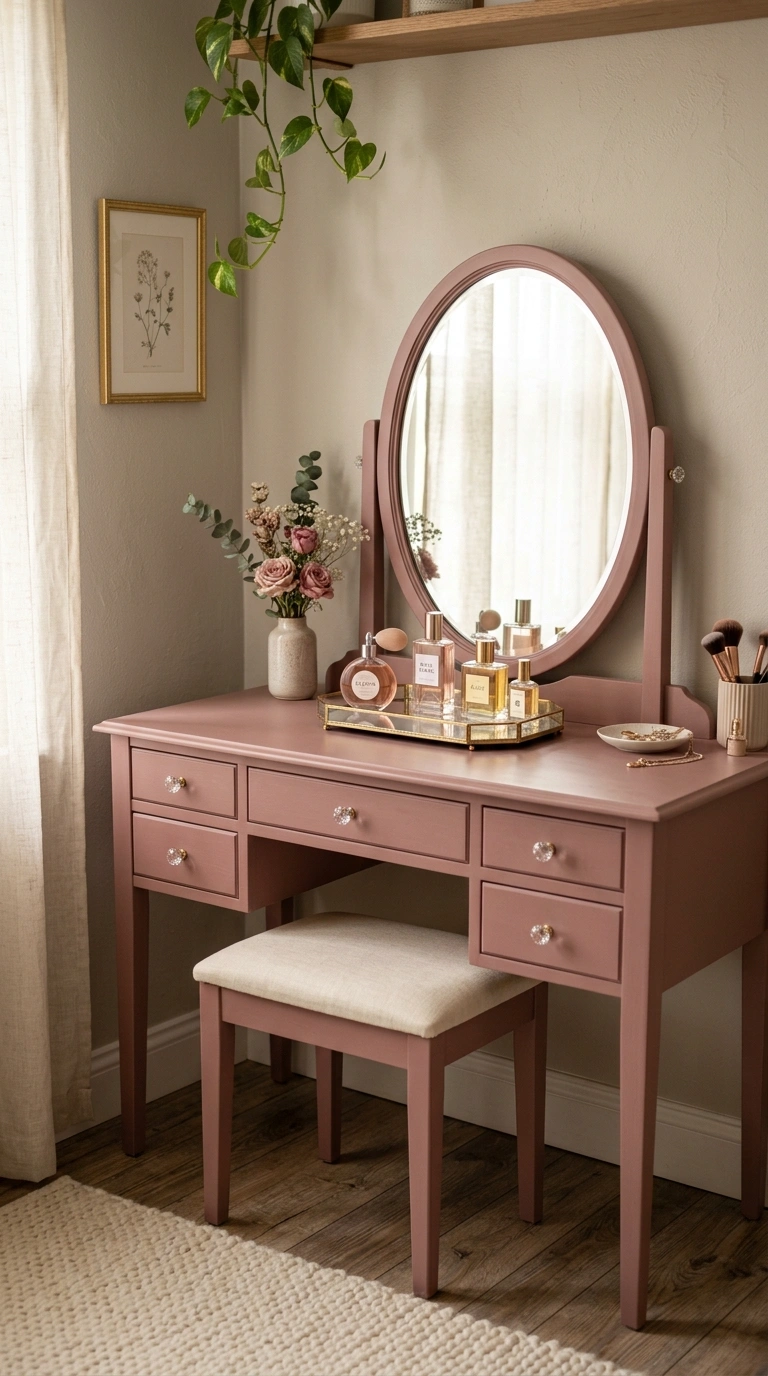
A dusty rose paint color turns a plain desk into a soft, romantic piece that works especially well for a vanity or a desk placed in a bedroom corner near a mirror. Choose a paint with a slight matte finish, since dusty rose can look too sweet with a glossy sheen but feels sophisticated in matte. Paint the whole desk in the rose color, then consider adding a thin gold or brass trim line along the drawer edges using a small artist brush for an extra detail.
Swap plain knobs for glass or crystal pulls to lean further into the vanity feel. Let the desk dry for at least 24 hours before placing anything on top of it, since paint can stay tacky longer than it looks. This color works beautifully in bedrooms with warm neutral walls, and it photographs especially well in soft morning light, making it a strong choice if you plan to style the space for photos.
5. Navy Blue Bold Statement
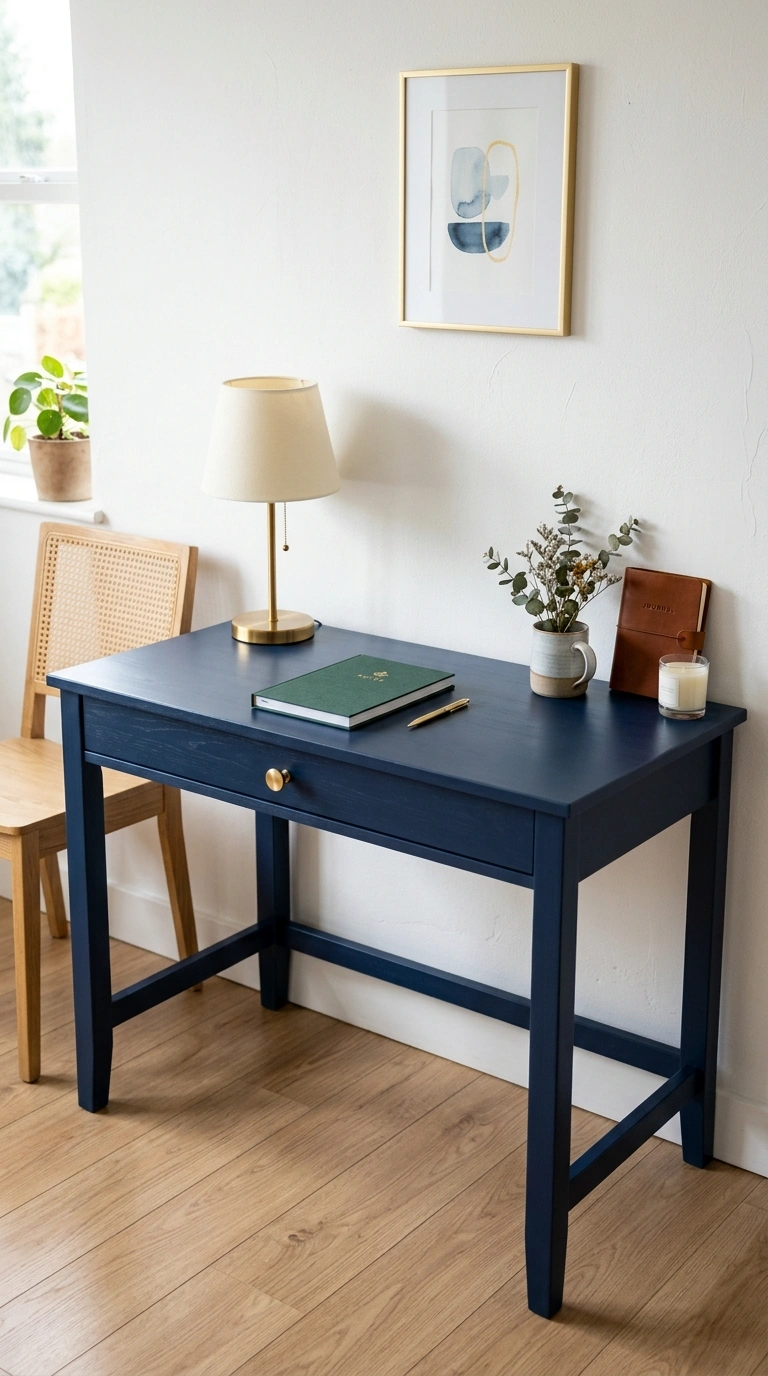
A navy blue desk brings a bold, grounded feeling to a bedroom without going as dark or heavy as black. Use a satin or eggshell finish paint rather than matte, since navy can look flat and lifeless without a little sheen to catch the light. Apply two to three coats for full, even coverage, since dark colors like navy often need an extra coat compared to lighter paints.
Once finished, pair the desk with gold or brass hardware, which stands out beautifully against the deep blue and adds a touch of shine. This desk works well as a statement piece in an otherwise neutral or white bedroom, where it becomes the one item your eye goes to first. It also holds up well over time, since navy tends to hide small scuffs and marks better than lighter colors, making it a smart pick for a desk that gets daily use.
6. Ombre Fade Desk
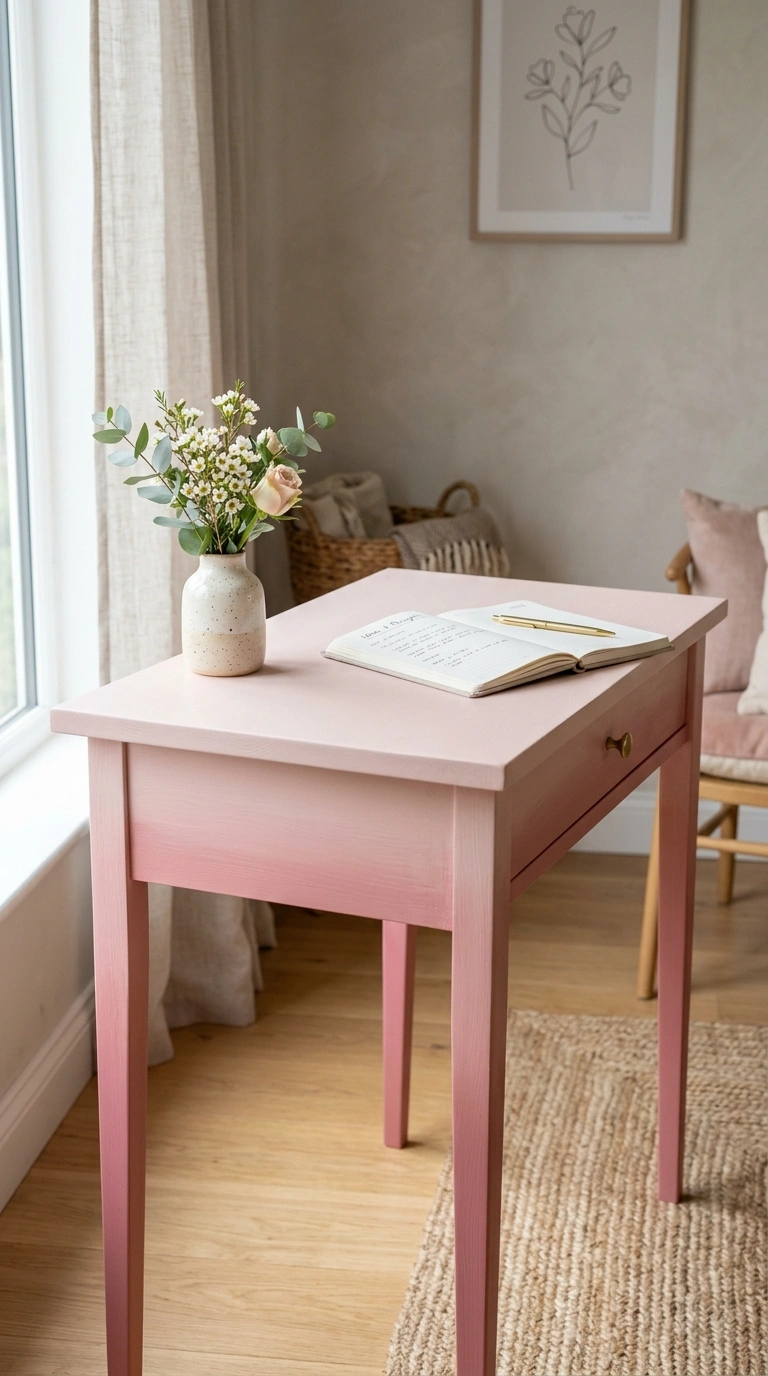
An ombre painted desk fades gradually from one color into another, creating a soft gradient effect that looks much harder to achieve than it actually is. Pick two shades of the same color family, like a light blush fading into a deeper rose, and mix them together in small amounts to create three or four in-between shades. Paint the lightest shade at the top of the desk and the darkest at the bottom, blending each new shade into the last with a slightly damp brush while the paint is still wet.
Work in small sections so the paint does not dry before you can blend it. This technique works best on a desk with a flat front, like a simple writing desk, rather than one with a lot of carved detail that would break up the fade. Once dry, seal the whole piece with a matte topcoat to protect the blended color from chipping.
7. Stenciled Floral Top
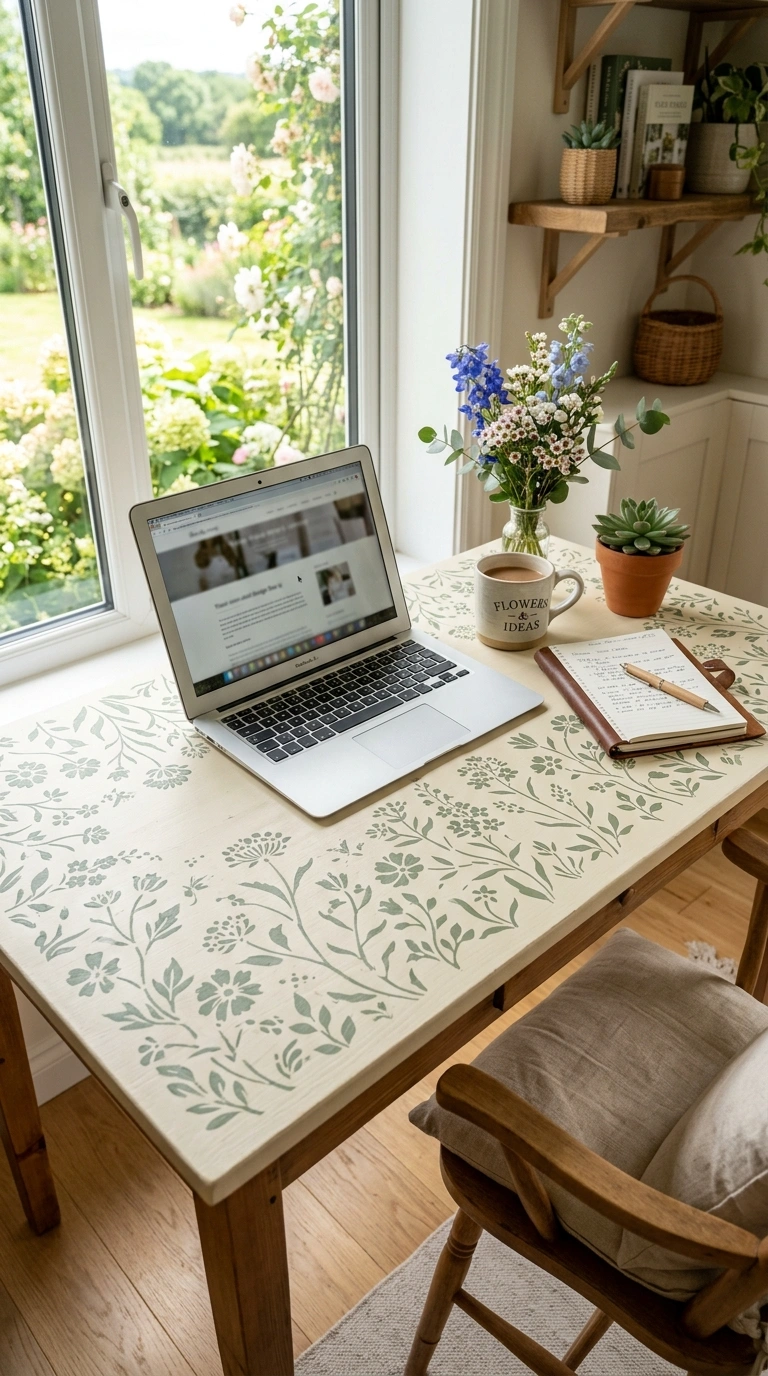
A stenciled floral pattern on the desktop adds a decorative touch without requiring any hand-painting skill, since the stencil does most of the design work for you. Start with a solid base coat in a neutral color like cream or soft gray, and let it dry fully before laying the stencil flat across the desktop. Use a stencil brush and a dabbing motion rather than brush strokes to keep the paint from bleeding under the stencil edges.
A single repeating floral motif in a soft color like sage or dusty blue tends to look more elegant than a busy, multicolor pattern. Once the stencil is removed and the paint is dry, seal the whole top with a clear polyurethane to protect the design from daily wear, since desktops get more direct contact than other painted furniture. This idea works especially well on a desk that already sits somewhere visible, since the pattern becomes a real conversation piece.
8. Terracotta Warm Desk
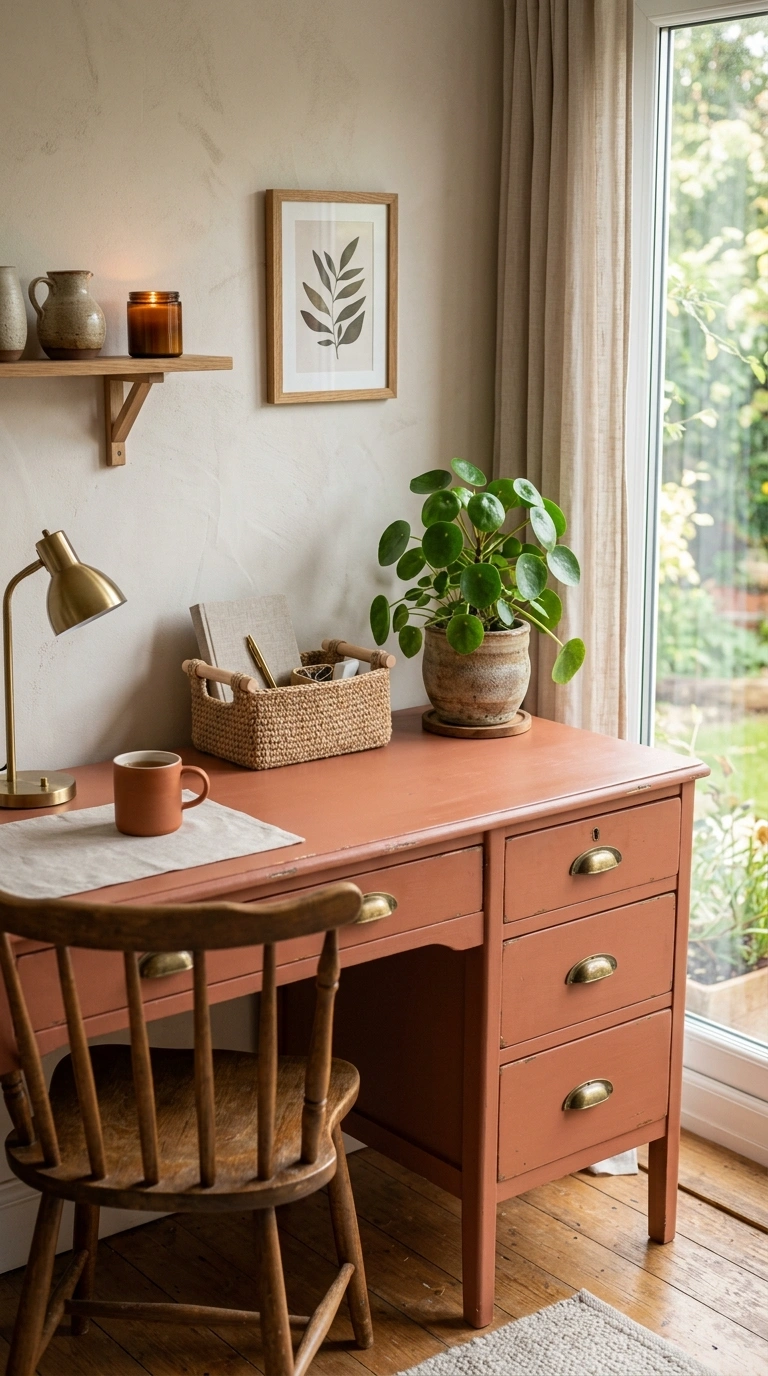
A terracotta paint color brings a warm, sunny feeling to a desk that works especially well in bedrooms with a lot of plants or natural wood furniture. Choose a paint with earthy, slightly muted undertones rather than a bright orange, since true terracotta leans more brown than orange. Apply in thin, even coats, sanding lightly between each layer to keep the finish smooth.
Leave the desk’s original wood or brass hardware in place if it already has a warm tone, since it will blend naturally with the terracotta color instead of clashing. This desk pairs especially well with woven baskets, rattan chairs, and green plants, since the warm color echoes those natural materials already found in boho and Mediterranean style rooms. Once sealed with a matte topcoat, the color tends to deepen slightly, so test a small section first if you want to double check the exact shade before committing to the whole desk.
9. Mint and Gold Accents
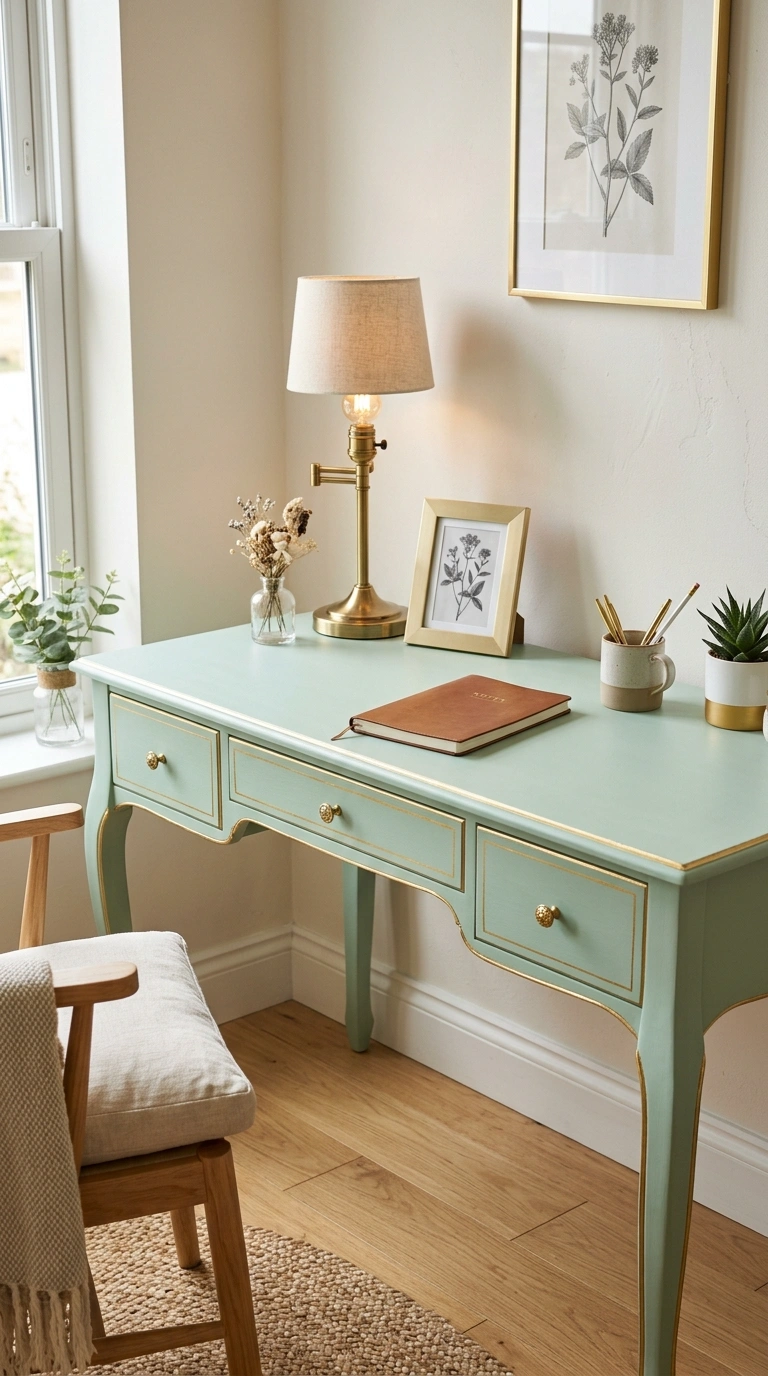
Pairing a soft mint green base with gold painted trim details creates a desk that feels fresh, a little glamorous, and still calm enough for a bedroom setting. Paint the whole desk in mint first, letting it dry completely, then use a small artist brush and gold paint pen to trace along the edges of drawers, the desk’s legs, or any decorative carved lines the piece already has. Keep the gold detailing thin and precise rather than heavy, since a little bit of gold goes a long way against a light color like mint.
Let the gold fully dry before sealing the entire desk with a clear matte topcoat to protect both colors from chipping. This desk works especially well in bedrooms with white or cream walls, since the mint color stays soft and does not compete with the wall behind it. Add a small gold desk lamp or frame nearby to tie the accent color together across the room.
10. Black Matte Modern Desk
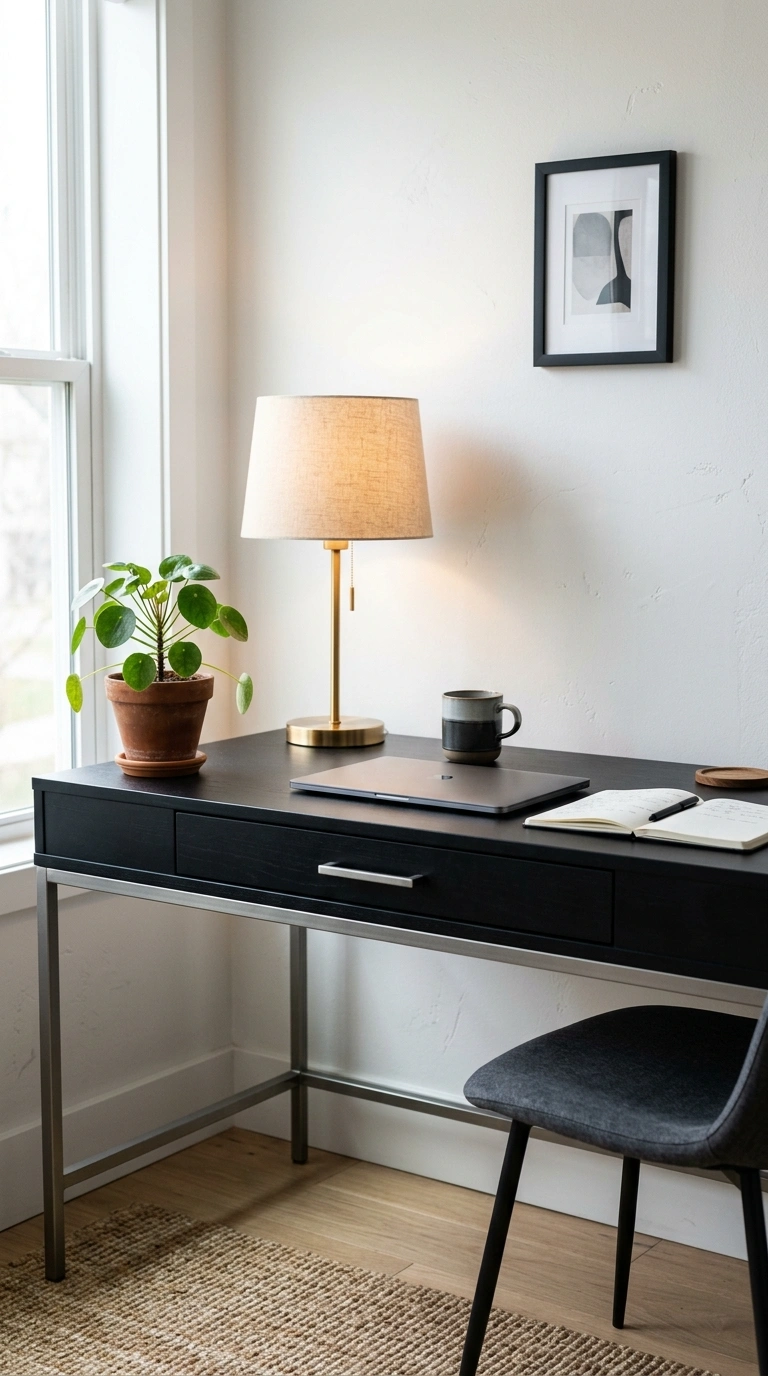
A fully black desk with a matte finish creates a sleek, modern look that works especially well for a minimalist bedroom or a shared workspace. Use a matte black paint, since a glossy black tends to show fingerprints and dust much more easily on a surface that gets daily use. Apply at least two coats, sanding lightly between coats with fine sandpaper to keep the finish smooth and free of brush marks.
Swap any plastic or gold hardware for simple black or brushed steel pulls so the whole piece feels consistent from top to bottom. This desk works best against a lighter wall color, like white, soft gray, or warm beige, since the contrast helps the black desk stand out as an intentional design choice rather than blending into a dark room. Add a single warm-toned lamp or a small plant on top to keep the space from feeling too stark or cold.
11. Pastel Yellow Cottage Desk
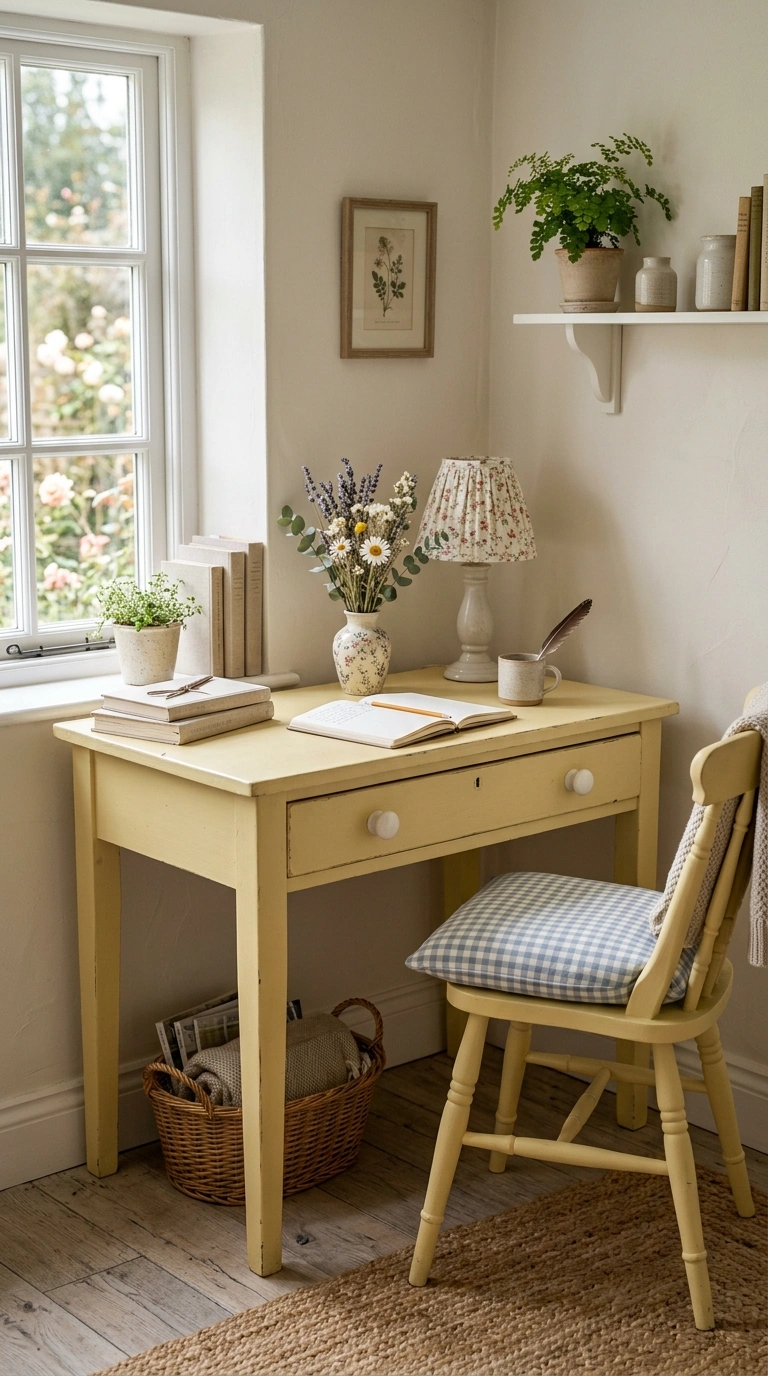
A pastel yellow desk adds a cheerful, cottage-style touch to a bedroom without feeling overly bright or busy. Choose a muted, buttery yellow rather than a bold or neon shade, since softer yellows tend to work better in a bedroom setting where you want the space to still feel restful. Paint the desk in two even coats, then consider leaving any carved detail or trim in a contrasting white to help those details stand out against the yellow.
Swap the hardware for simple white ceramic knobs, which keep the cottage feel consistent throughout the piece. This desk works especially well paired with gingham or floral fabric on a nearby chair cushion, since both details lean into the same cozy, cottage-inspired style. Seal the finished desk with a matte topcoat to help the color stay true over time, since yellow paints can sometimes yellow further or fade if left unsealed in a sunny room.
12. Distressed Farmhouse White
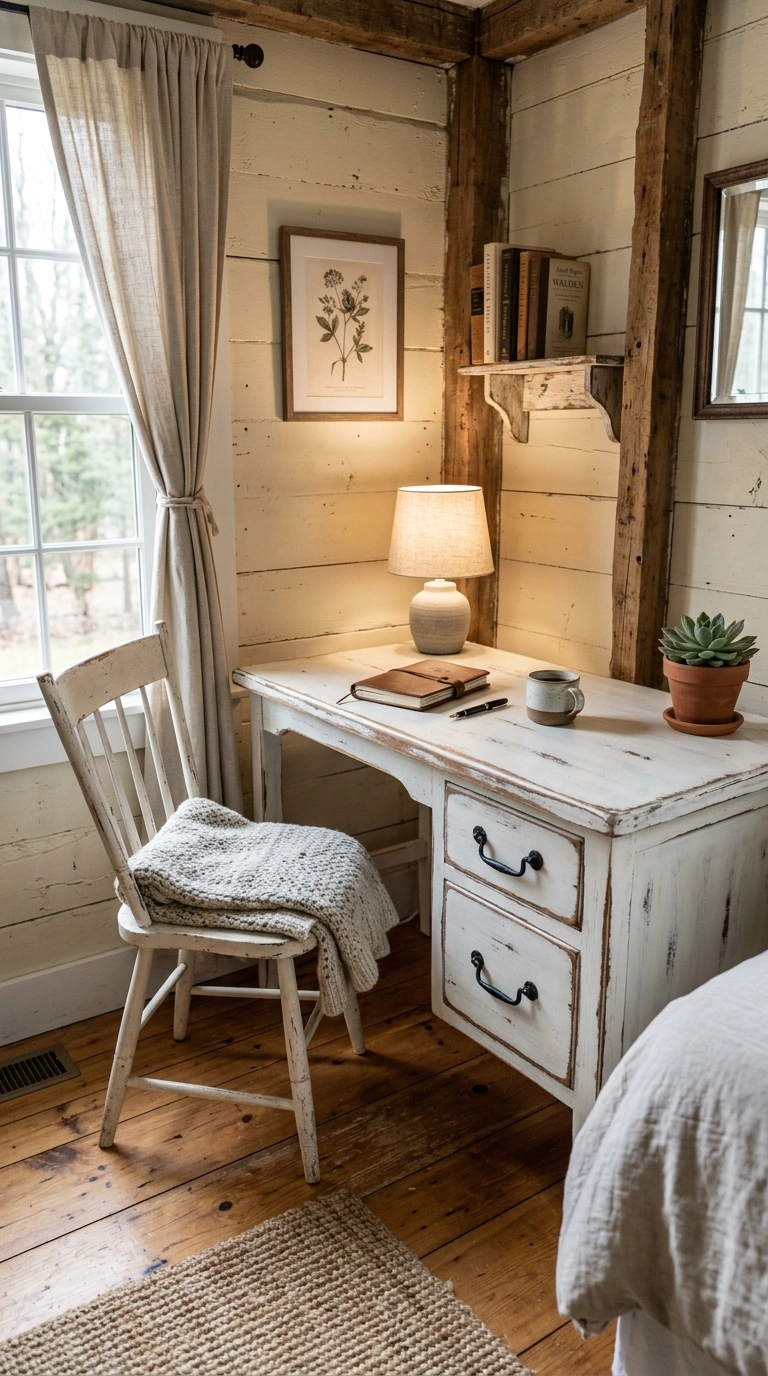
A distressed white finish gives a desk a worn-in, farmhouse look that feels collected over time rather than freshly painted. Start with a coat of a warm wood-toned paint, like a light brown or tan, and let it dry completely as your base layer. Once dry, paint a full coat of white chalk paint over the top, then use fine sandpaper to sand down the edges, corners, and any raised detail, allowing small patches of the brown base coat to show through.
Focus on the areas that would naturally wear down over years of use, like drawer edges and the front of the legs. Finish with a clear wax to seal the paint and add a slight soft sheen. This desk style works especially well in farmhouse or rustic bedrooms, and it pairs nicely with woven baskets, linen curtains, and simple black metal hardware for a look that feels lived-in rather than staged.
13. Charcoal Gray Minimalist
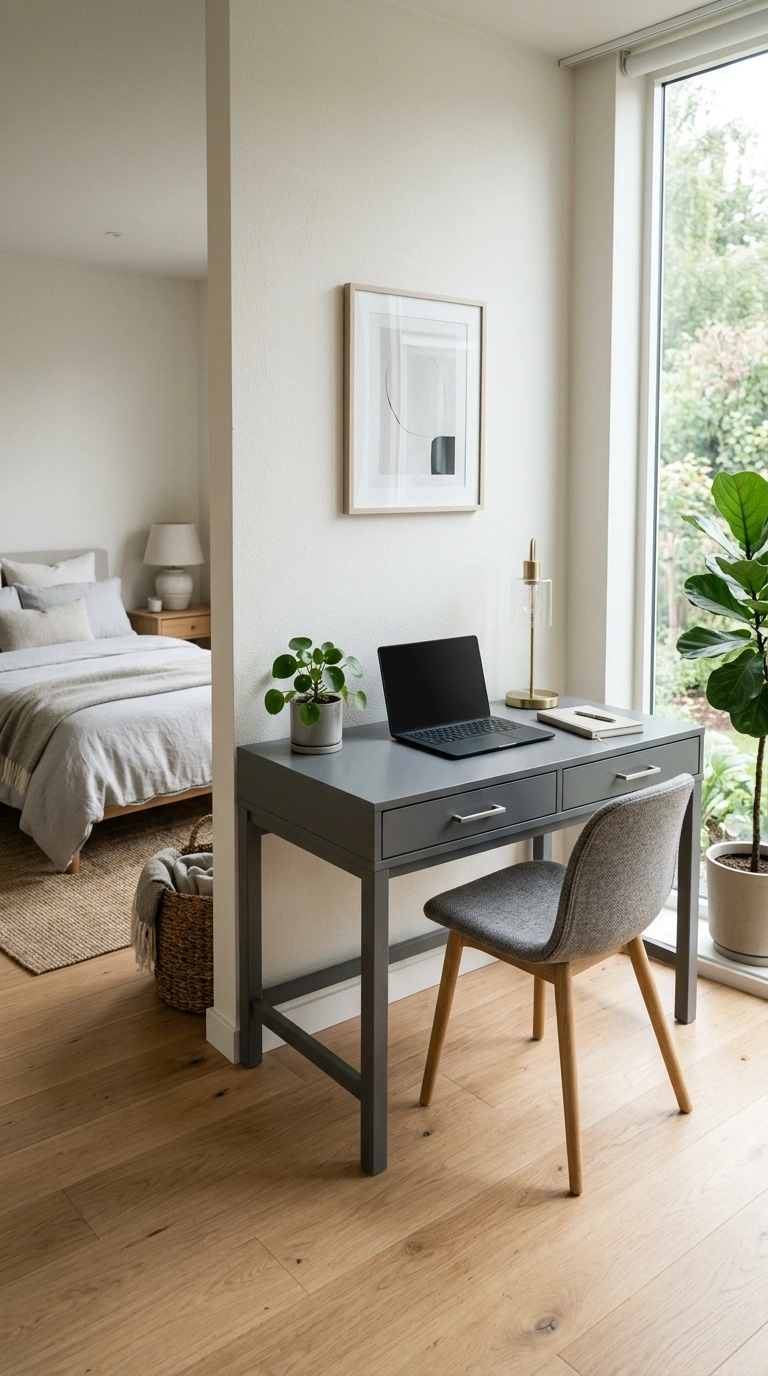
A charcoal gray desk offers a softer alternative to full black while still giving a bedroom a grounded, modern feel. Use a satin finish paint, since charcoal gray can look flat and chalky in matte but too shiny in high gloss, making satin the middle ground that works best. Apply two coats, sanding lightly between them, and pay close attention to drips along the desk’s edges since gray shows uneven coverage more than darker colors like black.
Pair the finished desk with simple brushed nickel or matte black hardware to keep the overall look clean and understated. This desk works particularly well in bedrooms with a Scandinavian or minimalist style, where the gray tone fits naturally alongside white walls, light wood floors, and simple linen bedding. Keep the desktop styling minimal, with just a lamp and a small tray, to let the gray color and the desk’s clean lines stay the focus of the corner.
14. Blush Pink Glam Desk
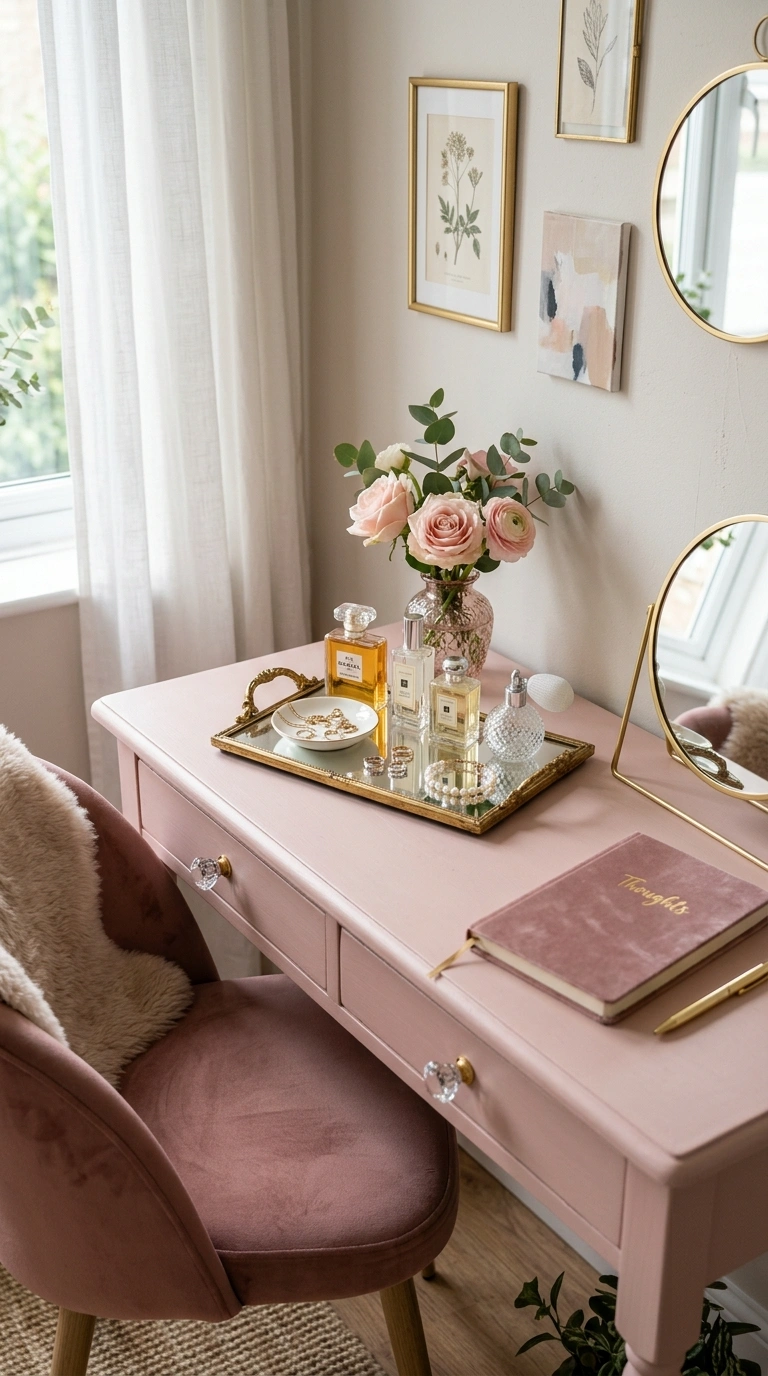
A blush pink desk paired with glam details like a mirrored tray or crystal knobs creates a soft, feminine focal point for a bedroom corner. Paint the desk in a light blush shade using a satin finish, which gives just enough shine to feel a little glamorous without looking overly glossy. Swap the original hardware for glass or acrylic knobs, which catch the light and add a subtle sparkle against the soft pink base.
Add a small mirrored tray on top to hold perfume bottles, jewelry, or desk supplies, since the mirrored surface reflects light back into the room and adds to the glam feel. This desk works especially well as a vanity-style piece in bedrooms with soft neutral or white walls, letting the blush color stand out clearly. Finish with a clear topcoat to protect the paint, since lighter colors like blush tend to show scuffs more easily than darker shades over time.
15. Sky Blue Coastal Desk
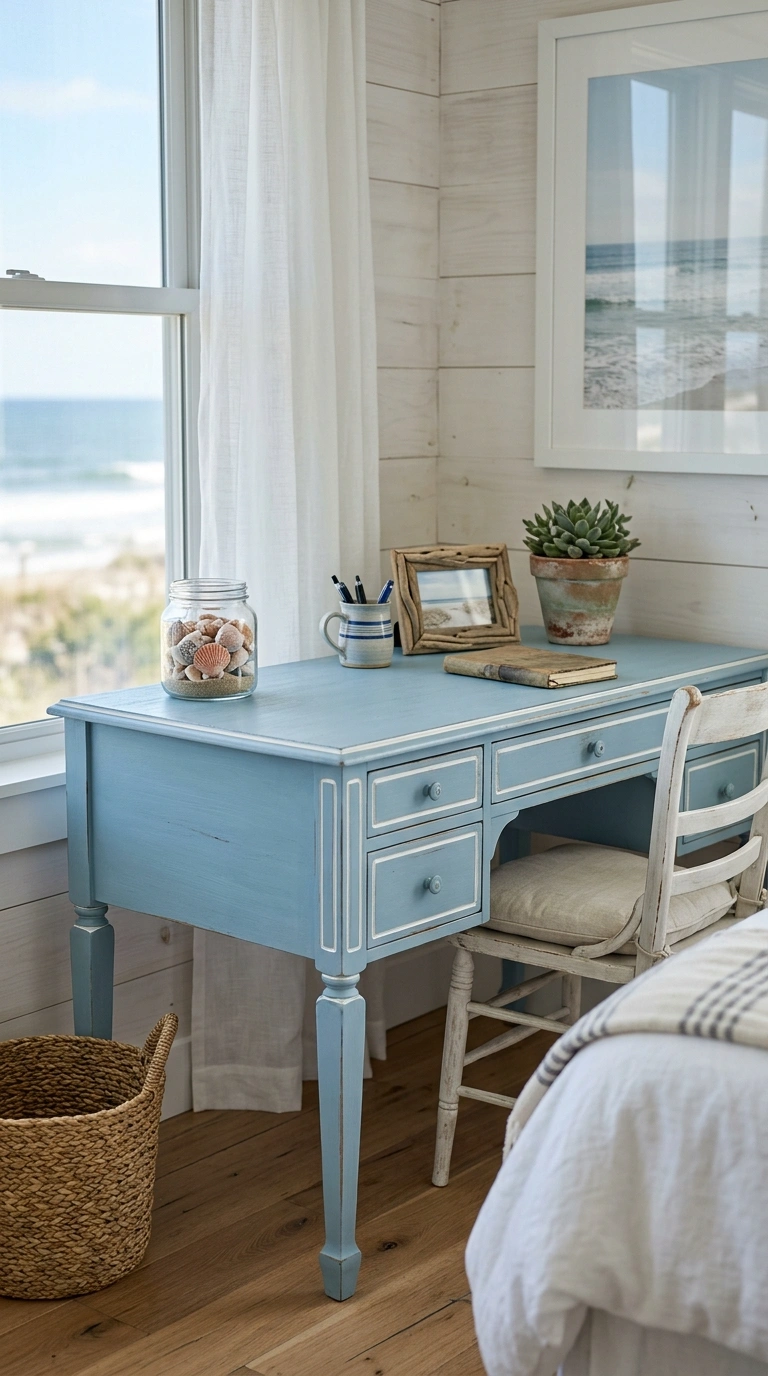
A sky blue desk brings a light, breezy coastal feel to a bedroom, especially when paired with white trim details or whitewashed wood accents. Choose a soft, slightly grayed-out blue rather than a bright or saturated shade, since muted coastal blues tend to feel calmer in a bedroom setting than bold primary colors. Paint the main body of the desk in blue, then use painter’s tape to mask off any trim or edge detail and paint those sections in a clean white for contrast.
Swap the hardware for simple white or weathered brass knobs to keep the coastal theme consistent throughout the piece. This desk pairs especially well with rope or rattan accents, striped textiles, and light wood flooring, since all of those details echo a relaxed beach house style. Seal with a matte topcoat once fully dry, and consider adding a small glass jar of seashells or beach glass on top to complete the look.
16. Emerald Green Statement
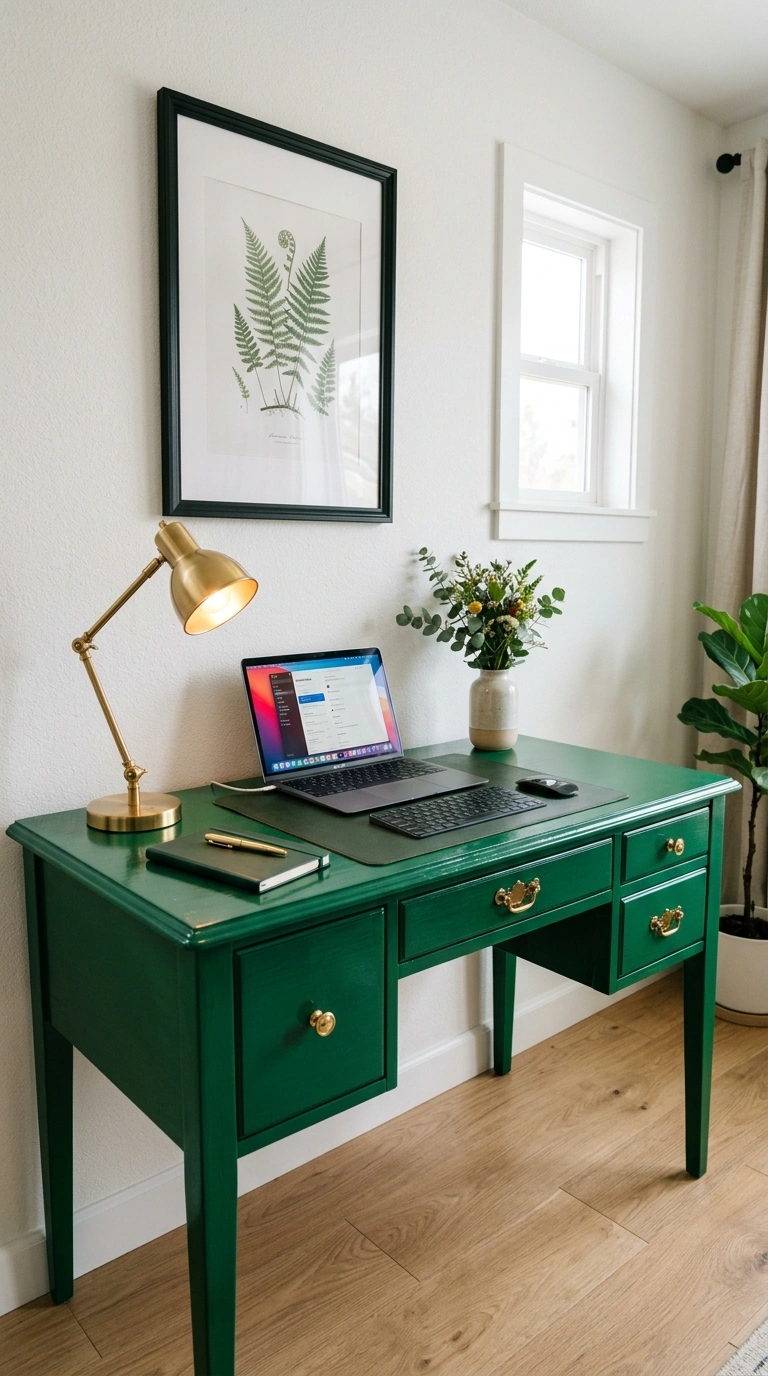
An emerald green desk makes a bold but still elegant statement, especially in a bedroom with mostly neutral or white surrounding decor. Use a satin or semi-gloss finish, since emerald tends to look richer and more jewel-toned with a bit of shine rather than a flat matte finish. Apply at least two coats for full coverage, since deep greens like emerald can sometimes streak if applied too thin.
Pair the finished desk with gold or brass hardware, which plays beautifully against the green and adds a slightly luxurious feel to the whole piece. This desk works especially well as the one bold item in an otherwise simple, neutral bedroom, where it becomes an instant focal point without needing any other bold colors in the room to support it. Add a single framed print or a small brass lamp nearby to echo the gold tones from the hardware and tie the whole corner together.
17. Two-Tone Drawers Contrast
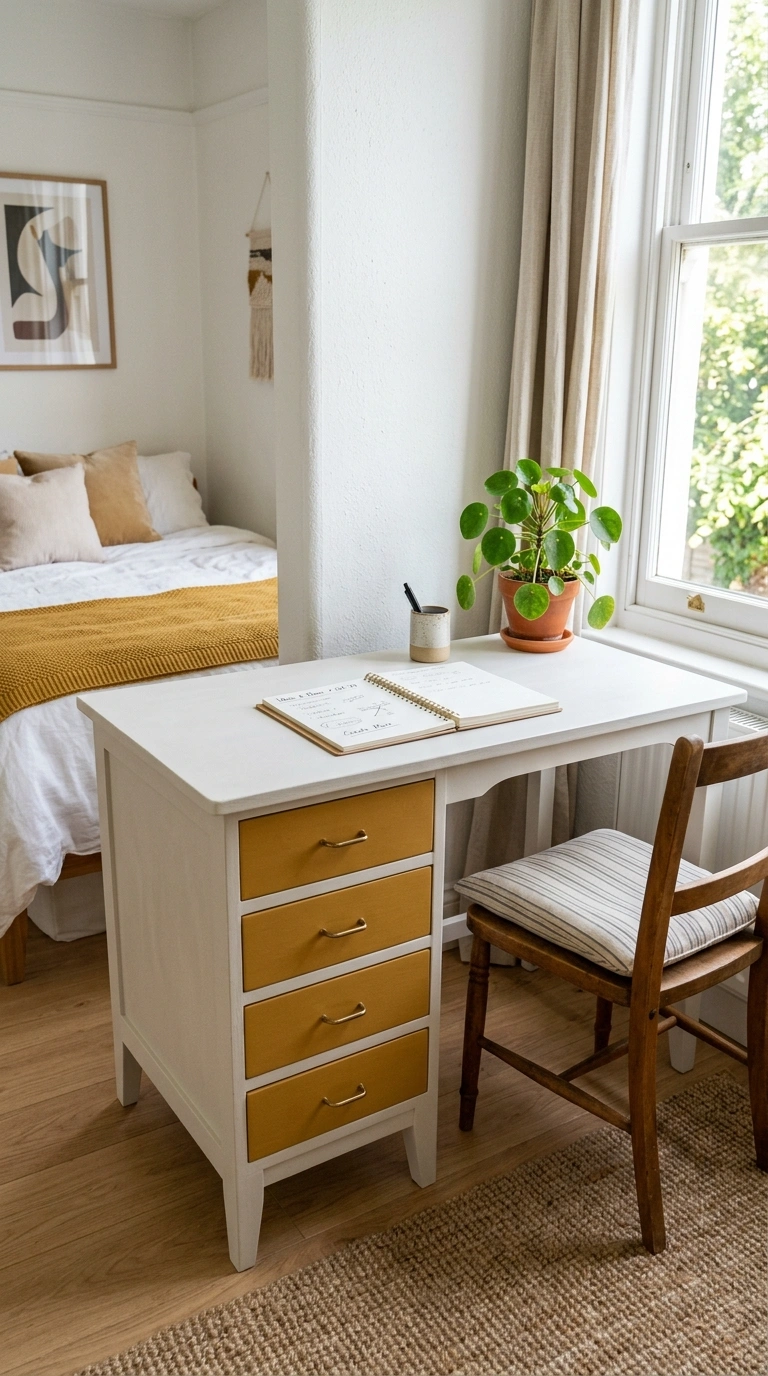
Painting the desk’s drawers a different color than the rest of the frame creates a fun, two-tone look that feels custom-made rather than store-bought. Paint the main body and legs of the desk in a neutral color like white or soft gray, then choose a bolder contrasting color, like coral or mustard yellow, for just the drawer fronts. Tape off the surrounding frame carefully before painting the drawers to keep the lines clean and crisp between the two colors.
This look works well whether the desk has one long drawer or several smaller ones, since each drawer front becomes its own small pop of color against the neutral base. Once both colors are fully dry, seal the entire piece with a matte topcoat. This idea is a great way to use up leftover paint from another project, since you only need a small amount of the accent color to cover the drawer fronts.
18. Marbled Paint Effect Desk
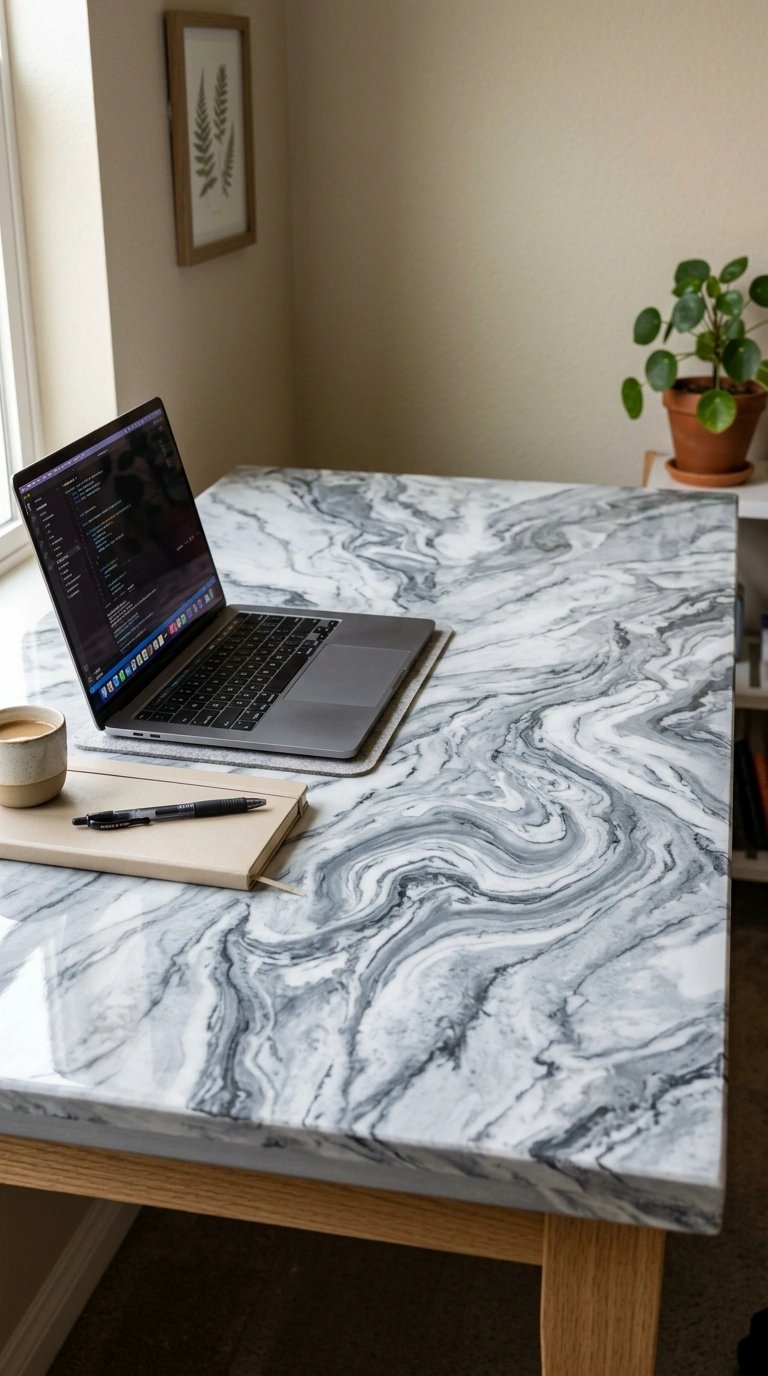
A marbled paint effect gives a desk the look of real stone without the weight or cost, and it works especially well on a flat desktop surface. Start with a white or light gray base coat and let it dry completely. Mix a small amount of gray or black paint with water until it is thin and runny, then drip it across the surface in loose, uneven lines using a small brush or feather.
Gently blend the lines with a dry brush or a piece of plastic wrap, working quickly before the paint sets, to create the soft veining look real marble has. Let the top dry fully, then seal with several coats of clear polyurethane to protect the design and give it a smooth, glass-like finish. This technique works best on desks with a flat, simple top rather than a lot of carved edges, since the marbled pattern needs a clean surface to really stand out.
19. Checkerboard Painted Top
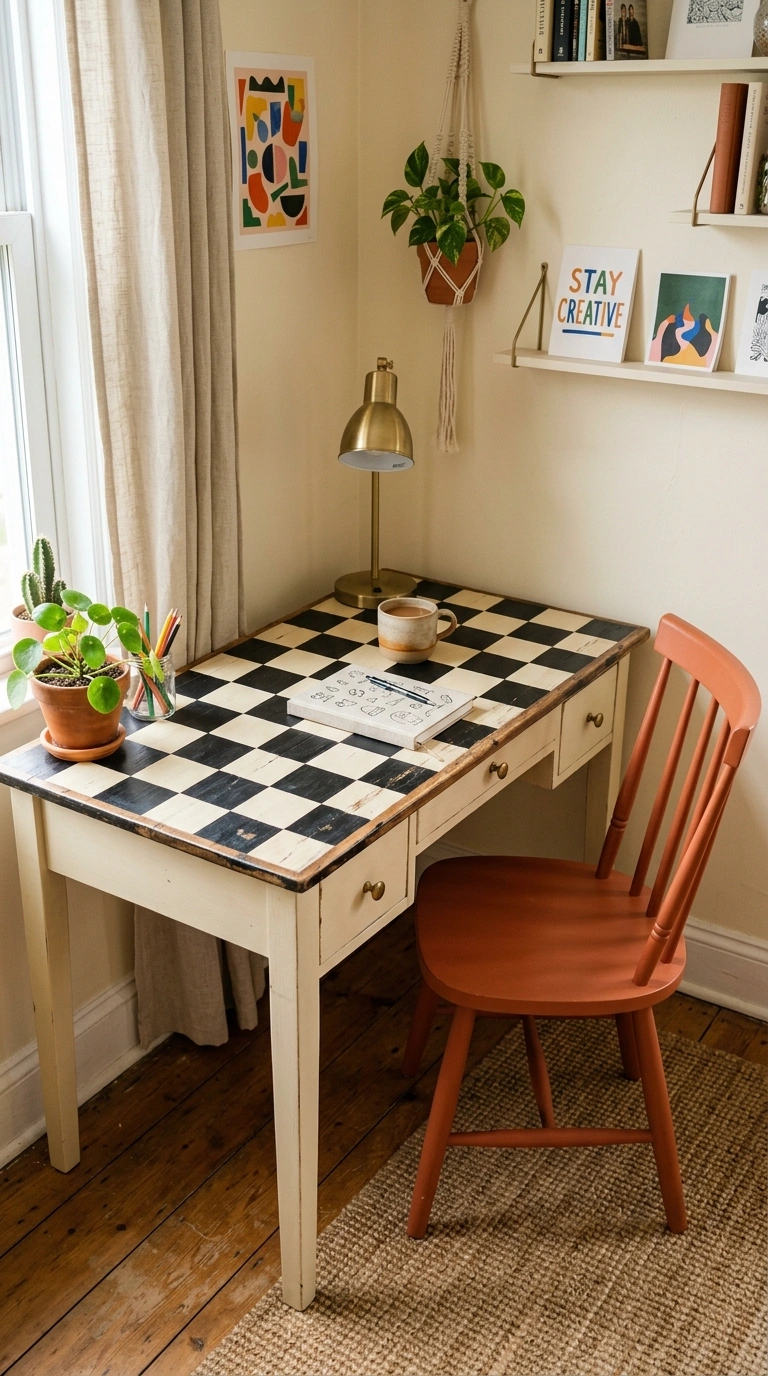
A checkerboard pattern painted across the desktop adds a fun, graphic touch that works especially well in a more playful or eclectic bedroom. Start with a base coat in one of your two chosen colors, like white or cream, and let it dry fully. Measure and mark even squares across the desktop with a pencil and ruler, then tape off every other square using painter’s tape.
Paint the taped sections in your second color, like black, navy, or forest green, and let it dry before peeling off the tape to reveal crisp, clean lines. Seal the entire top with a clear polyurethane once both colors are fully cured, since the desktop will need extra protection from daily scratches. This design pairs especially well with a plain, solid-colored desk base so the checkerboard top stays the main focus, and it looks great paired with a simple chair in one of the two chosen colors.
20. Cream and Brass Desk
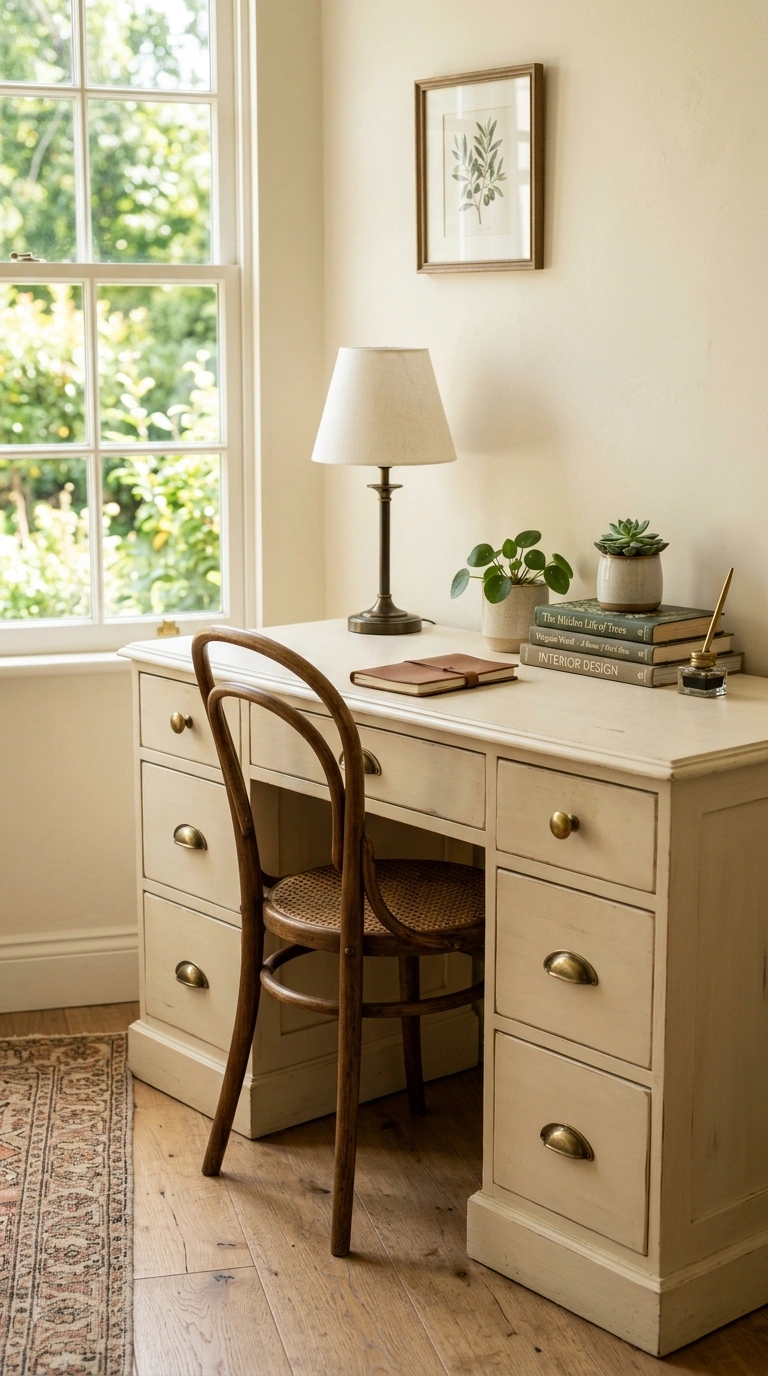
A cream colored desk paired with brass hardware creates a warm, timeless look that fits almost any bedroom style, from traditional to modern. Choose a warm cream rather than a stark white, since cream tends to feel softer and pairs more naturally with wood floors and warm-toned walls. Apply two even coats, sanding lightly between them for a smooth finish, then swap any existing hardware for brass knobs or pulls, which add a subtle shine without feeling too flashy.
This combination works especially well in bedrooms with wood furniture nearby, since the cream color bridges the gap between white and natural wood tones. Seal the desk with a matte or satin topcoat depending on how much shine you want in the final finish. This desk style tends to photograph beautifully in natural light, making it a strong choice if you plan to style the corner for photos or simply want a desk that feels classic for years to come.
21. Lavender Purple Desk
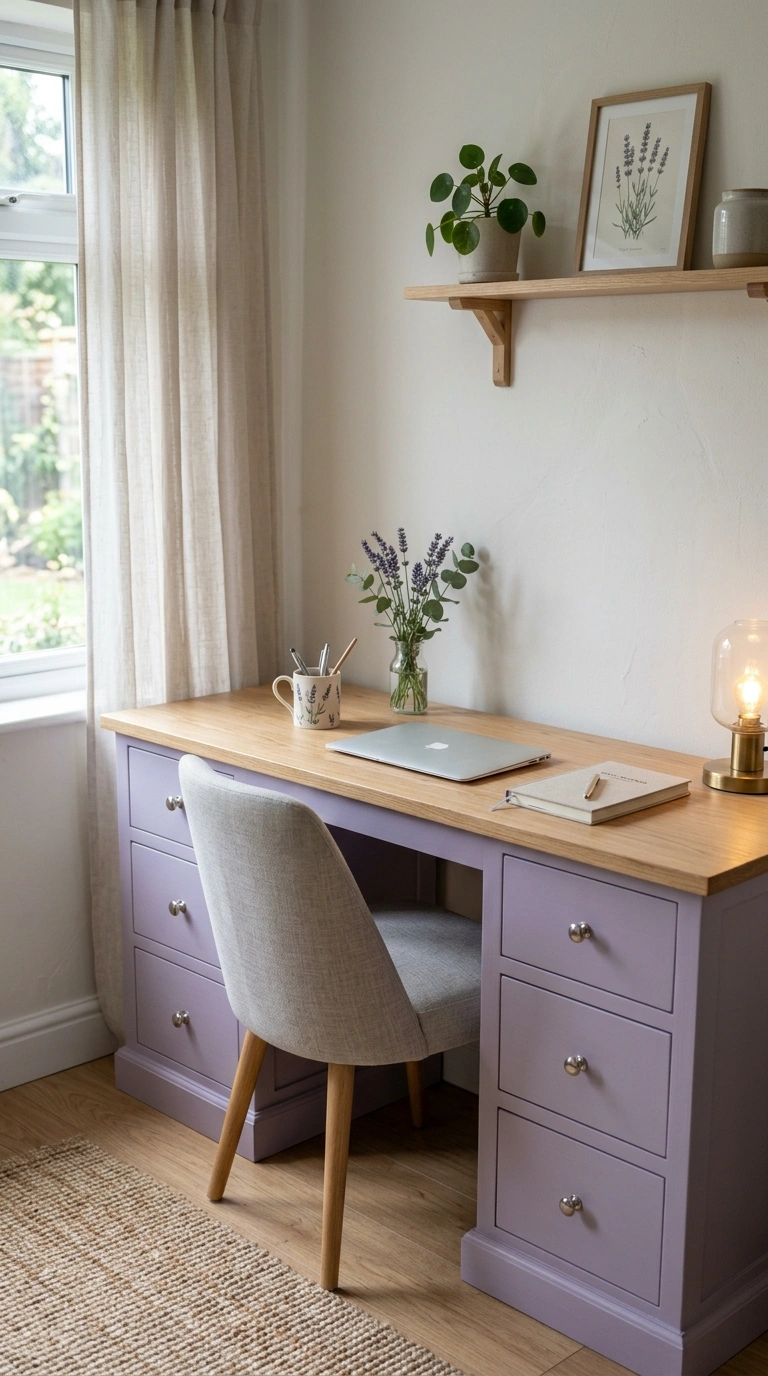
A soft lavender desk adds a gentle pop of color to a bedroom without feeling as bold as a true purple or violet shade. Choose a muted, grayed-down lavender rather than a bright or saturated purple, since the softer tone tends to feel more calming in a space meant for rest. Apply the paint in two thin coats, and consider leaving the desk’s top surface in natural wood if you want a bit of contrast against the painted legs and drawers.
Swap the hardware for simple silver or brushed nickel knobs, which feel cooler and pair better with lavender than warm gold tones. This desk works especially well in bedrooms with white or soft gray walls, letting the lavender color stand out as a soft accent rather than clashing with other tones in the room. Finish with a matte sealant to protect the color while keeping the overall look soft and understated.
22. Rustic Ochre Yellow Desk
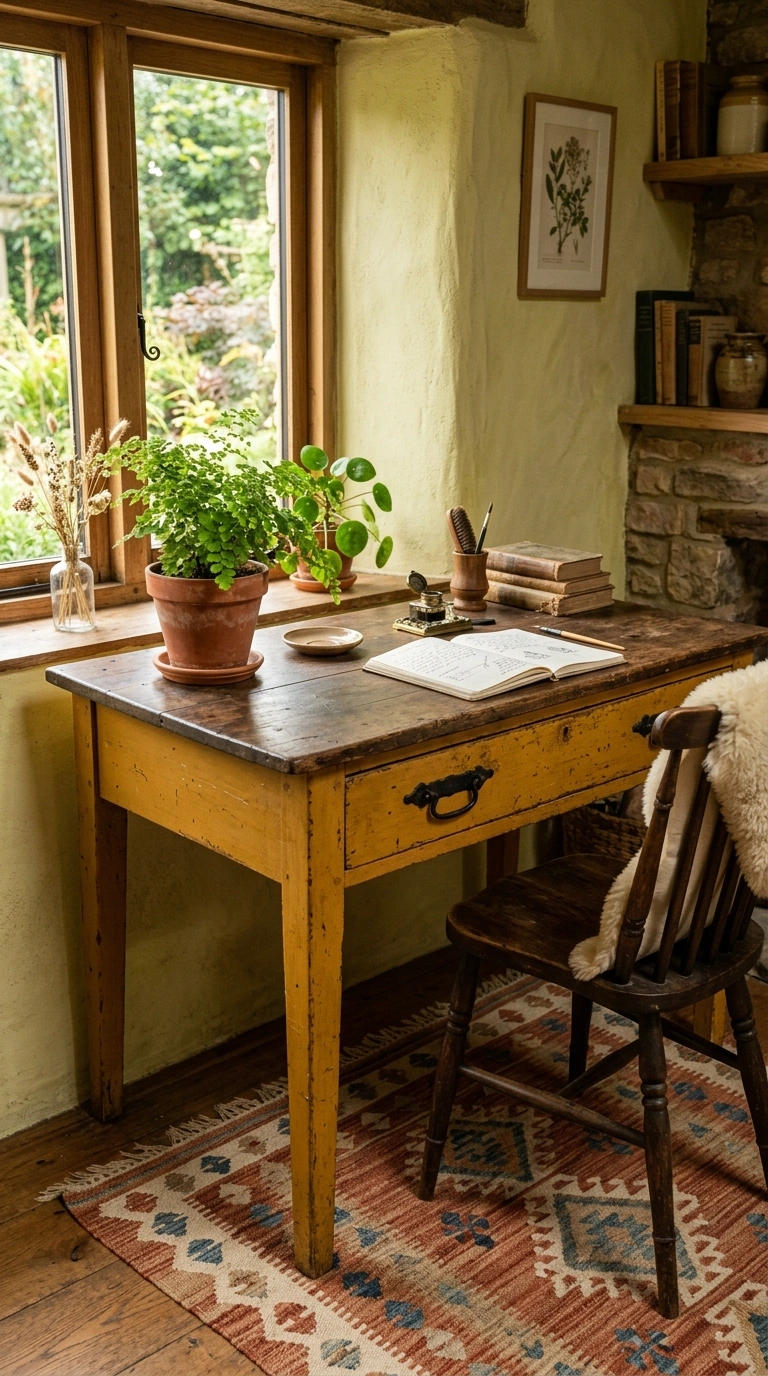
An ochre yellow desk brings an earthy, rustic warmth to a bedroom, especially when paired with natural wood accents or woven textiles nearby. Choose a deep, slightly muted yellow rather than a bright lemon shade, since ochre tones tend to feel more grounded and pair better with warm neutral walls. Apply the paint in two coats, sanding lightly between them, and consider leaving any wood trim or edge detail unpainted if the desk has natural wood accents you want to keep visible.
Swap the hardware for simple black iron or aged brass knobs, which feel fitting with the earthy color palette. This desk works especially well in bedrooms with a rustic or Mediterranean style, paired with terracotta pots, woven rugs, and warm wood furniture. Seal with a matte topcoat once fully dry, and let the desk cure for a few days before regular use to avoid any marks from daily wear settling into the fresh paint.
23. Colorblock Geometric Desk
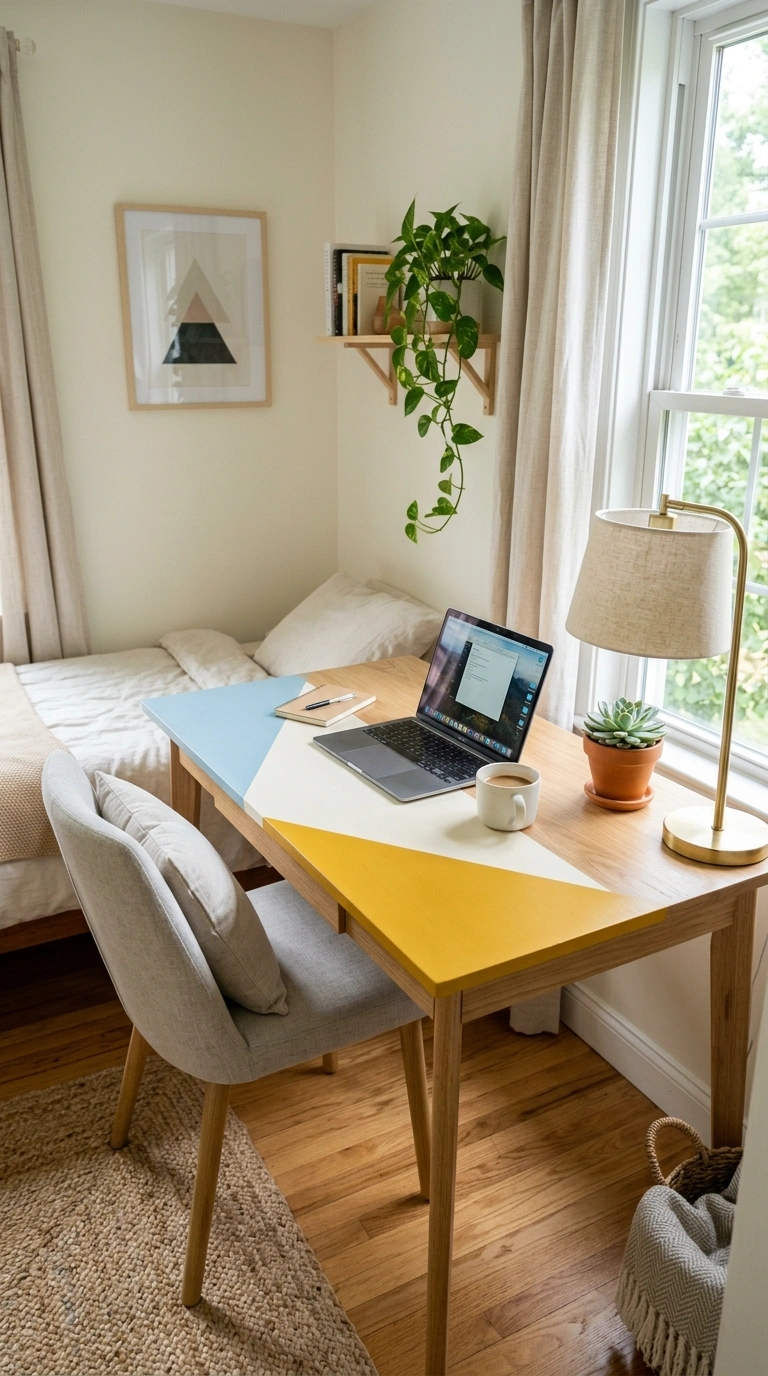
A colorblock design uses two or three solid colors divided into clean geometric sections across the desk, creating a bold and modern look. Choose colors that feel intentional together, like a soft blue, warm white, and mustard yellow, and sketch out your sections on paper first before taping off the design on the actual desk. Use painter’s tape to create sharp, straight lines between each color block, whether you divide the desk vertically, horizontally, or diagonally across the front and legs.
Paint one color at a time, letting each section dry fully before taping off the next to prevent the colors from bleeding together. Once all sections are painted and dry, seal the entire piece with a clear matte topcoat. This design works especially well on a simple, boxy desk shape, since the clean lines of the furniture help the geometric color sections read clearly rather than looking cluttered or confusing.
24. Metallic Copper Accent Desk
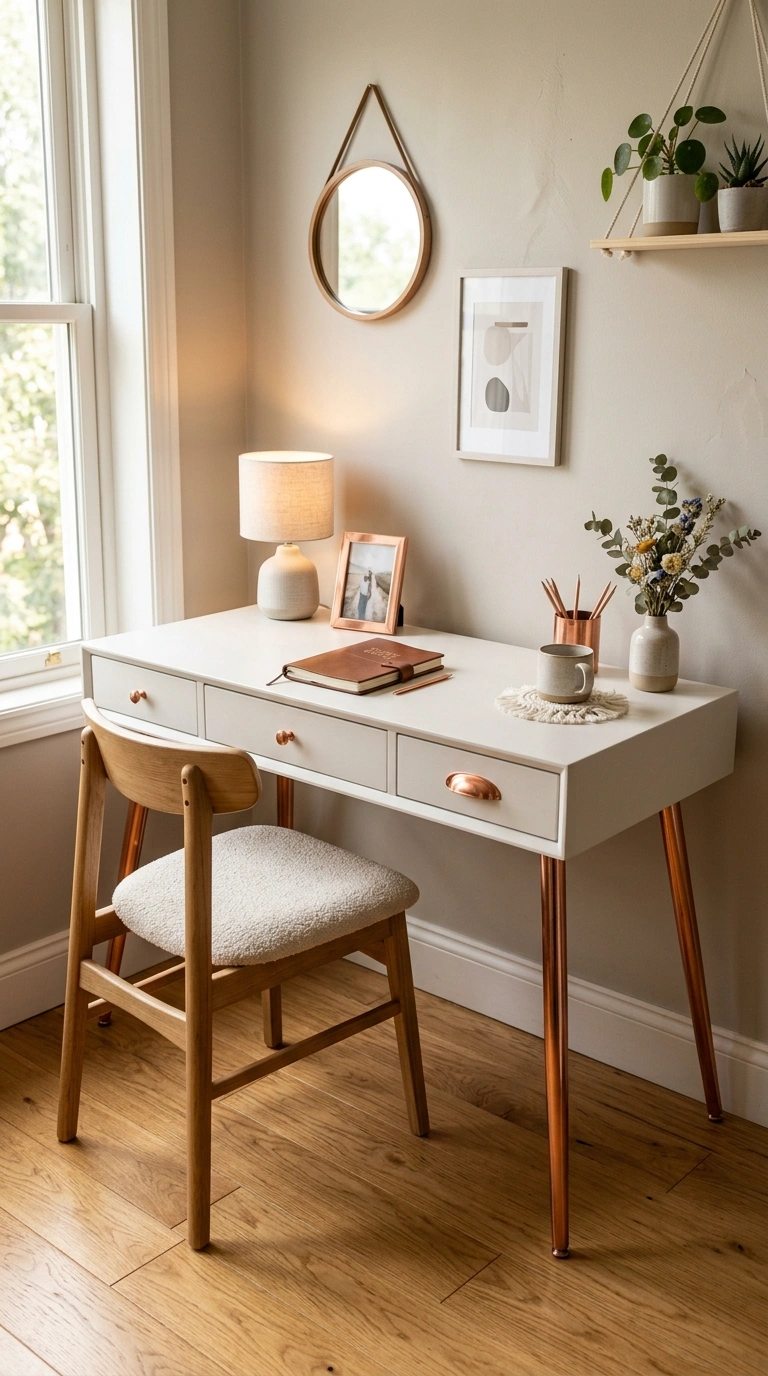
A metallic copper finish on just the desk’s legs or hardware adds a warm, shiny accent to an otherwise simple painted desk. Paint the main body of the desk in a solid neutral color like white, black, or soft gray, then use a metallic copper paint on the legs, drawer pulls, or any decorative trim the desk already has. Metallic paints often need two to three thin coats to build up a full, even shine, so apply light layers rather than one thick coat to avoid drips.
This combination works especially well in bedrooms with warm wood floors or brass light fixtures, since the copper tone ties those existing warm metals together with the new painted desk. Seal the metallic sections with a clear topcoat made for metallic finishes, since regular sealants can sometimes dull the shine. This desk style adds a bit of glamour to a simple, neutral colored piece without repainting the entire surface.
25. Soft Gray Scandinavian Desk
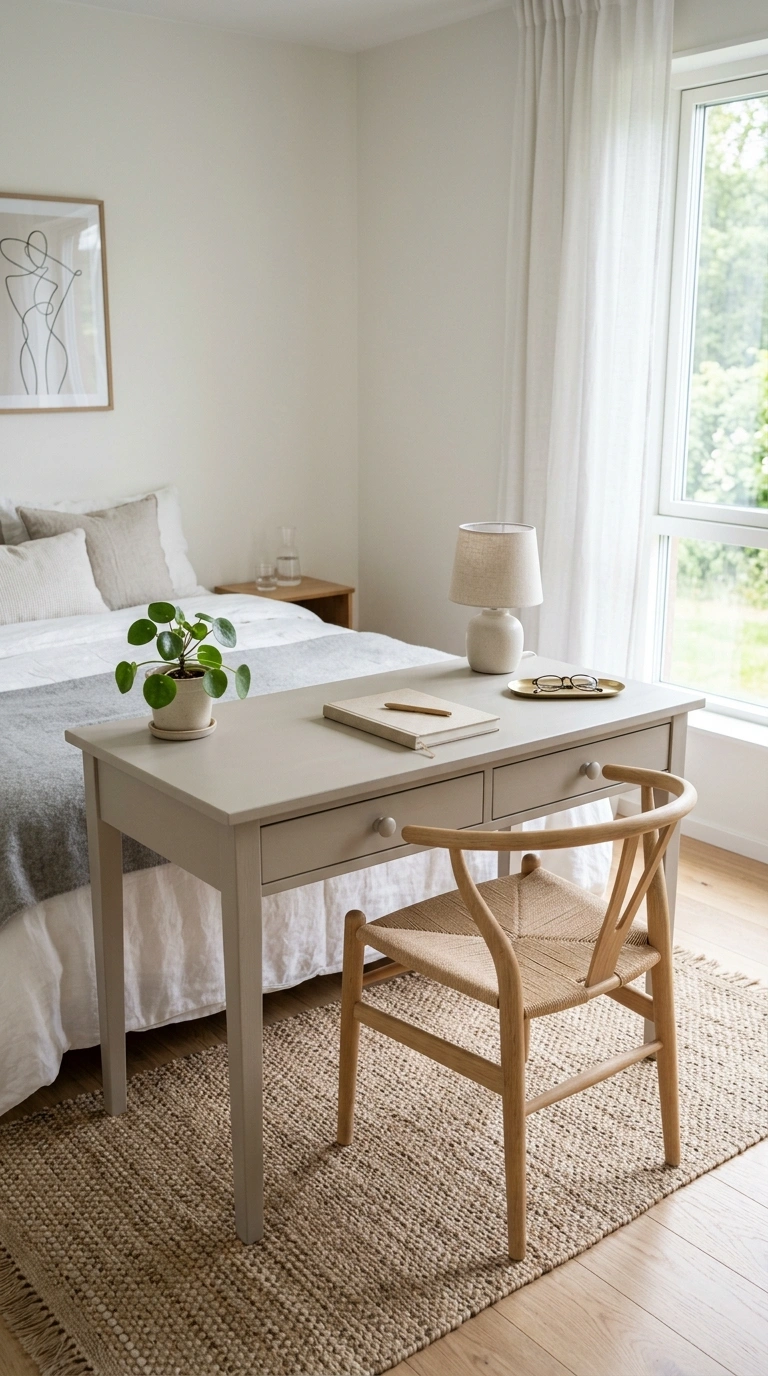
A soft gray desk fits naturally into a Scandinavian style bedroom, where light colors, simple shapes, and natural materials tend to lead the design. Choose a light, slightly warm gray rather than a cool or blue-toned gray, since warmer grays tend to feel softer next to light wood floors and white bedding. Apply two even coats using a matte finish, which fits the understated, calm feel that Scandinavian style rooms usually aim for.
Keep the hardware simple, either matching the gray with painted wood knobs or adding a small touch of black metal for contrast. This desk works especially well paired with a simple wood or white chair, a woven rug underneath, and minimal styling on top, since Scandinavian design tends to favor open, uncluttered surfaces. Seal with a matte topcoat once dry, and avoid adding too many decorative items on top of the desk, since the style works best when the space still feels calm and simple.
A can of paint and a weekend afternoon can turn almost any desk into something you actually want to sit at every day. Whether you go with a soft sage green, a bold navy, or a fun checkerboard top, the process is mostly the same, clean the desk, paint in thin coats, and seal it when you are done. Pick a color that fits your room, and do not be afraid to try a technique like ombre or stenciling if you want something a little different. Your old desk still has a lot of life left in it.