10 Modern Yoga Room Decor Ideas for a Calm and Peaceful Space
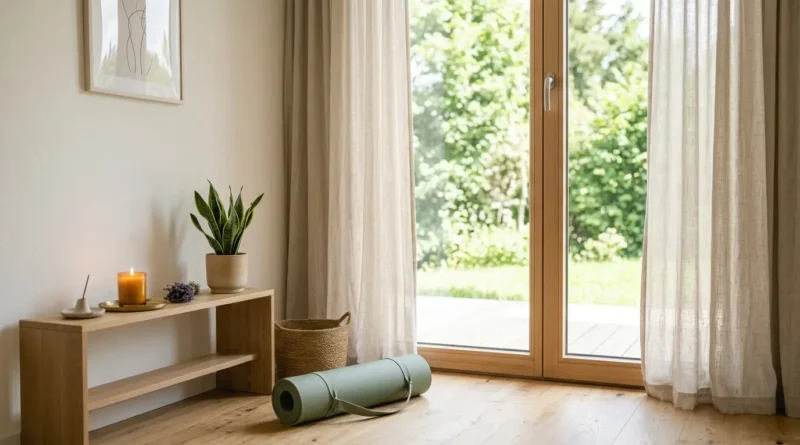
Picture a small room with soft morning light coming through a bare window, a folded mat resting against the wall, and nothing else fighting for your attention. That quiet feeling is what a good yoga room should give you the moment you step inside. Many people think a home yoga space needs special equipment or a huge room, but honestly, it needs the opposite. It needs less. A calm space works best when the color palette stays quiet, the clutter stays out of sight, and a few natural touches like wood, plants, or soft light are given room to breathe. Whether you have a spare bedroom, a corner of your living room, or a converted garage, these 10 ideas will help you shape a space that actually helps you slow down and focus, rather than one more room filled with stuff.
1. Neutral Wall Palette
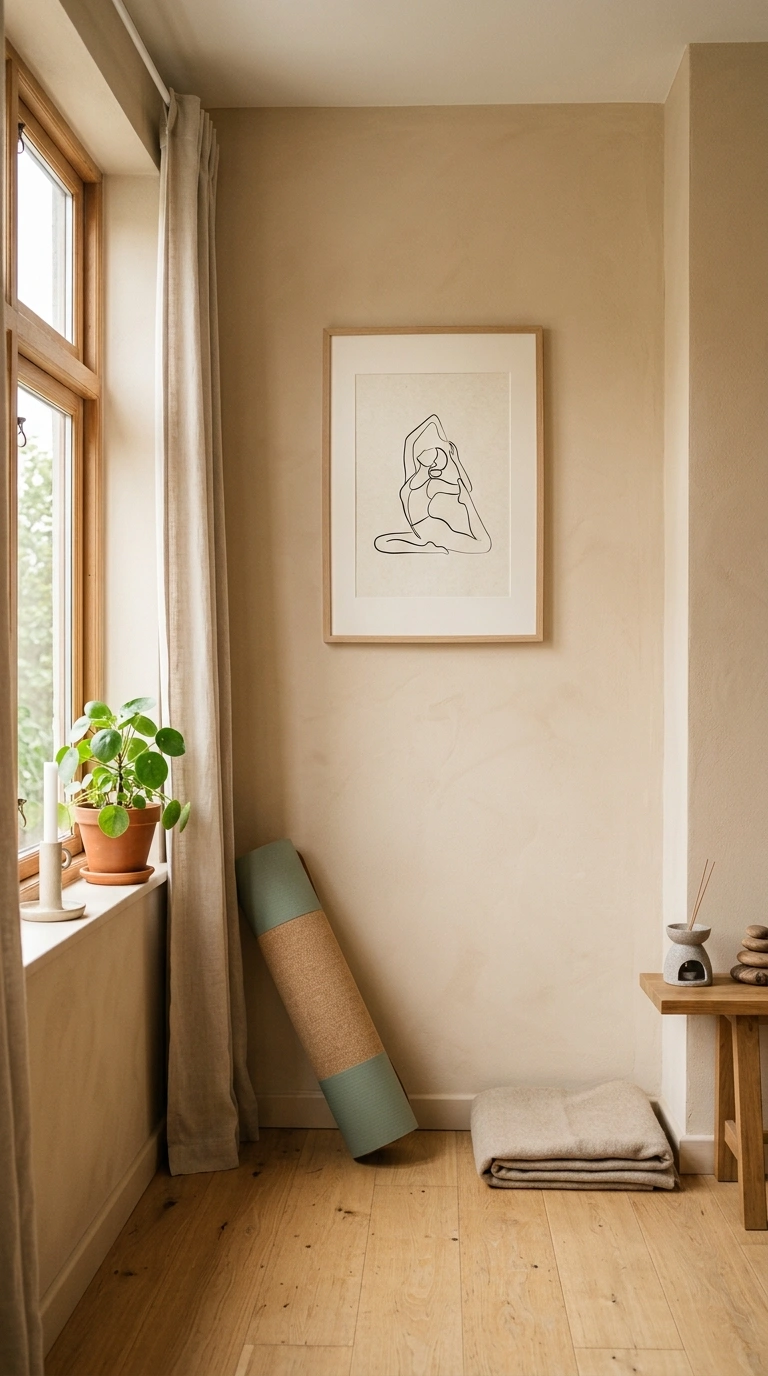
The walls set the tone for the entire room, so choosing a soft, neutral color is one of the most important decisions you can make for a calm yoga space. Shades like warm white, soft sand, light greige, or pale sage work especially well, since they reflect natural light gently without feeling stark or clinical. Avoid bright or saturated colors, which can feel stimulating rather than calming during practice.
If you rent your space or prefer not to paint, a large canvas or fabric wall hanging in a similar neutral tone can create the same effect without any permanent change. Keep the walls mostly bare aside from one or two simple pieces, such as a small framed print or a woven wall hanging, so the eye has somewhere quiet to rest. This single change often makes the biggest difference in how calm a room feels the moment you walk in for practice.
2. Bright Natural Corner
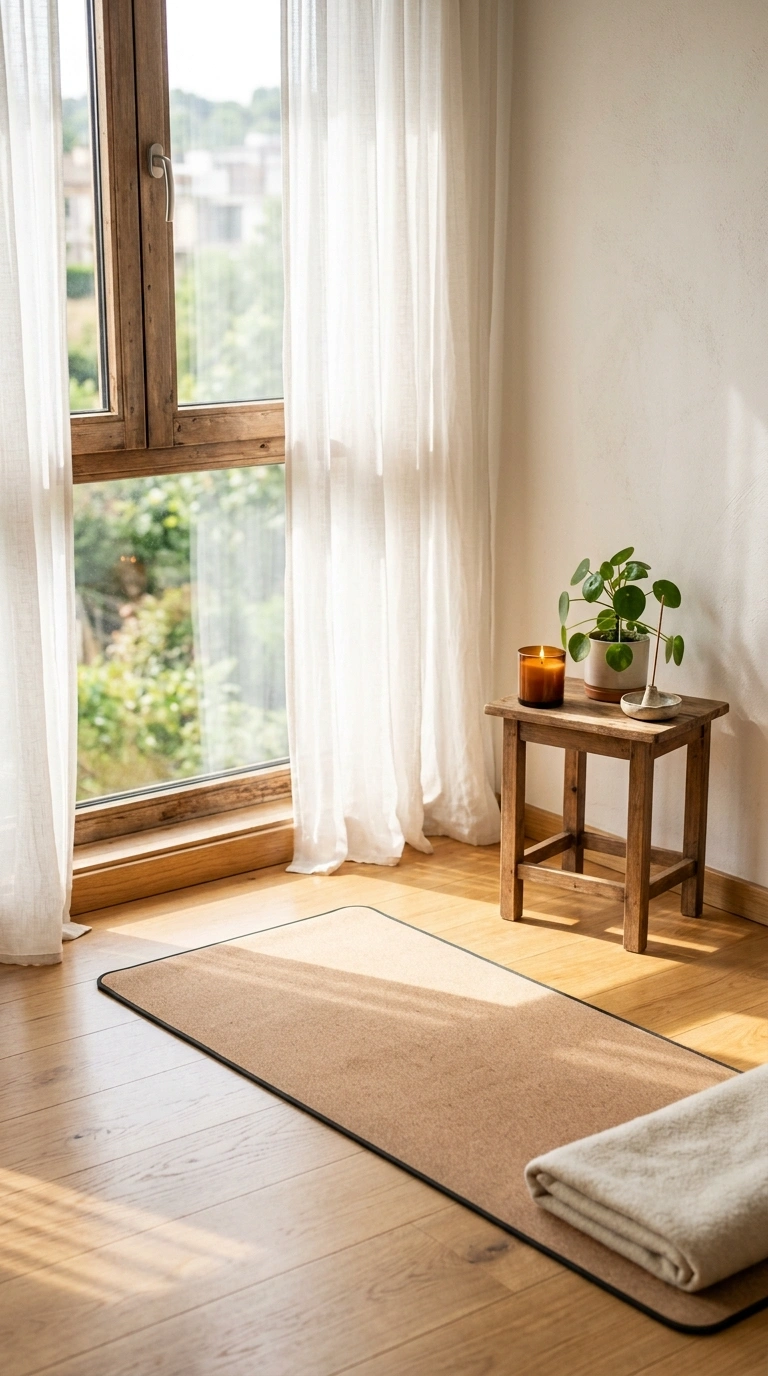
Positioning your yoga space near a window with plenty of natural light makes a noticeable difference in how the room feels throughout the day. If possible, place your mat facing the window so you can practice with daylight in front of you rather than behind you, which tends to feel more grounding. Use sheer, light-colored curtains rather than heavy drapes, since they soften harsh sunlight without blocking it out completely.
If your space does not get much natural light, a few well placed floor lamps with warm, dimmable bulbs can create a similar soft glow, especially for evening sessions. Avoid overhead fluorescent lighting, which tends to feel harsh and clinical rather than calming. A small side table near the window can hold a candle or a plant, adding a bit of warmth to the corner without cluttering the practice area itself.
3. Woven Mat Storage
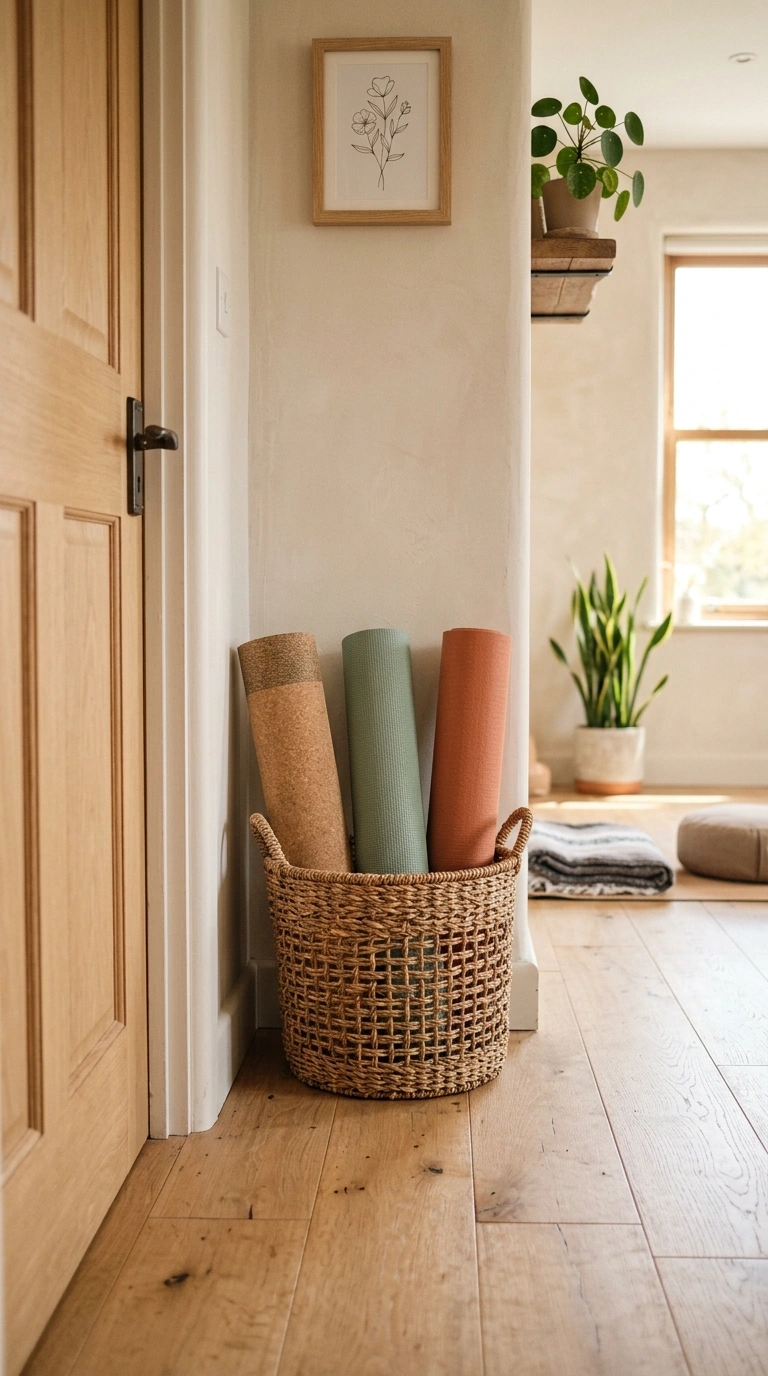
A simple woven basket or rattan stand near the door gives your yoga mats, blocks, and straps a tidy home instead of leaving them stacked in a corner. Choose a basket with natural texture, like seagrass or rattan, since it adds warmth to the room without competing with the calm color palette around it. Roll mats loosely rather than folding them, and stand them upright in the basket for an easy grab and go setup.
This idea keeps the floor space clear, which matters a lot in a small practice area where every square foot counts. If you use blocks or straps regularly, a second smaller basket or a simple wooden tray nearby keeps those items sorted too. Placing this storage near the door means you can put everything away the moment your practice ends, keeping the room looking calm and ready for the next session.
4. Low Wood Shelf
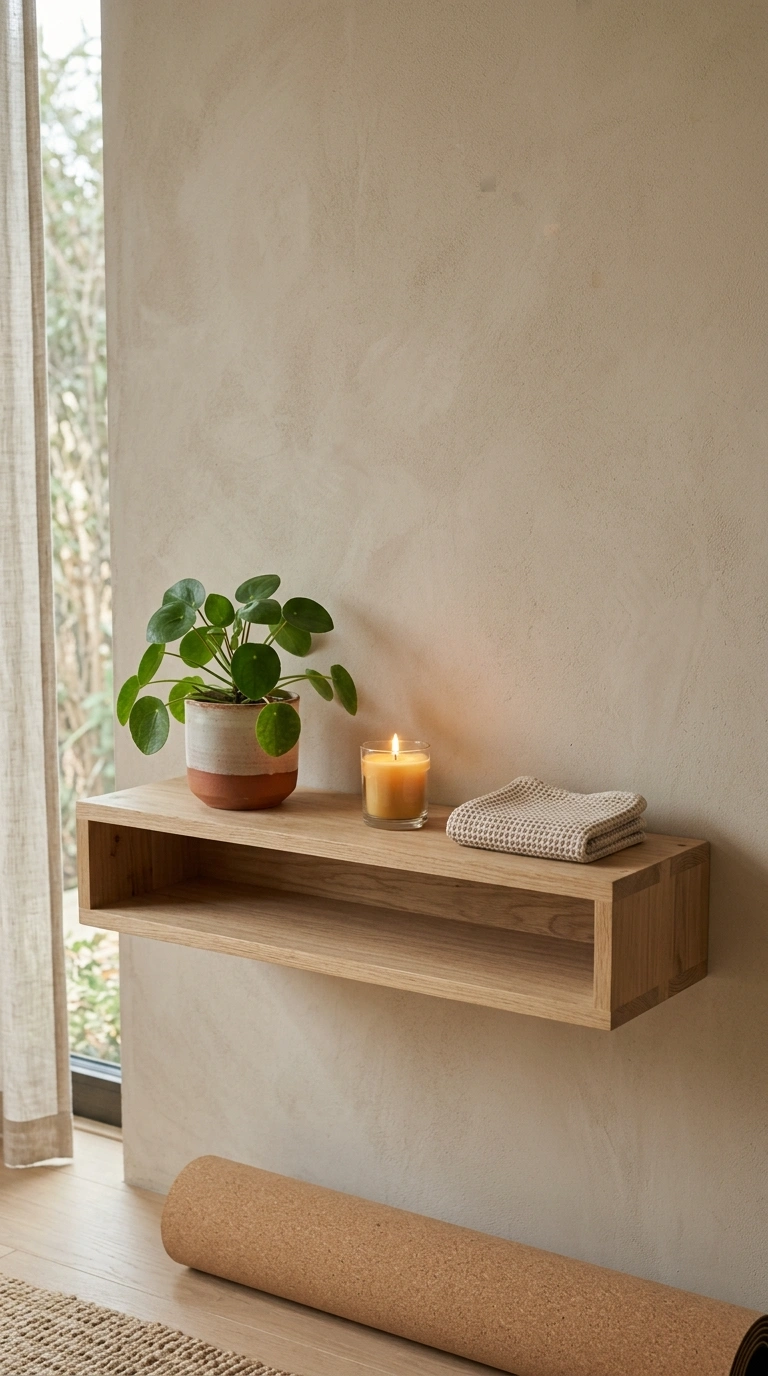
A single low wooden shelf along one wall gives you a spot to display a few meaningful items without cluttering the floor or walls. Keep the shelf simple, holding only three or four objects such as a small plant, a candle, a stack of folded washcloths, or a smooth stone. Choose a shelf in natural or light wood tones to match the calm, grounded feeling of the rest of the room.
Avoid the temptation to fill every inch of the shelf, since empty space is part of what makes a room feel peaceful rather than busy. This shelf works well positioned at a height where it does not interrupt your eye line while seated or lying on the mat. If your room doubles as a meditation space, this shelf can also hold a small bell, a journal, or a folded blanket, keeping small essentials close but out of the way.
5. Meditation Cushion Nook
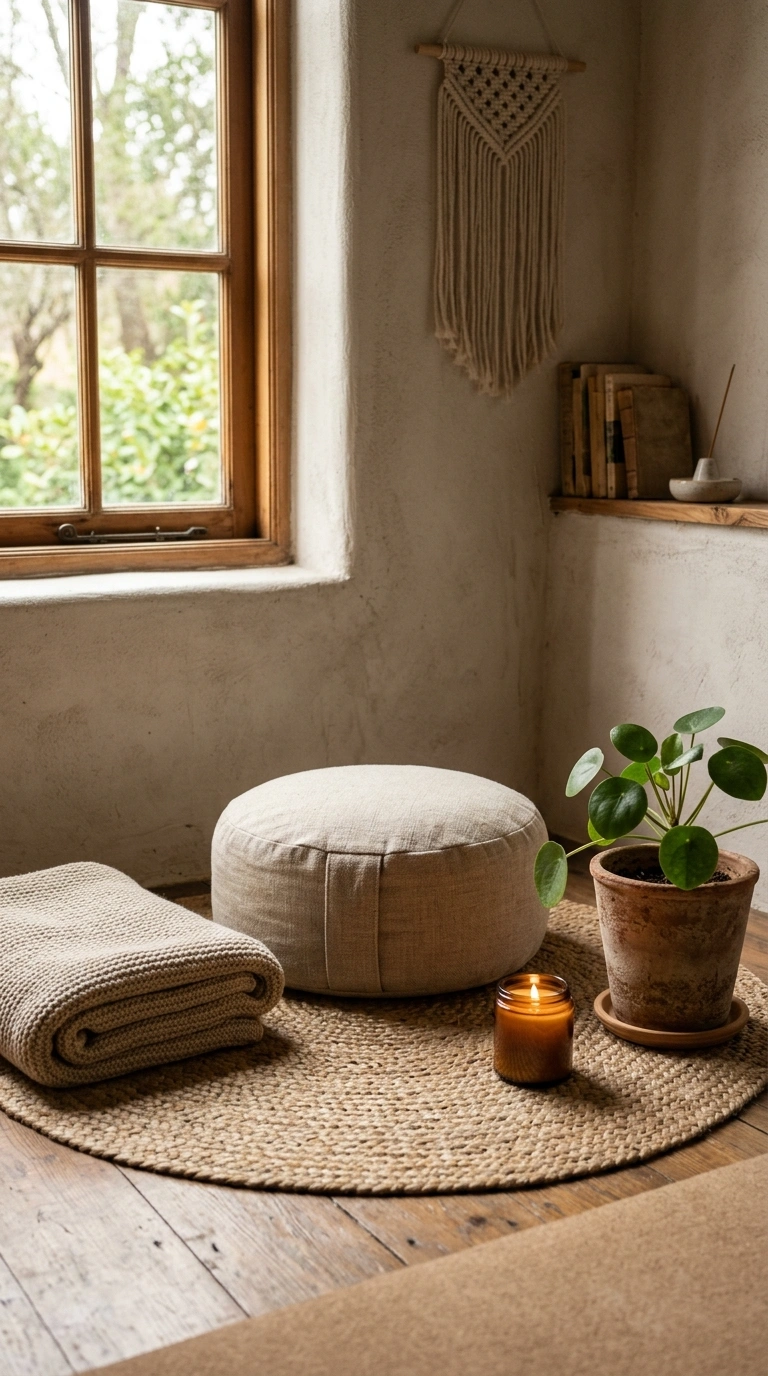
Setting aside a small corner specifically for a floor cushion or meditation pillow gives your yoga room a second purpose beyond active practice. Choose a round cushion in a neutral or muted tone, and place it on a small round rug that defines the space without needing any walls or furniture to separate it. Add a folded blanket nearby for cooler mornings, along with a small candle or a single plant beside the cushion.
This nook works especially well tucked into a corner near a window, where soft light can fall across the space in the morning. Keep the area small and simple, since the goal is a quiet spot to sit rather than a fully furnished corner. Over time, this little nook often becomes the most used part of the room, offering a place to breathe and reset even on days when a full practice does not happen.
6. Potted Plant Corner
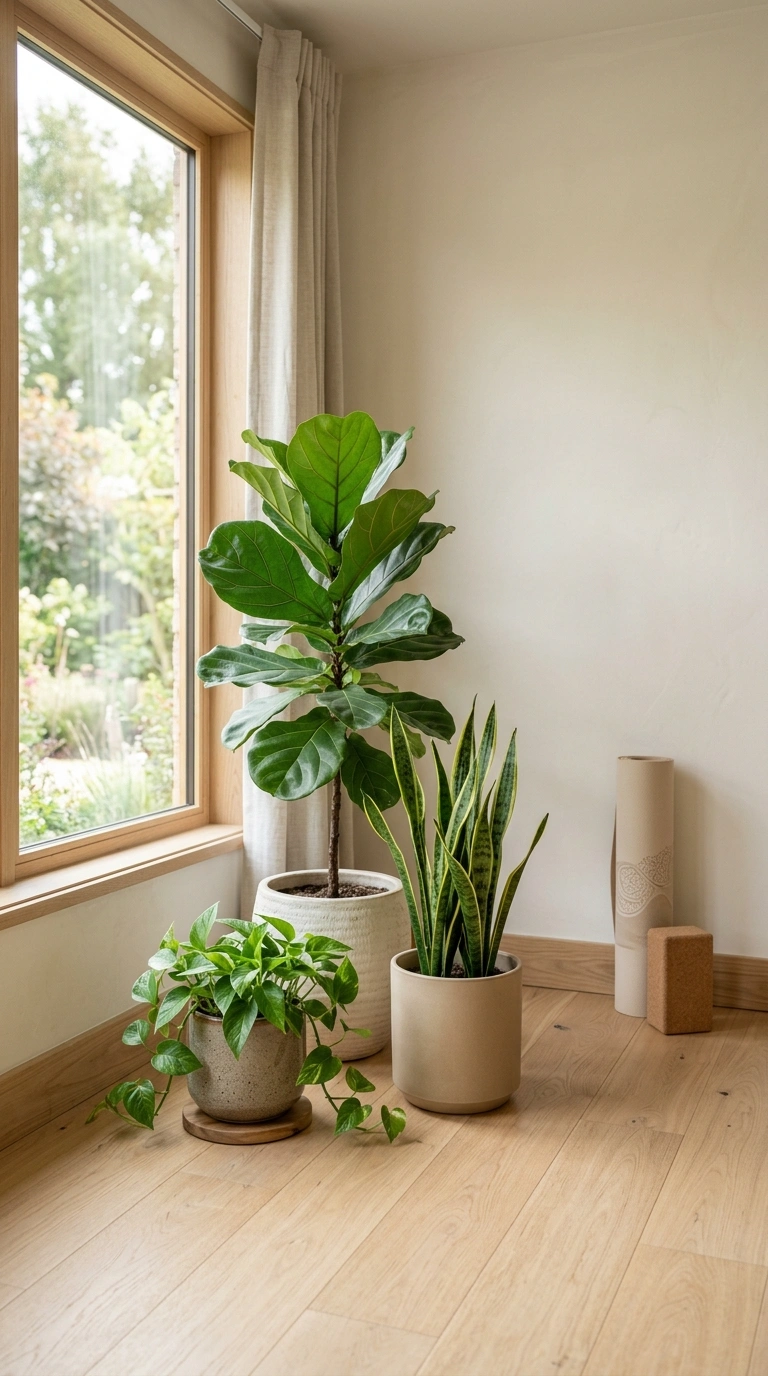
A few well chosen plants bring life and softness into a yoga room without disrupting its calm, uncluttered feeling. Choose low maintenance varieties like a snake plant, pothos, or a small fiddle leaf fig, and place them in simple terracotta or ceramic pots in neutral tones. Group two or three plants of different heights together in one corner rather than scattering single plants around the room, since grouping creates a more intentional, calming visual.
Position your plant corner near a window if possible, since most plants need some natural light to thrive, and the greenery will also soften the light coming through the glass. Avoid patterned or brightly colored pots, which can pull focus away from the plants themselves and the calm feeling of the room. Wipe leaves down occasionally to keep them looking fresh, since dusty leaves can quietly make even a nice plant corner feel neglected.
7. Soft Curtain Layers
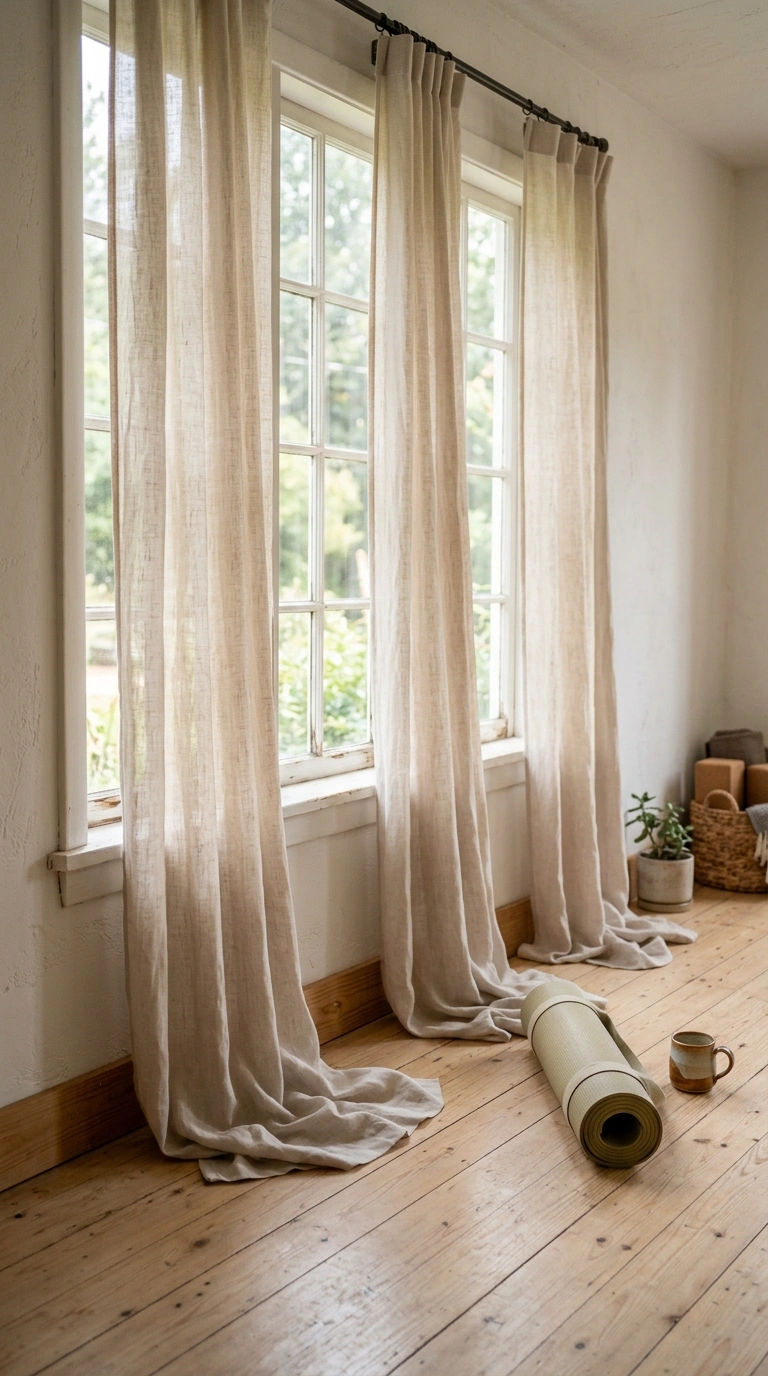
Soft, flowing curtains in a light neutral fabric add warmth and a gentle sense of privacy to a yoga room without making the space feel closed in. Choose linen or cotton curtains in white, oatmeal, or pale grey, and hang them slightly higher than the window frame so they appear to stretch the ceiling height. Let the fabric pool slightly at the floor for a relaxed, unstructured look rather than hemming them precisely at the sill.
Curtains also help soften any street noise or outside light during evening sessions, which can make a real difference for focus. If your room gets very bright in the afternoon, layer a sheer curtain with a slightly thicker one behind it, so you can adjust the light throughout the day depending on your practice time. This small addition makes the whole room feel softer and more intentional the moment you walk in.
8. Wood Accent Wall
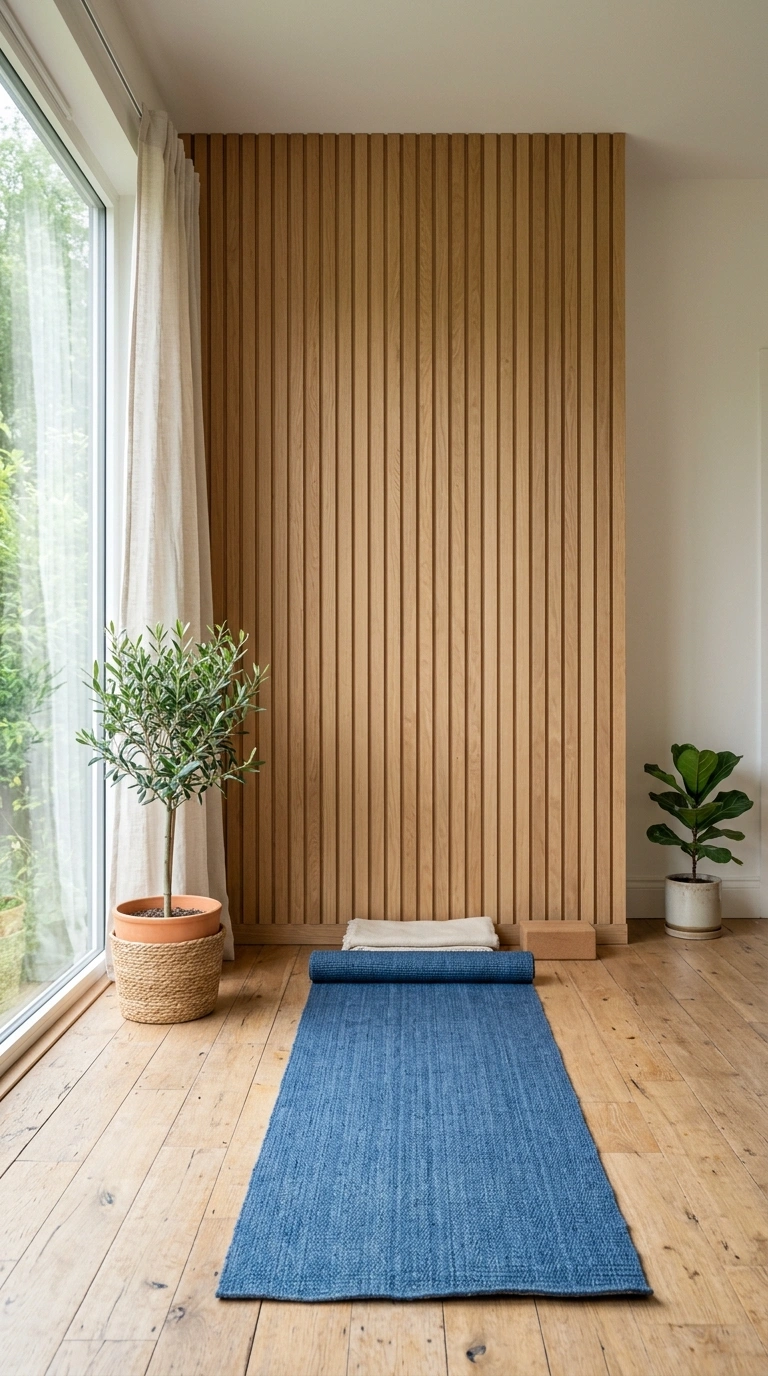
A single wall finished in natural wood paneling or slatted wood strips adds warmth and texture to an otherwise simple, neutral yoga room. Choose a light to medium wood tone, such as ash or white oak, rather than a dark stain, since lighter woods keep the room feeling open and bright. This accent wall works especially well behind where you place your mat, giving you a natural, grounding backdrop during practice.
If a full wood wall is not practical, a smaller version using a few vertical wood slats or a large framed wood panel can create a similar effect on a smaller budget. Keep the rest of the room simple so this wall remains the visual focus rather than competing with other decor. Paired with a plant or two nearby, this idea brings a natural, almost outdoor feeling into an indoor practice space.
9. Floor Cushion Seating
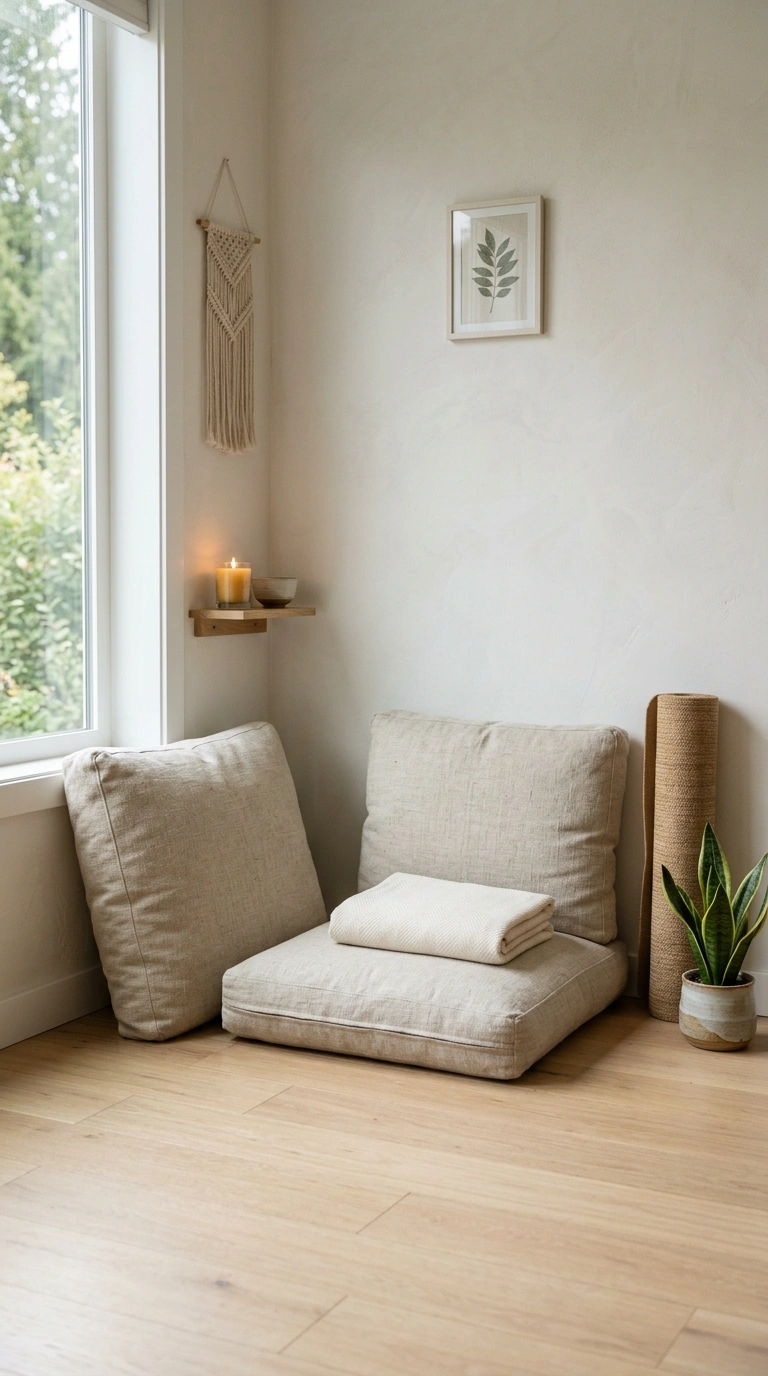
Instead of a chair or bench, a few floor cushions or a low floor pouf give your yoga room flexible seating that fits naturally into the practice area. Choose cushions in a soft neutral fabric like linen or cotton, and place them along one wall or in a corner where they can be used for stretching, resting, or simply sitting before or after a session. This kind of seating keeps the room feeling open, since cushions can be moved or stacked away easily.
A low pouf also works well as a small side table in a pinch, holding a water bottle or a folded towel during practice. Keep the seating area simple, with no more than two or three cushions, so the room does not start to feel like a lounge. This idea works especially well in a multi-purpose room, giving guests or family members a comfortable spot to sit and watch or wait during a session.
10. Candle Incense Shelf
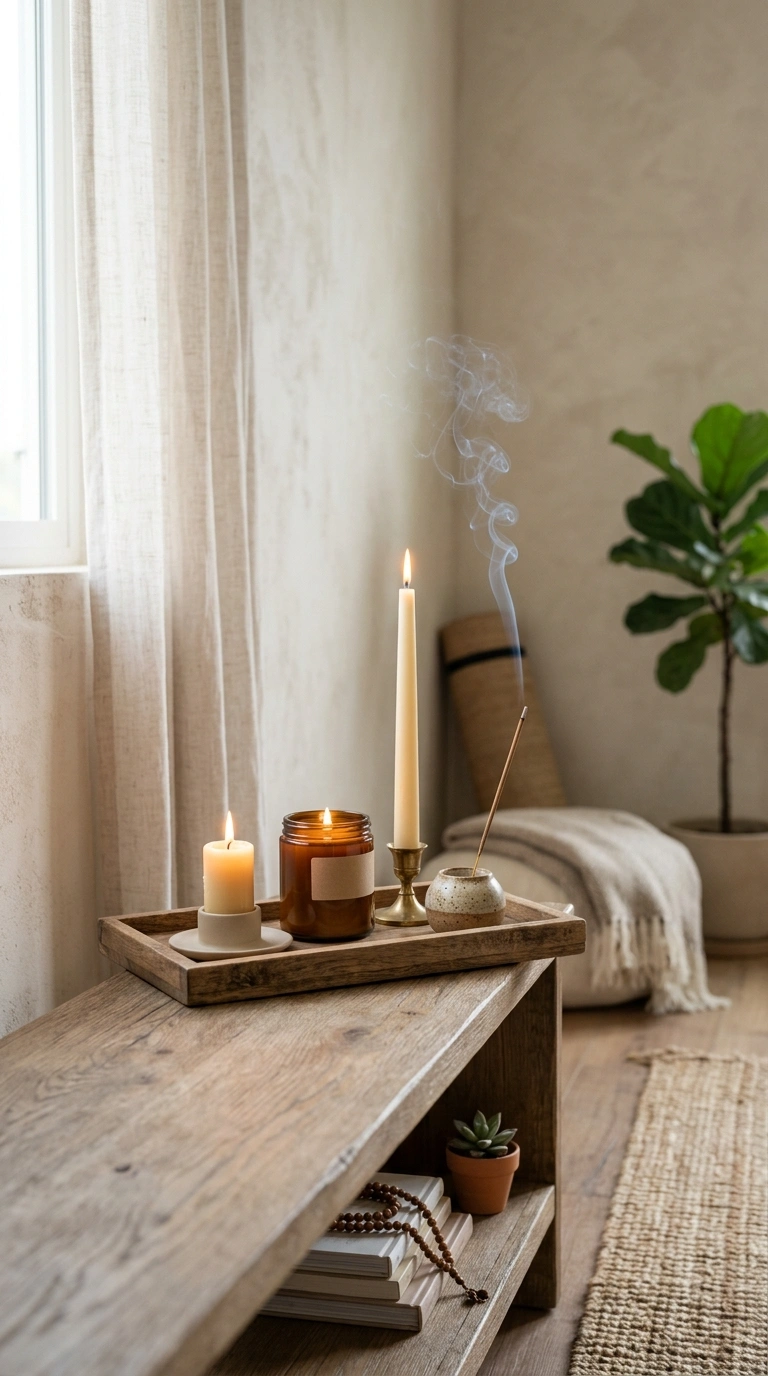
A small dedicated shelf or tray for candles and incense adds a calming ritual element to the start or end of a yoga practice. Choose a simple wooden or stone tray, and place two or three candles of varying heights along with a small incense holder in one corner of the room. Stick to unscented or lightly scented candles, since strong fragrances can be distracting rather than calming during focused breathing.
Position this tray somewhere safe and stable, away from curtains or mats, ideally on a low shelf or small side table near the edge of the room. Lighting a candle before practice can serve as a simple, consistent cue that signals the start of your session, helping your mind settle more quickly. Over time, this small ritual becomes part of the calm atmosphere of the room itself, not just a decorative detail.