21 Studio Apartment Ideas for Small Spaces
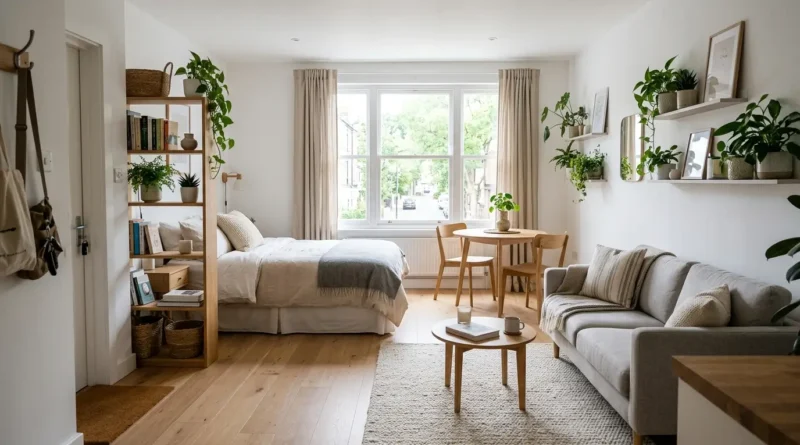
One room has to hold your bed, your couch, your dinner table, and maybe your work desk too. That is the deal with a studio apartment, and it can feel like a puzzle at first. The good news is that you do not need a bigger place. You just need each part of the room to have a clear job. A rug in one spot, a shelf in another, and a curtain in the right place can make one open box feel like it has real rooms. The ideas below are simple, and most of them use furniture you can find at a regular store. Some cost almost nothing, while others need a little saving up. Pick the ones that fit your space and your budget, and try one this weekend.
1. Bookcase Room Divider
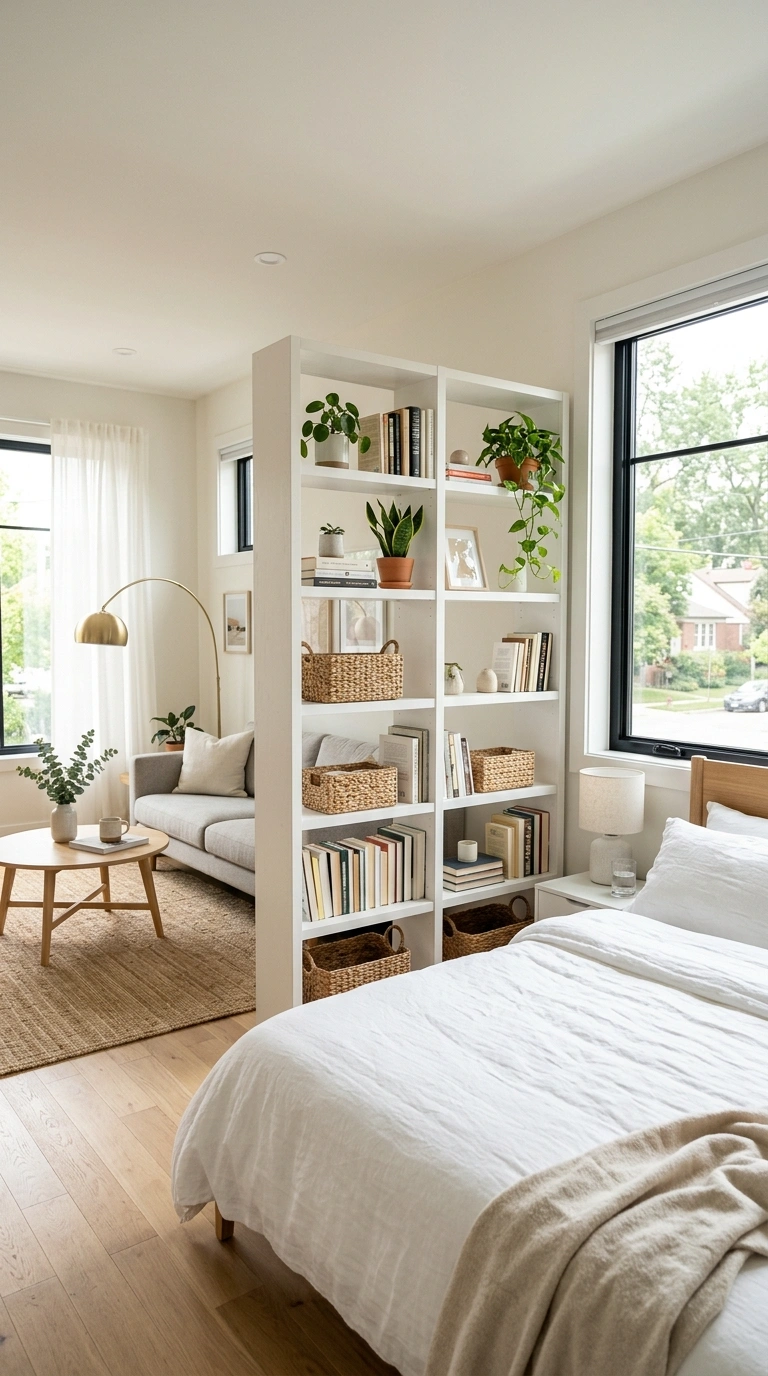
A tall open bookcase is one of the easiest ways to split a studio into two zones. Place it at the foot of your bed so the sleeping area sits behind it and the living area stays open in front. Pick a shelving unit with no back panel so light can pass through and the room does not feel cut in half. Wood and white metal frames both work well, and a cube style unit gives you plenty of storage. Fill the shelves with a mix of books, woven baskets, a few small plants, and one or two framed photos. Keep the bed side of the shelves a little emptier so it feels calm when you are trying to rest. If the unit feels wobbly, attach it to the wall with a safety strap. Turn it at a slight angle if your floor plan allows, since that looks more relaxed and leaves a clear walking path around it.
2. Curtain Around the Bed
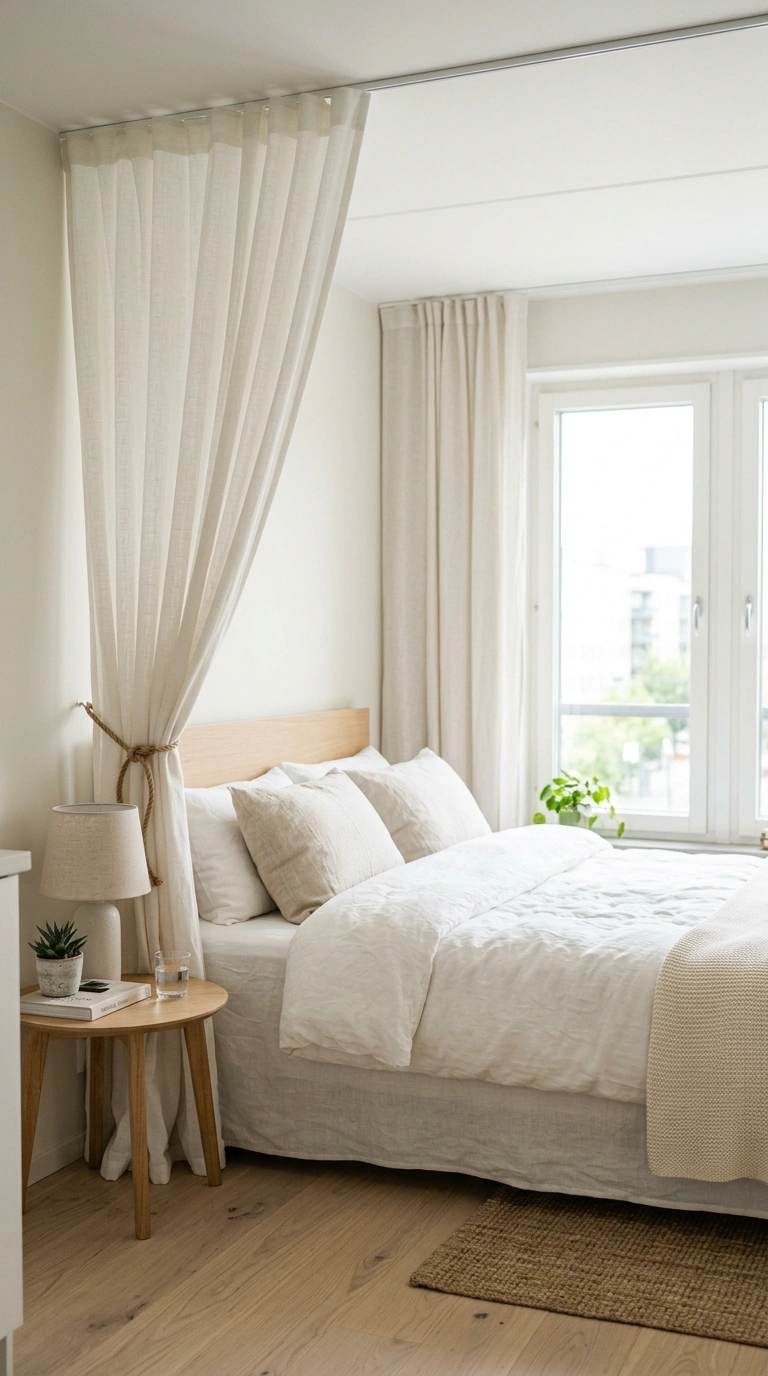
If a bookcase feels too heavy for your space, a floor length curtain is the softer choice. Hang a ceiling track or a sturdy rod above the bed area so the fabric can slide across when you want privacy. Linen or thick cotton in white, cream, or soft gray keeps the room bright and calm. Make the curtain about twice as wide as the opening it covers, because fuller fabric looks richer and hangs better. During the day, tie it back with a fabric loop or a jute rope so the room feels open. At night, pull it closed and the bed area feels like its own little bedroom. Inside the space, add a small bedside table, a warm lamp, and a bed with a plain white duvet. Renters can use a tension rod between two walls if there is a natural nook, which means no drilling and no damage to worry about.
3. Murphy Bed With Sofa
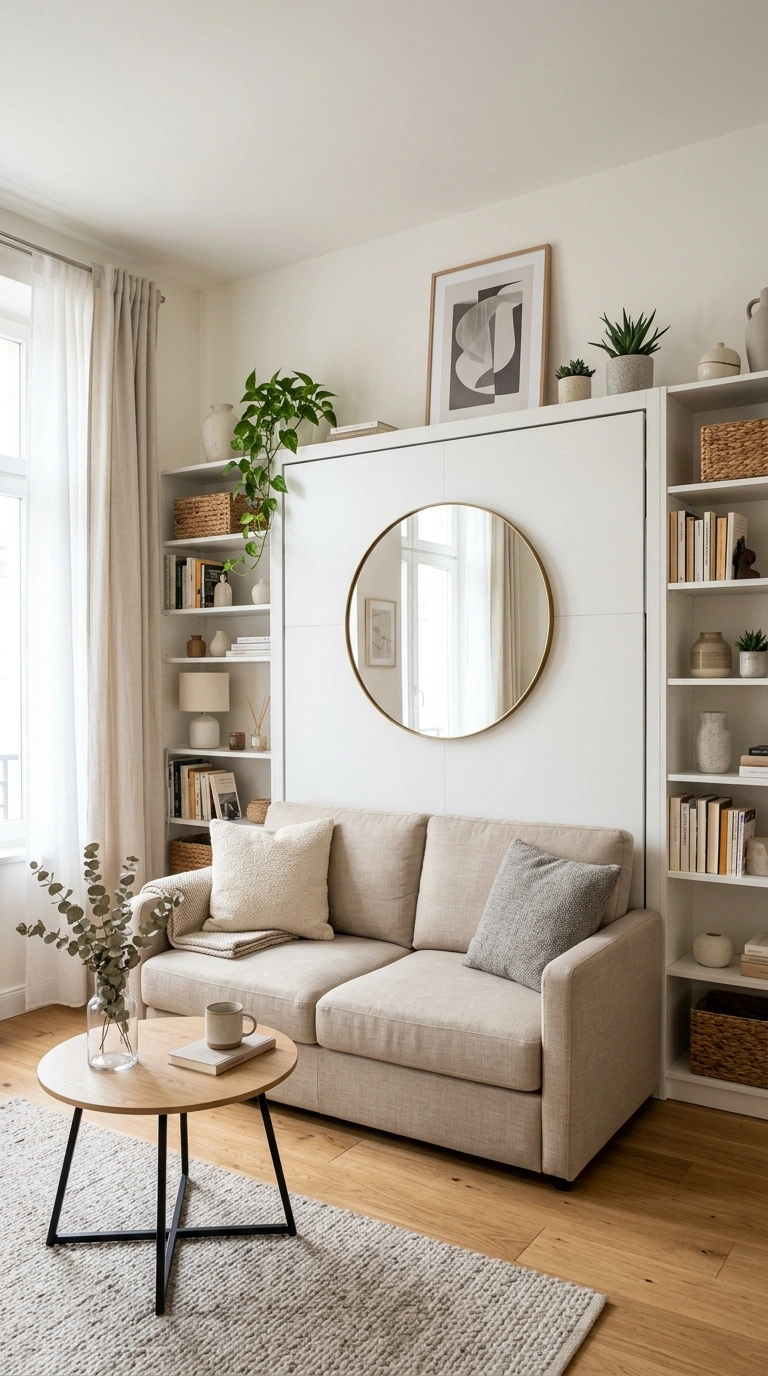
A wall bed frees up more floor space than any other option in a studio. A Murphy bed folds up into a cabinet during the day, and some models come with a sofa built in below the frame. Place it on the longest wall in the room, ideally away from the kitchen so cooking smells stay away from your pillows. Choose a cabinet finish that matches your wall color or your main wood tone so it looks like a built in piece of furniture. Add tall shelves or cabinets on both sides for books and extra storage. When the bed is folded up, the front panel can hold a mirror or a large piece of art, which makes the wall feel finished. Before you buy, measure the depth you need to open it fully. Most frames need about 20 to 24 inches of space in front. Keep the bedding light so it folds up easily, and store extra pillows in a basket nearby.
4. Loft Bed With Desk
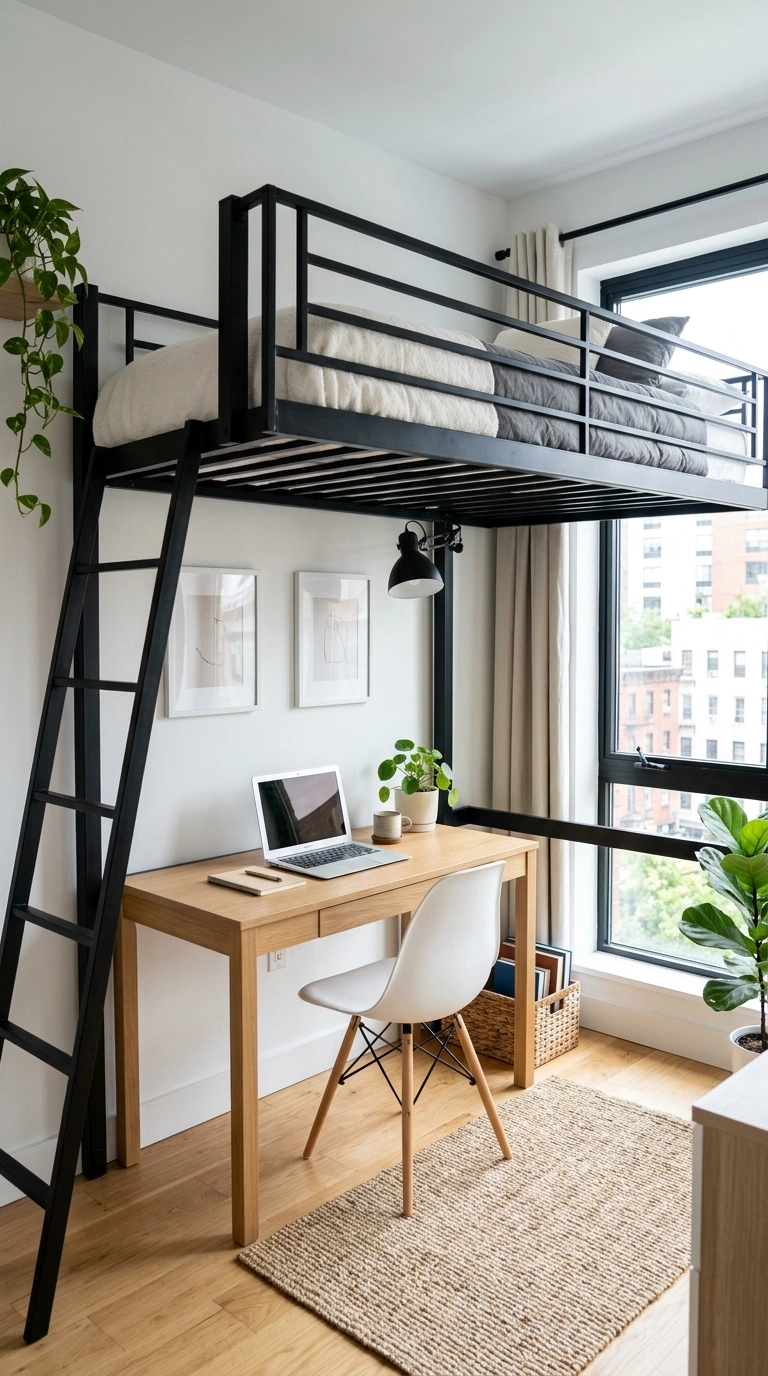
When your ceilings are tall enough, going up is the smartest way to use a small room. A loft bed lifts your mattress about five or six feet off the floor and leaves the space below free for a desk, a small sofa, or a wardrobe. A metal frame in black or white takes up the least visual space and looks clean in almost any room. Put a compact desk underneath with a comfortable chair, and hang a plug in lamp or clip on light so you can work without turning on the overhead light. Add a rug under the desk zone so the space feels defined. Use a sturdy ladder or stairs with drawers built into them, and keep one hook on the frame for your robe or bag. Check your ceiling height before buying, and leave at least 30 inches between the mattress and the ceiling so you can sit up without bumping your head.
5. Window Desk Corner
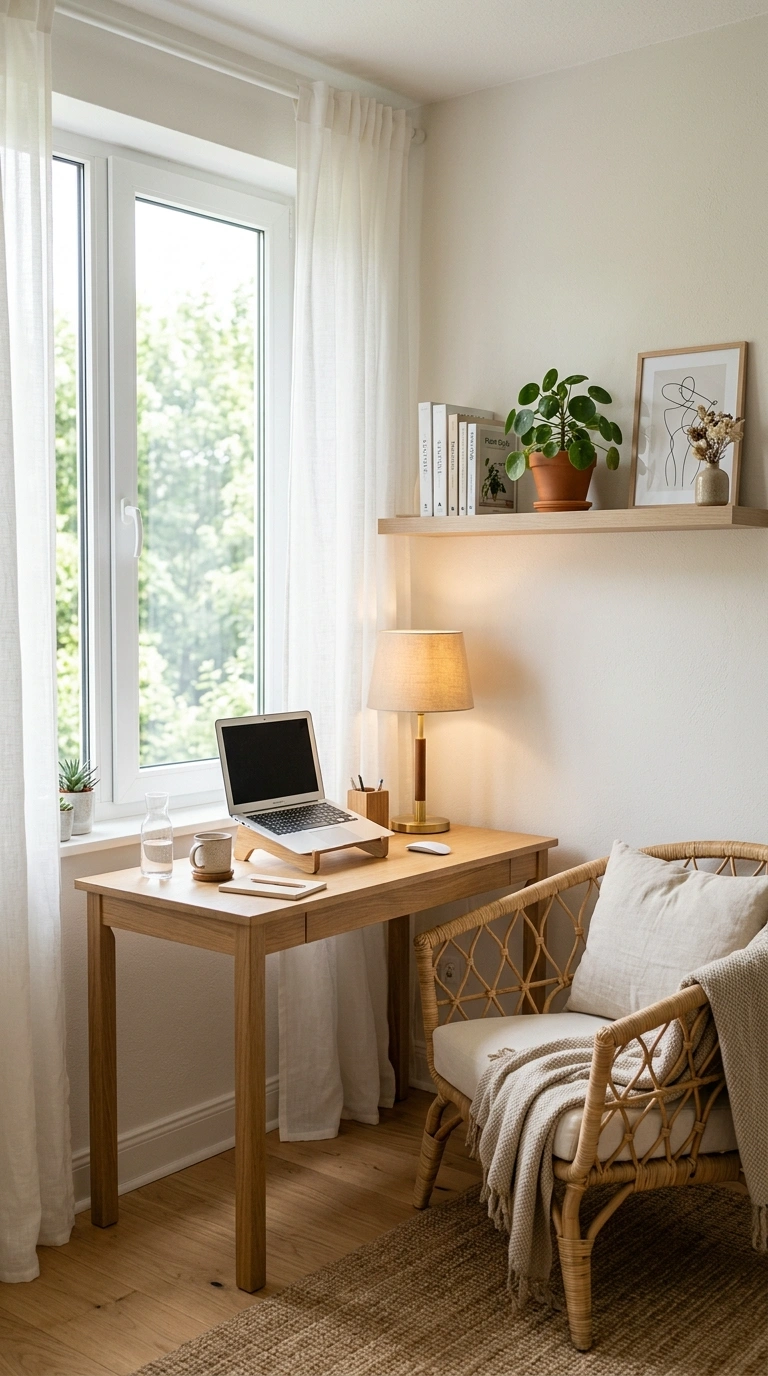
Natural light is the best thing you can give a work area, so tuck a small desk right against a window. A simple wood table with slim legs works well, and it can double as a vanity or a breakfast spot when you are done working. Keep the top clear except for a laptop, a small lamp, and a cup for pens. Add a floating shelf above the desk for books and a plant, and use a wall mounted cord cover to hide messy wires. Pair the desk with a chair that looks good from every side, such as a rattan or wooden chair with a soft cushion, since it will be visible from the whole room. Hang sheer curtains so the light stays soft and does not create glare on your screen. When the workday ends, slide the laptop into a drawer or basket and the corner goes right back to looking like part of your living space.
6. Sofa Back Console
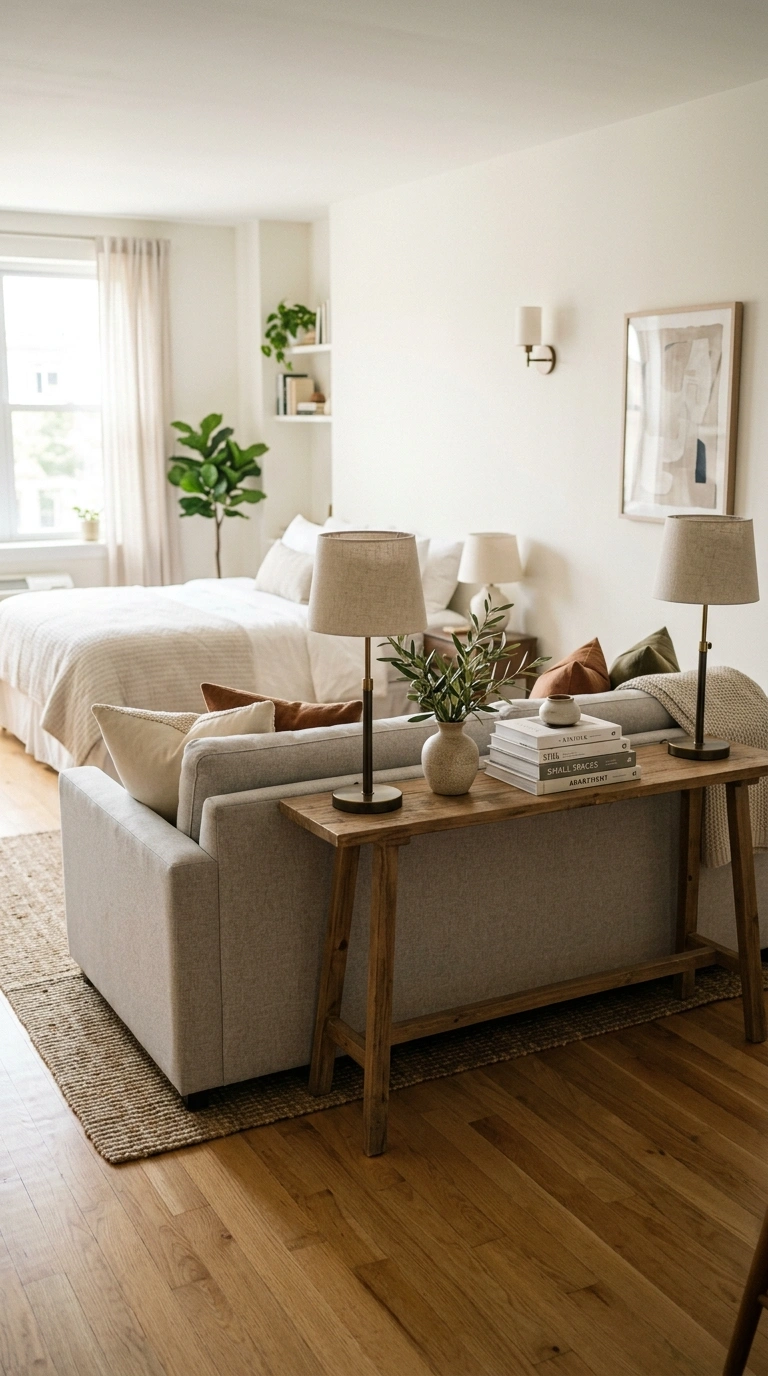
Placing your sofa in the middle of the room with its back to the bed is a classic studio trick, and a narrow console table behind it makes the setup look planned. Choose a console that is the same length as your sofa or a little shorter, with a depth of about 10 to 12 inches. Wood or black metal both look good. On top, place a pair of lamps, a stack of books, a bowl for keys, and a small plant or vase with branches. The lamps give you soft light for the bed side of the room, and the console hides the back of the sofa so the dividing line looks tidy. Leave at least 30 inches of walking space around the sofa so the room does not feel blocked. If you have a small budget, an old bookshelf laid on its side or a sturdy narrow table from a thrift shop works just as well when you give it a fresh coat of paint.
7. Rug Zones the Room
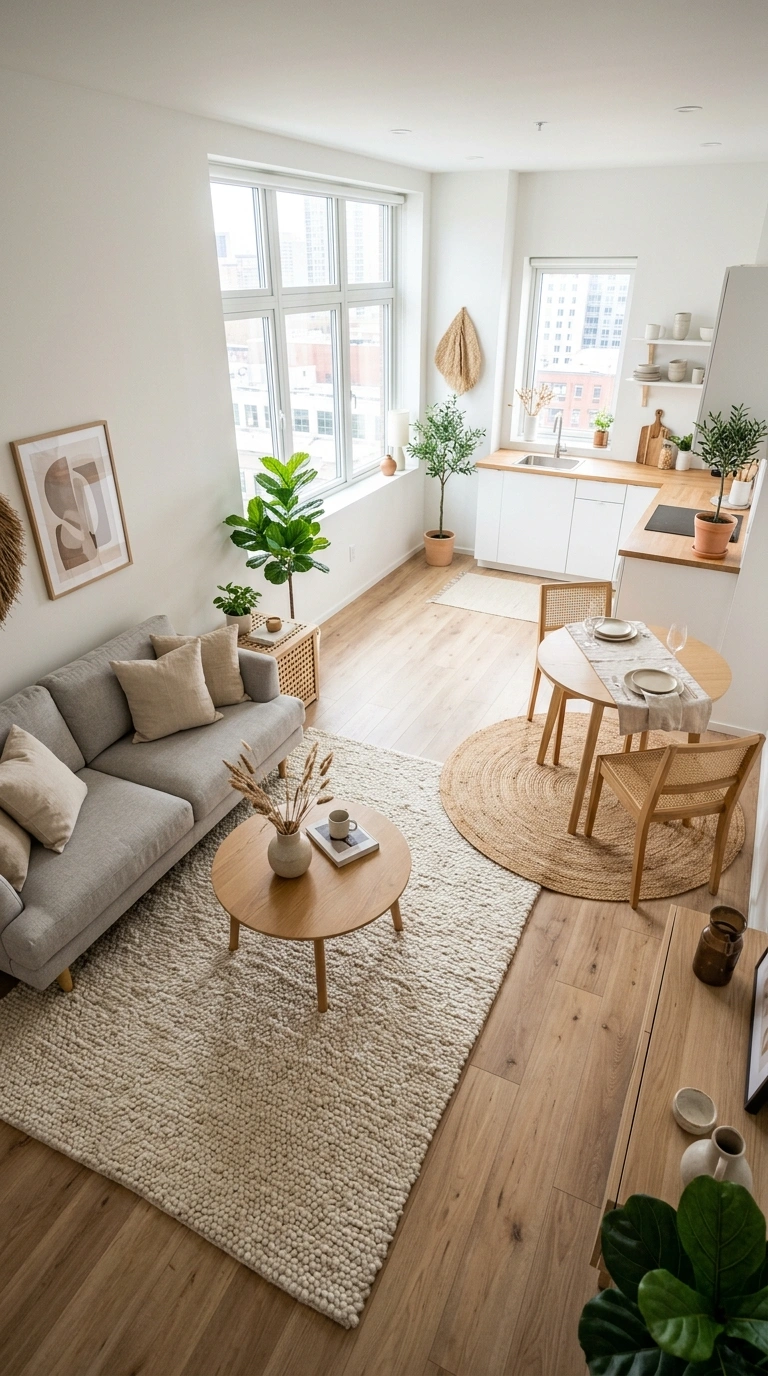
Rugs are the easiest way to mark different areas without adding a single piece of furniture. Lay a large neutral rug under your sofa and coffee table so the living area feels like a real room. Then place a smaller rug beside the bed or under the dining table to mark those spots as separate places. Keep the rugs in the same color family but change the pattern or texture, for example a soft wool rug for the living zone and a flat woven jute rug near the kitchen. Make sure the front legs of your sofa and chairs sit on the rug, since that makes the space look pulled together and keeps the furniture from looking like it is floating. Avoid rugs that are too small, which can make a room look chopped up. A quick tip is to use a thin rug pad underneath every rug so nothing slides, and so you can vacuum without the edges curling up.
8. Counter Dining Spot
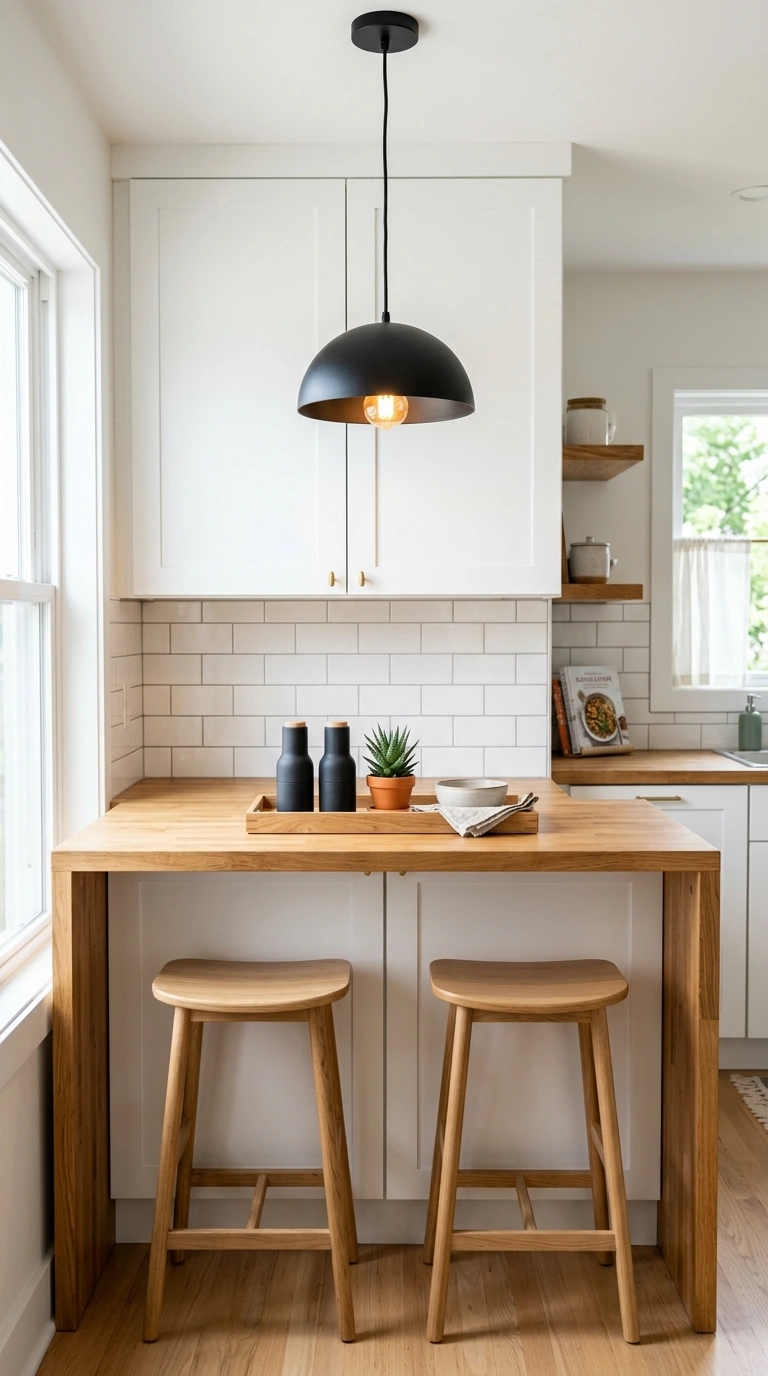
Many studios have a kitchen counter or a small island that can act as your dinner table. Push two slim stools underneath it when you are not eating so they do not block the walkway. Pick stools with backs if you sit there for long meals, or backless wooden stools if you want them to disappear under the counter. Style the counter with a wooden tray that holds salt, pepper, and a small plant, and lift it off when you cook. Add a pendant light or a small hanging lamp over the counter if there is a ceiling outlet, which makes the spot feel like a real dining area. If your counter is short, attach a fold down leaf to one edge to extend it for guests. Keep the stools the same color as your cabinets or your floor for a calm look. This setup saves you from buying a table and leaves more room for a sofa or a reading chair.
9. Drop Leaf Table
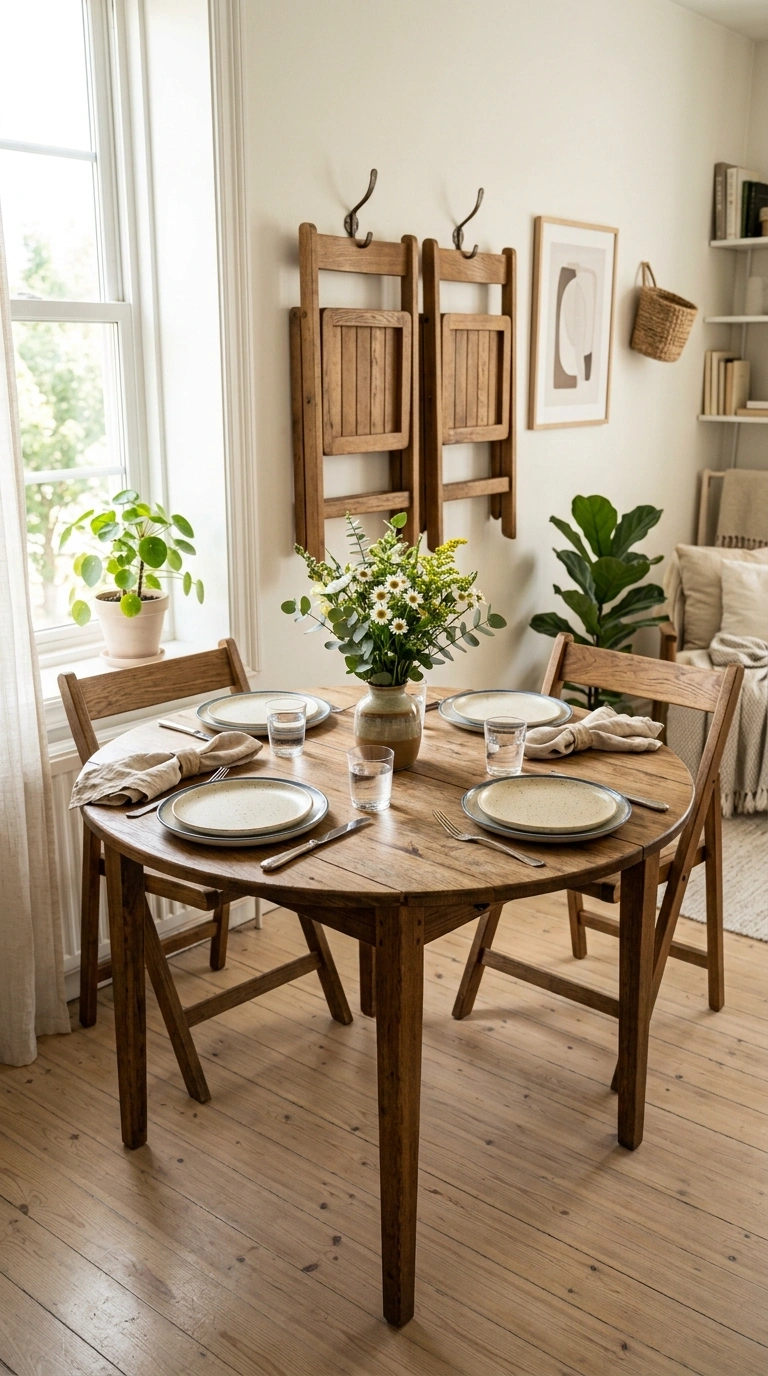
A drop leaf table is a small table with hinged sides that fold down when you do not need them. Against a wall with the leaves down, it takes up as little as 10 inches of depth and works as a console or a desk. When friends come over, lift the leaves and it seats four people comfortably. Look for a wood finish that matches the rest of your furniture, or paint an older table in white or soft sage for a fresh look. Pair it with folding chairs that hang on wall hooks when you are not using them, which keeps your floor clear and even adds a bit of style to the wall. Put a simple vase of flowers or a bowl of fruit on the table so it looks nice even when it is folded. If you find a used table, check that the hinges are strong and the leaves sit flat when lifted, because a wobbly table will get old fast.
10. Bed With Drawers
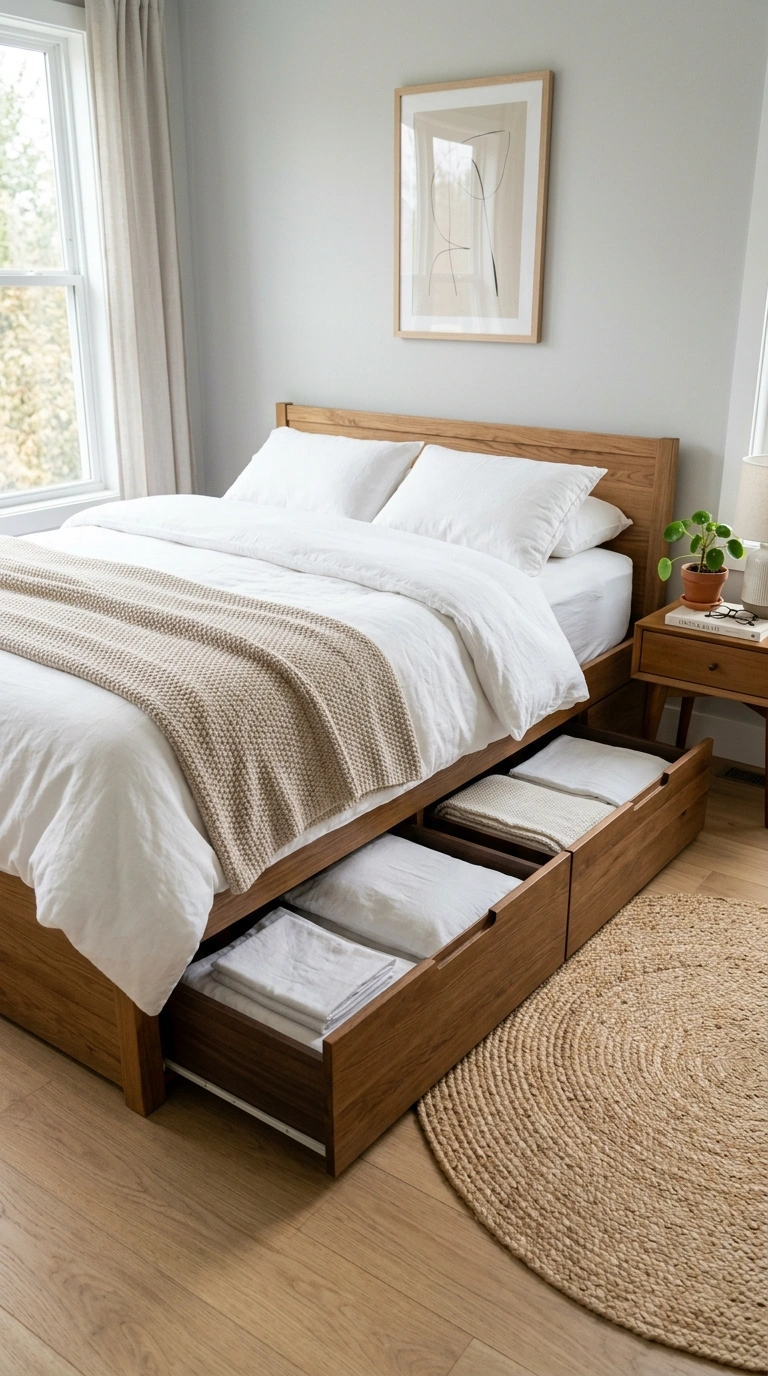
Storage is the hardest thing to find in a studio, and the space under your bed is often wasted. A bed frame with built in drawers gives you room for extra sheets, off season clothes, and shoes without adding a dresser to the room. Choose a low profile frame in wood, white, or a soft upholstered fabric, and pick a headboard that matches your wall color so the bed feels calm and easy to look at. Keep the top of the bed simple with a white duvet, two pillows, and one textured throw folded at the foot. If you already own a regular bed, slim rolling bins or flat baskets under it work nearly as well and cost far less. Label the front of each drawer or bin with a small tag so you can find things quickly. Leave about 20 inches of clear floor in front of the bed so the drawers can open all the way without hitting the wall or a chair.
11. Shelves Above Bed
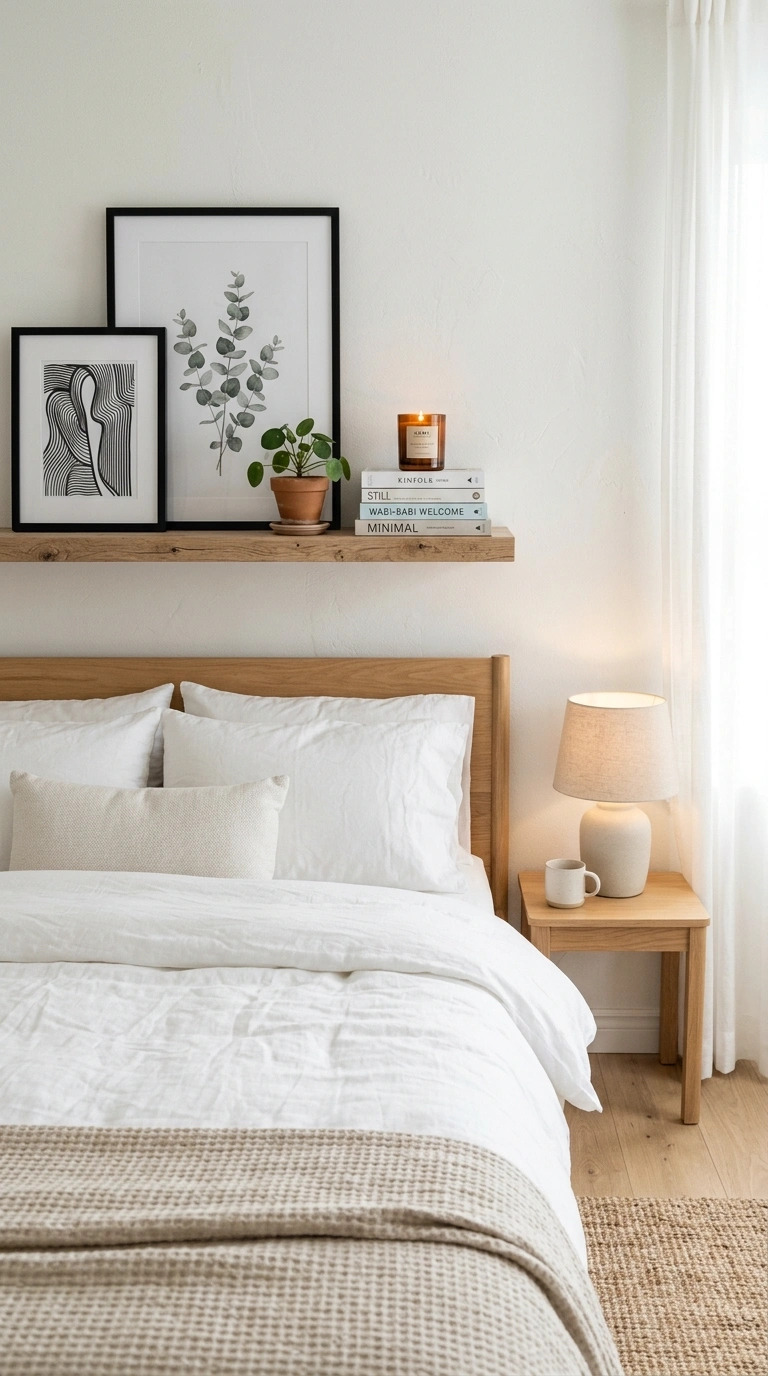
The wall above your bed is empty space that can hold a lot. Mount a long floating shelf about 12 inches above the top of your headboard, and use it as a display and storage spot. Keep the shelf styled with a few framed prints, a small plant, a candle, and a short stack of books. Choose wood or white finishes to match your bed and keep it light. Make sure the shelf is anchored into wall studs or uses strong wall anchors, since you do not want anything heavy falling near your head. If you like the look of a library, add two or three shelves in a row with even spacing between them. Skip the top row for anything breakable. For renters, a picture ledge is a lighter option that needs just two small screws and holds frames and paperbacks nicely. Keep the items lined up in odd numbers, which looks natural and balanced, and dust the shelf when you change your sheets so it stays fresh.
12. Pegboard Kitchen Wall
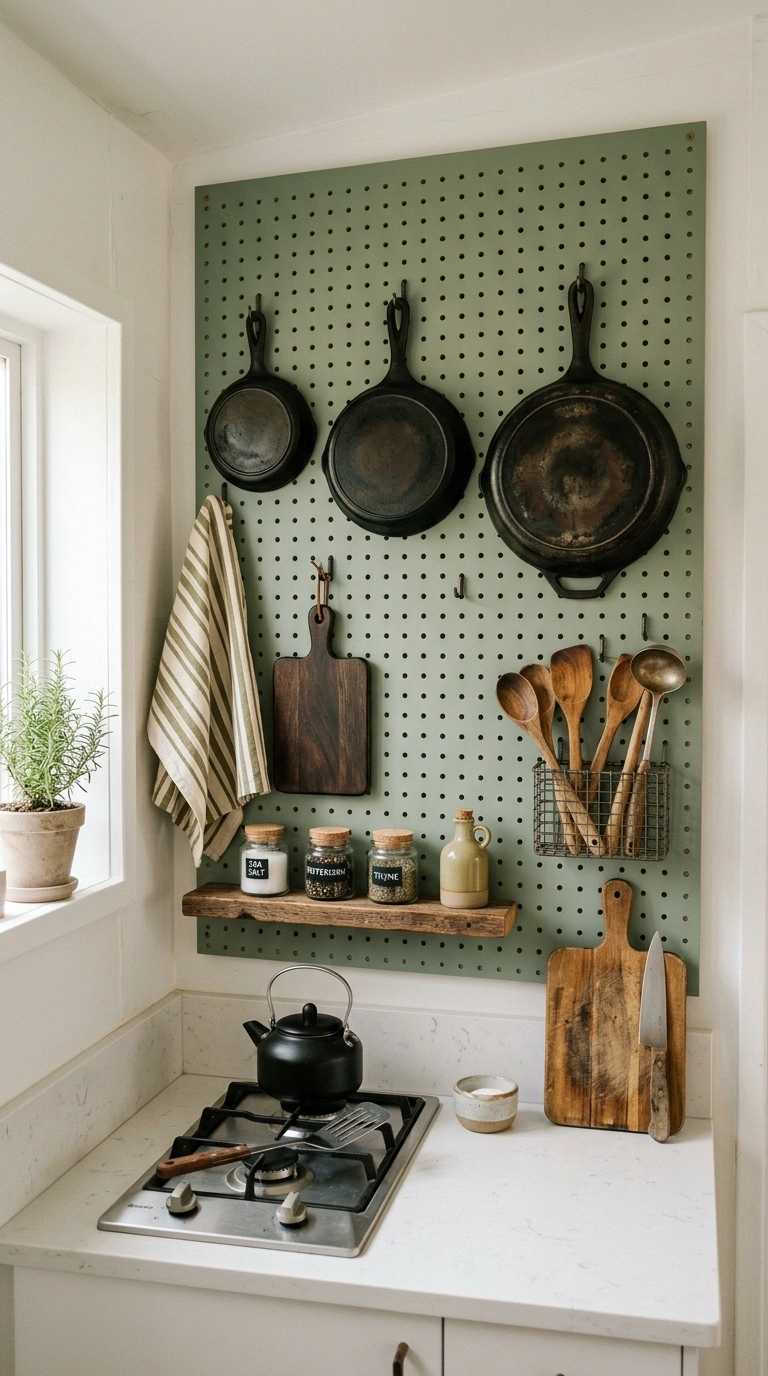
Small studio kitchens run out of cabinet space quickly, so use the wall instead. A painted wood pegboard gives you a flexible place to hang pans, cutting boards, utensils, and small shelves, and it looks good enough to leave on display. Paint it white, sage green, or a warm gray to match the room, and hang it behind the stove or next to the sink at an easy reach height. Arrange the items with the largest pieces on the bottom and the small tools near the top, and keep them in groups of similar color, such as wood spoons together and steel pans together. Add a small shelf for jars of pasta or spices, and a hook for a dish towel. Leave a bit of empty space so it does not look like a busy hardware store. Use only what you use every day. If drilling is a problem, a rail system with adhesive hooks can hold lightweight tools such as spatulas and measuring cups.
13. Big Leaning Mirror
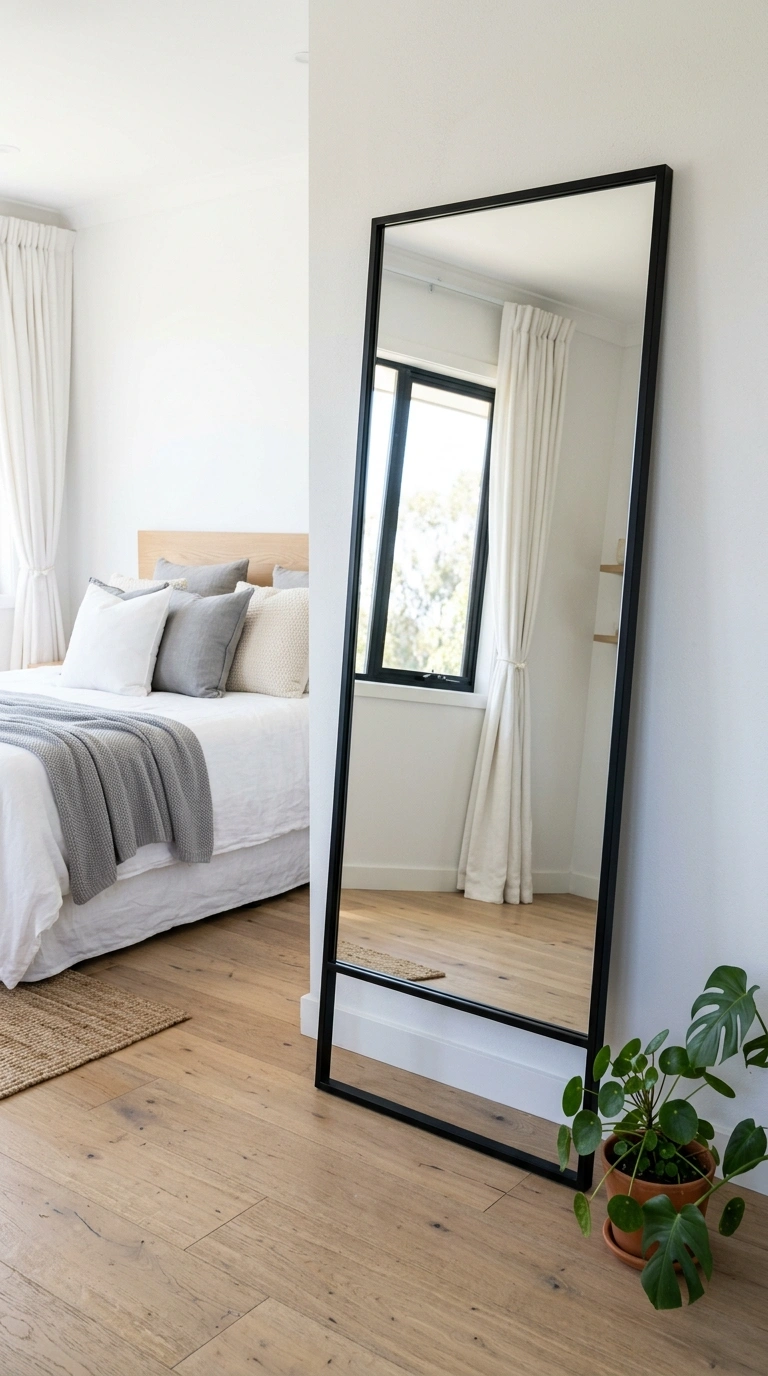
A large floor mirror leaned against the wall makes a small room feel deeper and brighter. Choose one that is at least five feet tall, with a thin frame in black, brass, or light wood. Place it across from your window so it catches the daylight and bounces it around the room. It also works well beside the bed as a dressing mirror, which saves you from buying a second piece of furniture. Lean it against the wall at a slight tilt and set a small rug or a plant near the base so it feels like part of the decor. Keep the space in front of the mirror tidy, because it doubles whatever it reflects, so a clutter pile will look twice as big. Add a felt pad or a rubber stopper under the bottom edge so the mirror does not slide. If you have kids or pets, secure the top with a safety strap to the wall, which takes about five minutes and keeps it from tipping.
14. Entry Bench Hooks
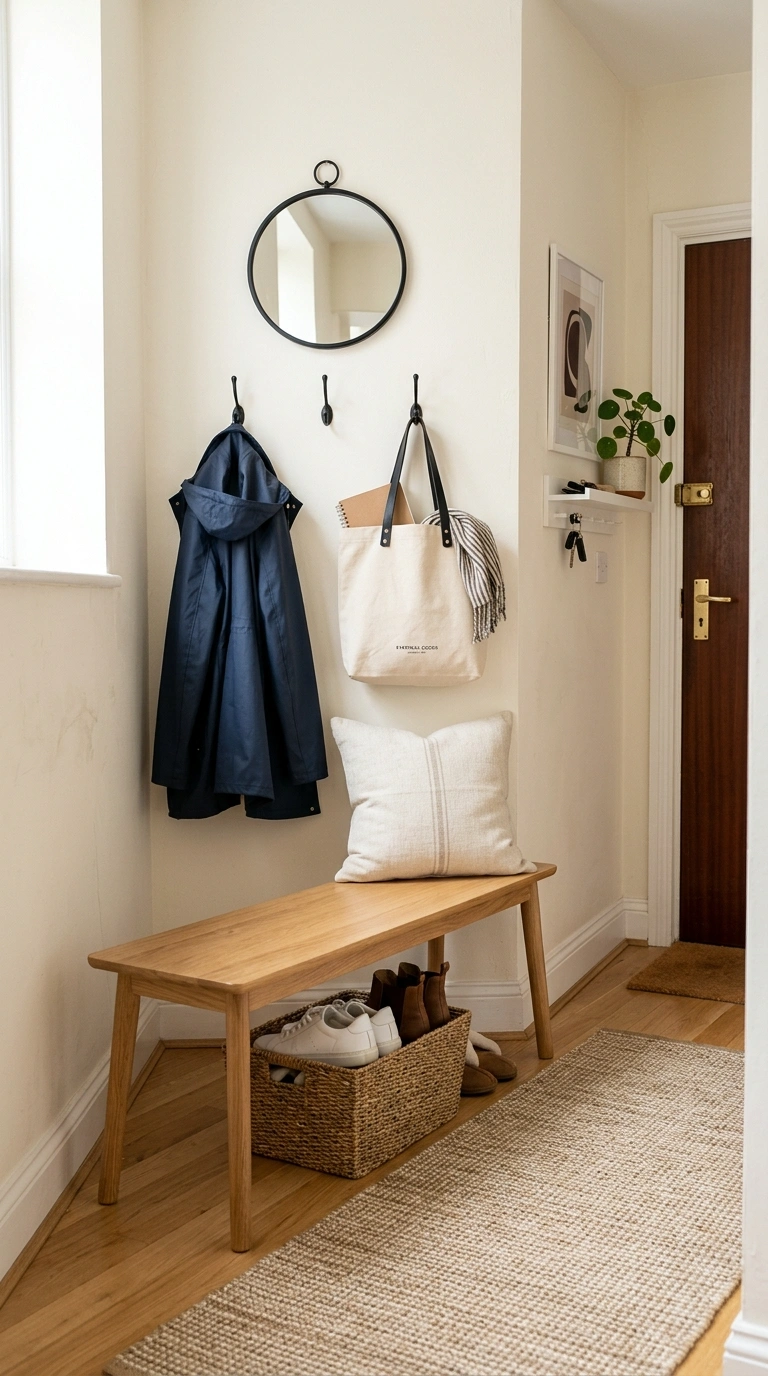
Most studios have no entry hall, so create a tiny one with a slim bench and a row of hooks. Place a narrow wooden bench by the front door with a basket beneath it for shoes and a small cushion on top for sitting. Mount three or four hooks on the wall above at about 60 inches from the floor, and hang a coat, a tote bag, and a hat there. Add a small mirror above the hooks so you can check your look before leaving, and a tray on the bench for keys and sunglasses. Choose a rug that is easy to shake out, like a flat weave runner in a neutral color. If space is very tight, a wall mounted shelf with hooks underneath does the same job and takes up no floor space at all. This little corner keeps outdoor clutter from spreading across your living space, and it also makes your home feel more welcoming the moment you walk in.
15. Storage Ottoman Seating
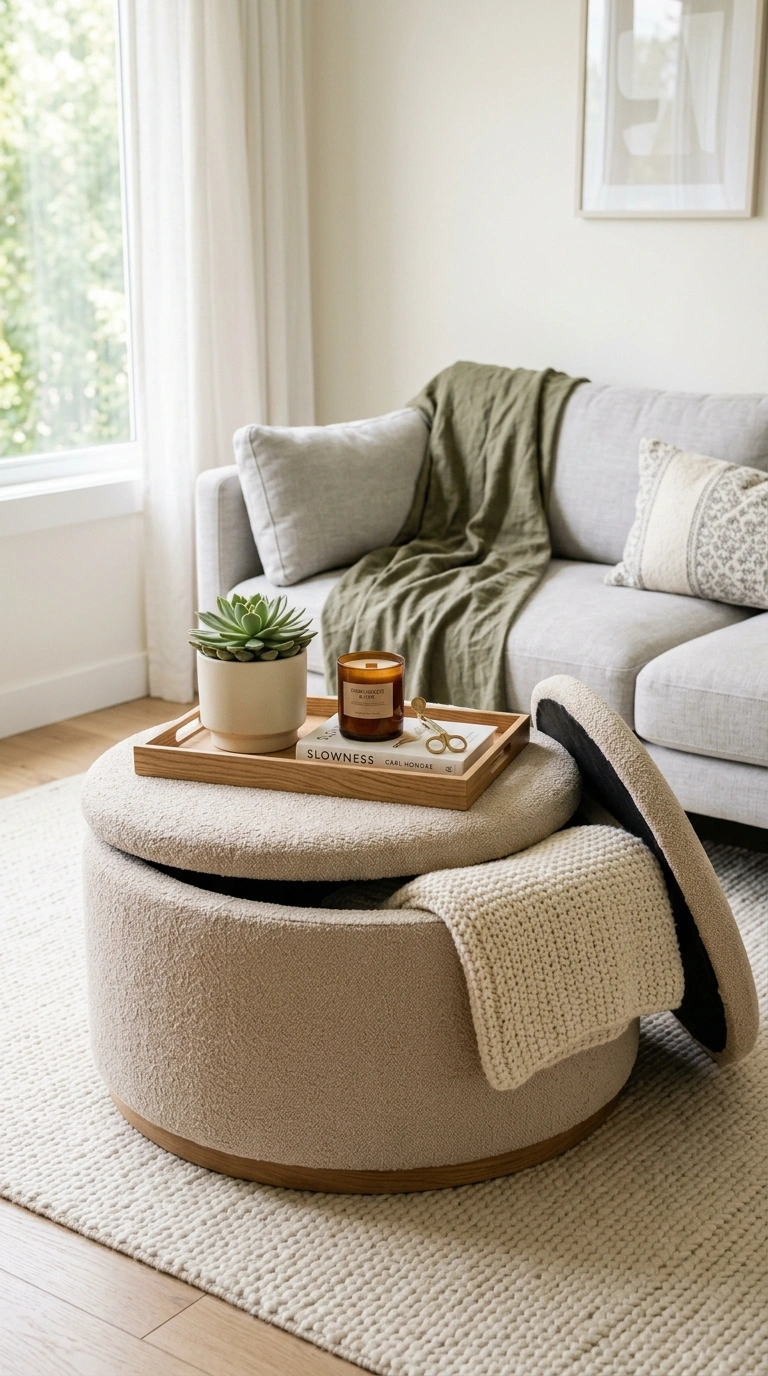
An ottoman with a lift up lid is a small piece of furniture that does three jobs. It works as a coffee table with a tray on top, as extra seating when guests visit, and as a hidden spot for blankets, games, and remotes. Choose a round or square style in a fabric that matches your sofa, such as linen, boucle, or soft leather. Round shapes are easier to move around in a tight room and have no sharp corners to bump into. Place a wooden tray on top with a candle, a small plant, and a coffee table book, and lift the tray off when someone needs the storage. Keep the inside organized with a few flat baskets so items do not pile up. If your budget is small, a sturdy wooden crate with a padded cushion on top works just as well. Look for one with a soft close hinge so the lid does not slam on small fingers, and pick a height close to your sofa seat.
16. Glass Partition Wall
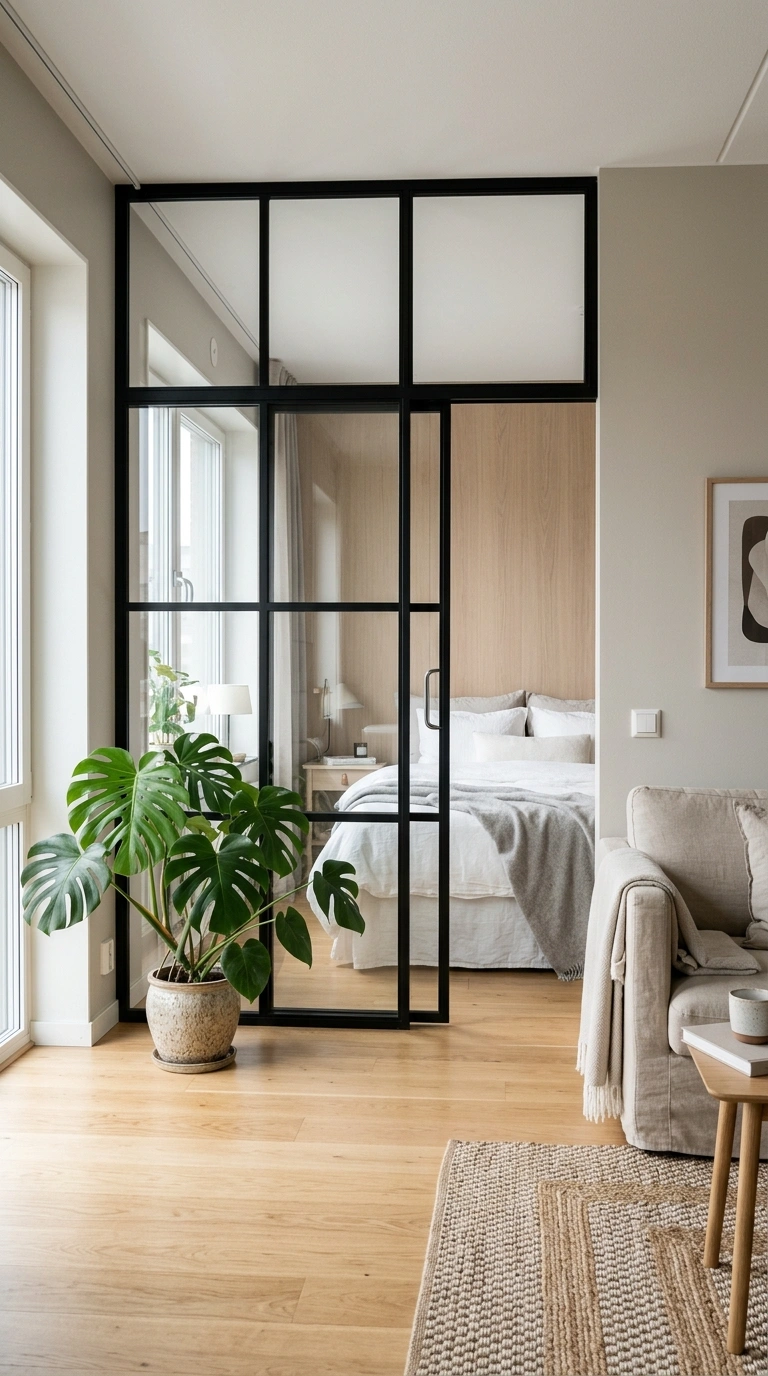
If you want a real separation without losing light, a black framed glass partition is a beautiful choice. It looks like a large window between your sleeping area and the rest of the room, and it lets daylight pass through while blocking some noise. Place it near the bed with a small opening or a sliding door so you can move in and out easily. Black steel frames look sharp and modern, while white frames feel softer and lighter. Add a simple linen curtain on the bed side of the glass if you want to close it off at night. Freestanding versions of these dividers now exist, so you do not have to build a wall, and many can be moved when you change your layout. Styling stays simple, with a bed in white bedding, a wooden bedside table, and one large plant on the living side to show through the glass. Measure your ceiling height first, because most panels come in set sizes.
17. Reading Corner Chair
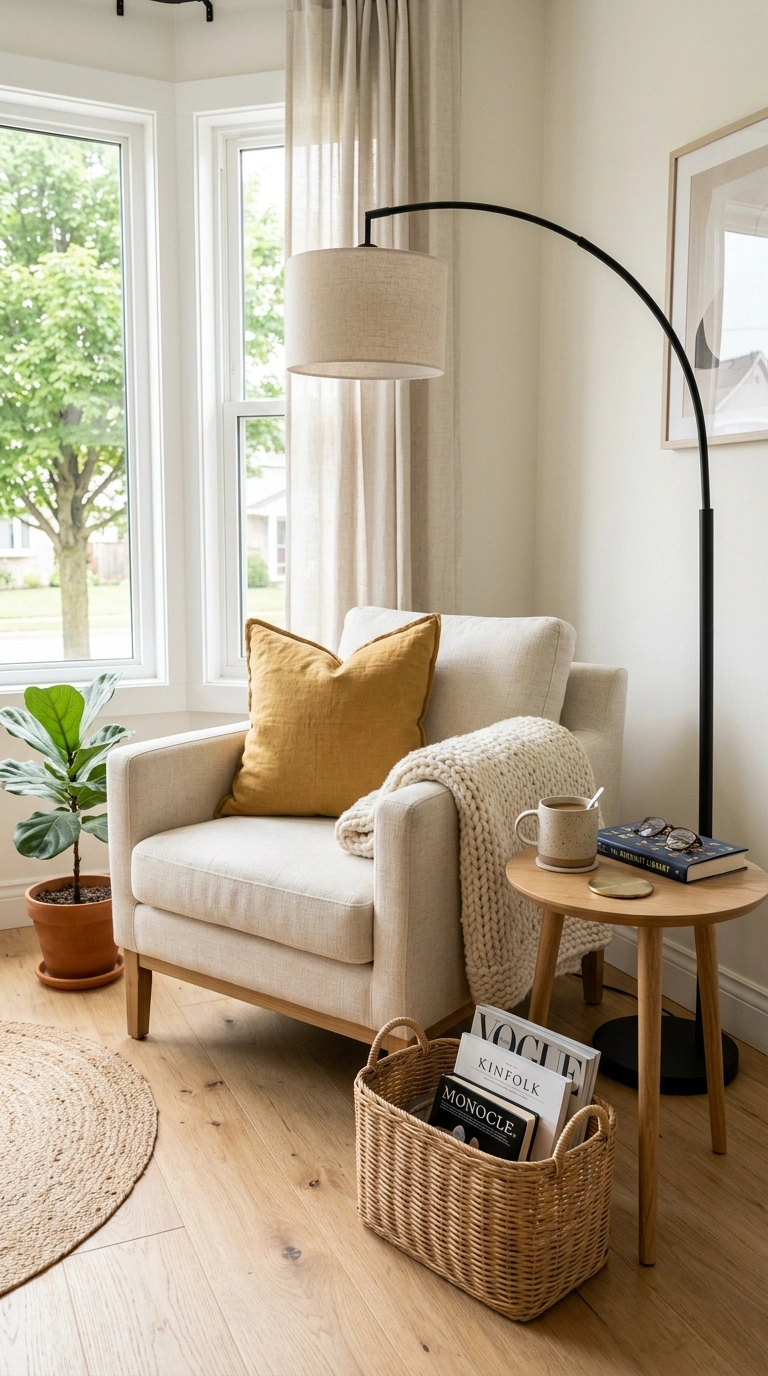
A small chair in a quiet corner gives a studio one more place to breathe. Choose an armchair with a rounded back and a soft seat, and place it in the corner that gets the best light, ideally near a window. Add a slim floor lamp with an arc arm so the light falls over your shoulder, and a small round side table for a mug and a book. Put a wool or cotton throw blanket over one arm and a single pillow in a color that stands out gently from the chair, such as mustard on a cream chair. Keep a small basket next to the chair for magazines and knitting, and keep the top of the side table simple. A chair with slim wooden legs shows more floor underneath, which helps the room feel bigger. If you can only fit one seat in your studio, choose a swivel chair that turns to face either the window or the room, so you can enjoy both views from the same spot.
18. Painted Bed Alcove
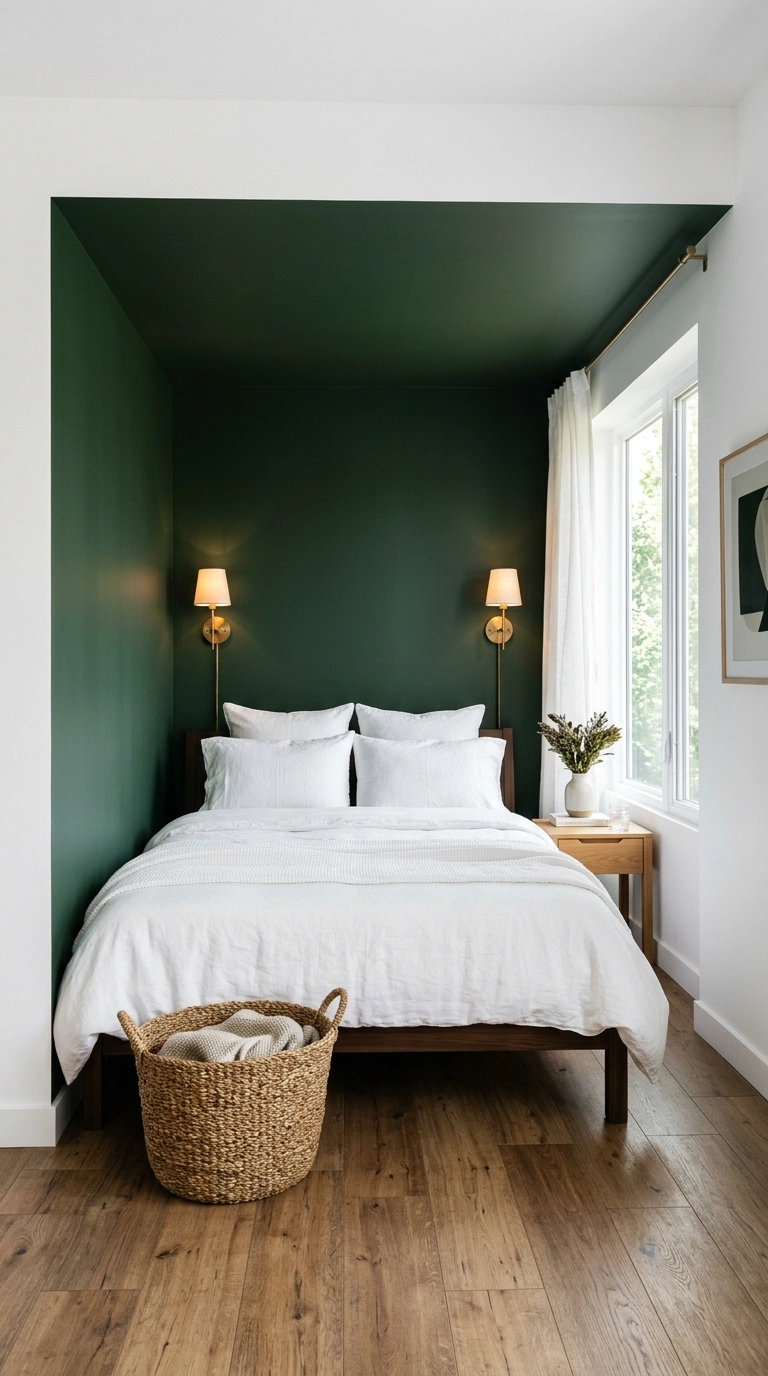
If your studio has a small bump out or an alcove, paint that area a deeper color to set it apart from the rest of the room. A dark green, navy, or warm terracotta on all four sides of the alcove, including the ceiling, makes the bed area feel like a cozy little nook. Keep the rest of the room in white or a light neutral so the contrast looks planned. Put the bed inside with the headboard against the back wall, and add wall sconces on both sides so you do not need bedside tables. Use white bedding to keep it bright, and add a woven basket at the foot for extra blankets. If you do not have an alcove, paint a wide stripe behind the headboard that stretches from wall to ceiling, which creates the same effect. Test your paint color on the wall for two days before you commit, since color looks different in morning light and evening light, and pick a matte finish that hides small flaws.
19. Open Clothing Rail
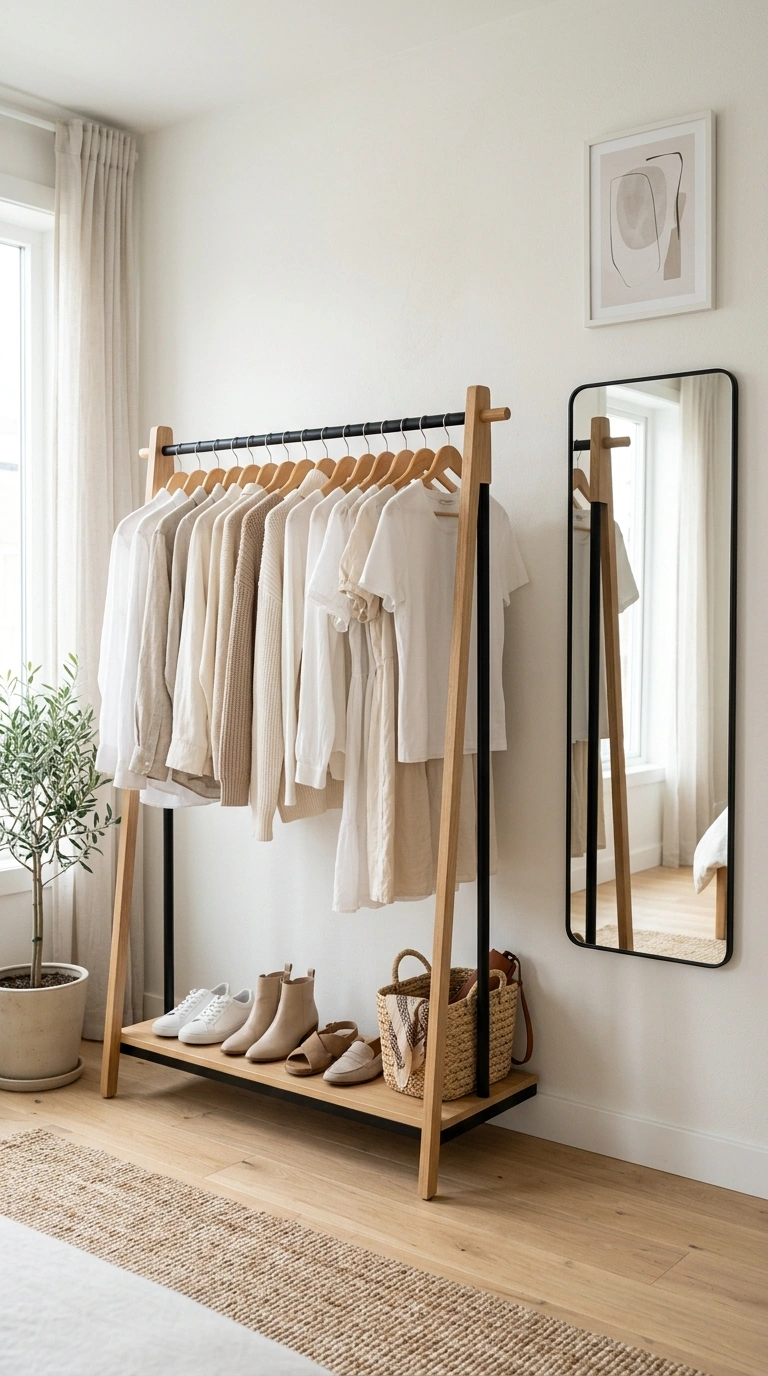
When a studio has one tiny closet or none at all, a freestanding clothing rail can hold your everyday clothes and look like part of the decor. Choose a rail with a wood or black metal frame, and hang clothes in a pattern, such as whites first, then neutrals, then colors. Add a shelf at the bottom for shoes and a small basket at the end for scarves and bags. Place the rail against a wall near the bed, and hang a full length mirror beside it so it feels like a boutique corner. Keep it neat by hanging only what you wear often, and store off season items in the bed drawers or in a slim closet bag. Use matching hangers in wood or matte black, because a uniform look keeps the rail from feeling messy. If you have a lot of clothes, add a small dresser under a window on the opposite wall, which balances the room and keeps your rail from feeling overloaded or heavy.
20. Plug In Wall Sconces
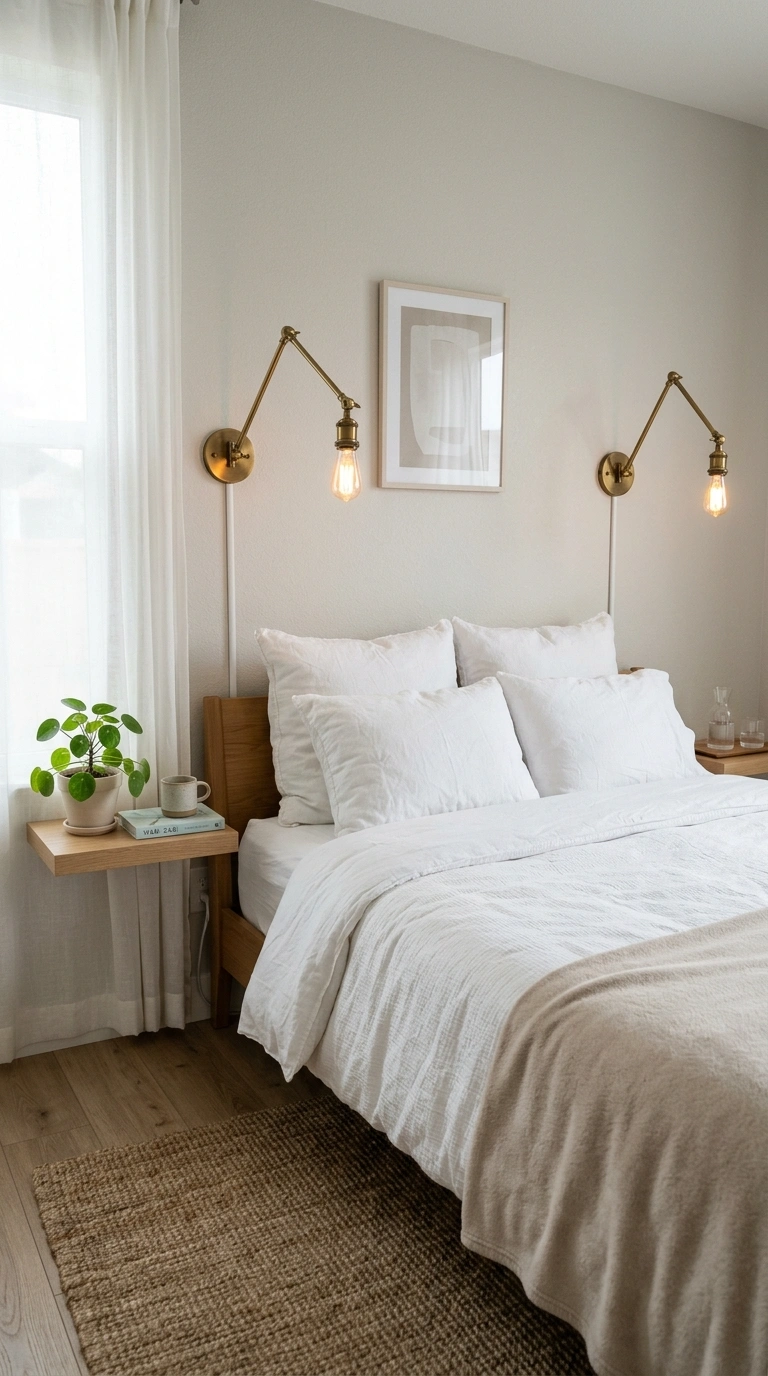
Ceiling lights can make a studio feel flat and harsh, but plug in wall sconces give you warm light without any electrical work. Mount one sconce on each side of the bed or sofa, and run the cord down the wall with a paintable cord cover. Choose swing arm styles in brass or black if you want to read, and simple globe or shade styles for soft mood lighting. Use warm white bulbs, around 2700 kelvin, so the room feels relaxed at night. Place another sconce near your dining or desk area so each zone has its own pool of light, which helps the room read as separate spaces even after dark. Put a dimmer plug on each one if you can, so you can lower the glow during dinner or before bed. This setup also frees up your bedside table and desk, because you no longer need a bulky lamp taking up surface space. Test the cord length before you hang anything, so it can reach the outlet without stretching.
21. Daybed Sofa Bed
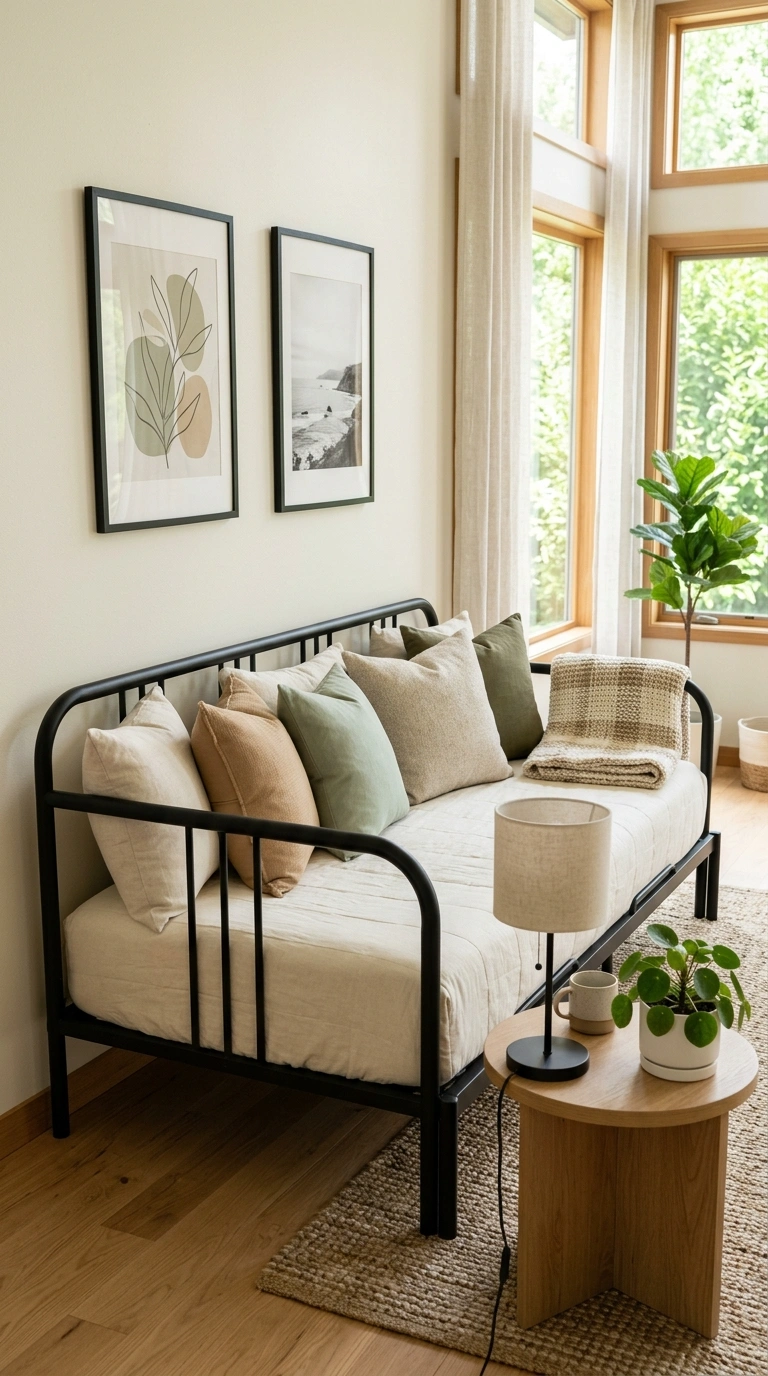
A daybed sits somewhere between a sofa and a bed, which makes it a smart pick for studios. Place it against the wall so it works like a sofa in the daytime, with a row of pillows along the back and a neat throw at one end. At night, remove a few pillows and you have a real bed with a mattress, no folding required. Choose a metal frame in black or white, or a wood frame that matches your other furniture. Use a firm mattress with a fitted cover that looks tidy, since it will be visible all day. Add a small side table at one end for a lamp and a plant, and hang a shelf or a piece of art on the wall behind it. Keep the pillows in two or three colors from the same family, such as cream, tan, and soft green, to make the whole setup look calm. It is also a great fit for guests, since they can sleep on it without you rearranging the room.
Frequently Asked Questions
How do I separate the sleeping area in a studio apartment?
Use a bookcase, a curtain, or a glass partition to mark the bed area. If you cannot add a divider, place a rug under the bed and put the sofa with its back toward the bed. This makes a clear line between sleeping and living zones without building anything.
What is the best furniture layout for a studio apartment?
Start by placing the bed against the wall farthest from the entry and the kitchen. Then set the sofa to face the room, and put a table or desk near the window. Leave a clear walking path of about 30 inches so the room does not feel crowded.
How can I make a studio apartment feel bigger?
Use light wall colors, large mirrors, and furniture with slim legs so you can see the floor underneath. Keep surfaces clear, hang curtains close to the ceiling, and choose pieces that do two jobs, such as an ottoman with storage or a fold down table.
Where do I put storage in a studio with no closets?
Look at the walls and the areas under furniture. Tall bookcases, shelves above the bed, drawers under the bed, and a clothing rail all give you room. Baskets and storage ottomans also hide items, and they look good in the room instead of feeling like clutter.
Can I decorate a studio apartment on a budget?
Yes. Start with paint, rugs, curtains, and lamps, since these change the room the most for the least money. Shop thrift stores for tables and chairs, and use one strong piece, such as a mirror or a plant, as your focus. Add new items slowly so you only buy what you really need.
Wrapping Up
A studio works best when each area has one clear purpose and the walls do a lot of the work. You do not need to try every idea here. Choose two or three that solve your biggest problems, such as where to sleep and where to store things, and add more over time. Small changes add up faster than you expect.