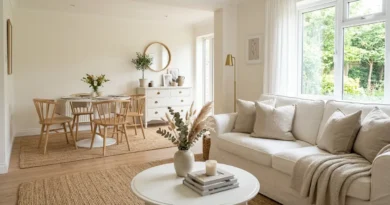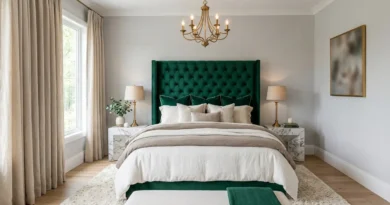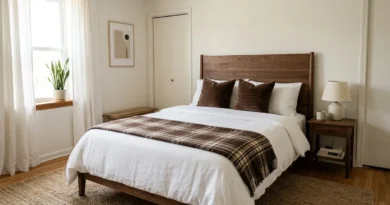
18 Practical No Headboard Ideas for Your Bedroom
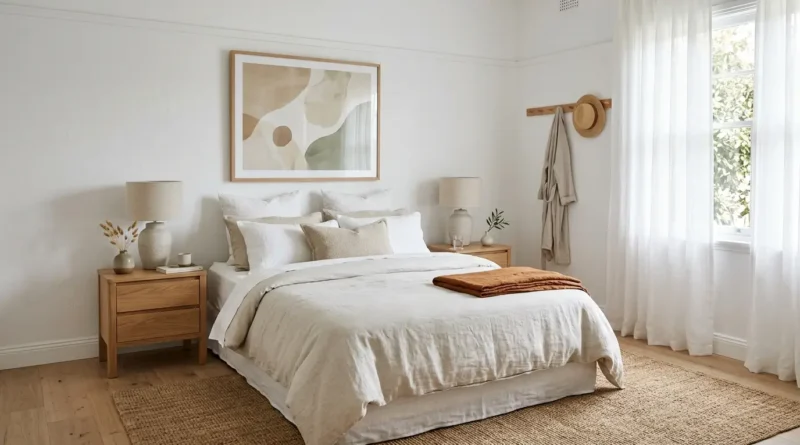
A headboard is nice, but it is not a rule. Plenty of good bedrooms skip it, and some look better without one. Maybe your frame never came with one, maybe it broke during a move, or maybe you just do not want another big piece of furniture in the room. Whatever the reason, a bed without a headboard can still look finished and calm with the right wall and pillow setup. Below are 18 practical no headboard bedroom ideas that use paint, art, curtains, shelves, and things you may already own. Every idea covers where it goes, what to buy or borrow, and one small step you can try tonight. Pick the one that fits your wall and your budget, and start there.
1. Painted Arch Wall
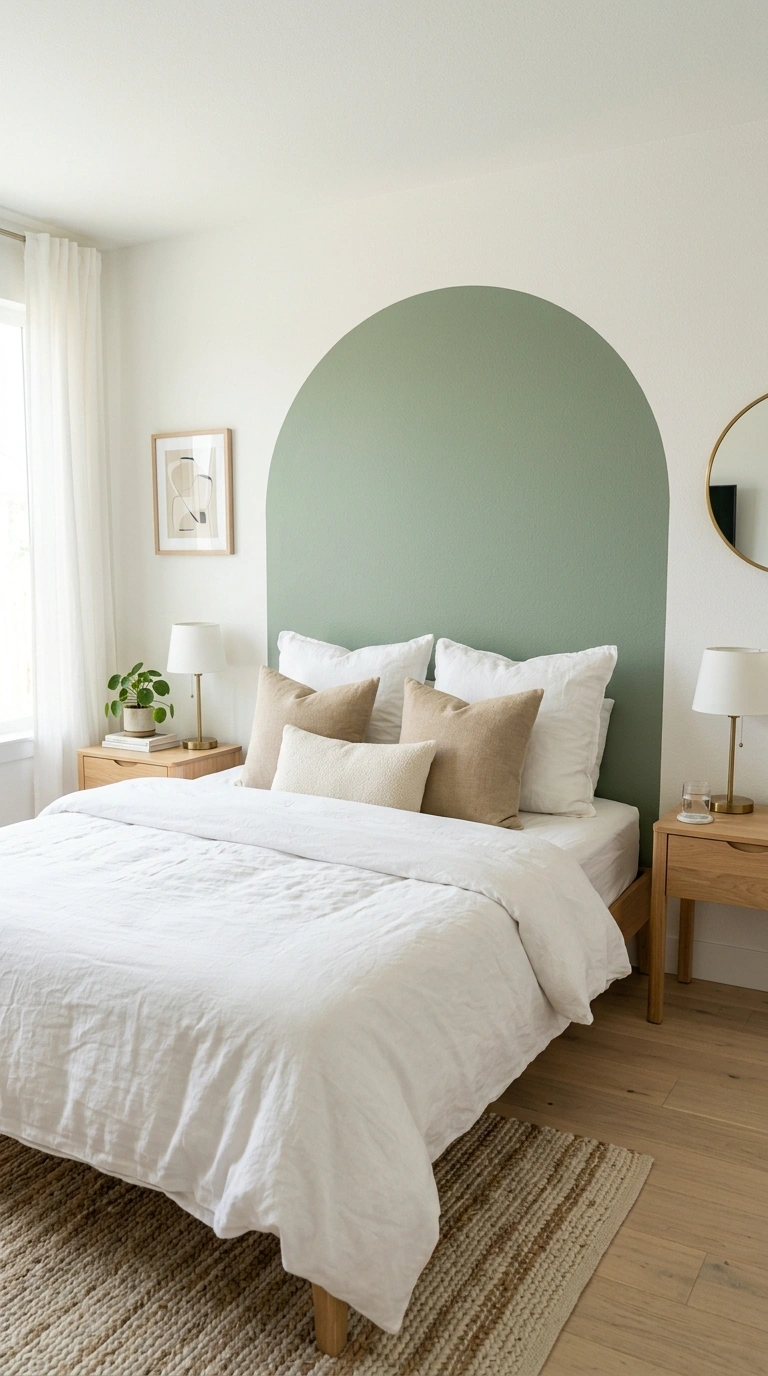
A painted arch behind the bed gives the look of a headboard without any extra furniture. Choose the wall behind the bed, center the arch over the middle of the mattress, and make it about as wide as the bed or a little wider. Tie a string to a pencil and use it like a compass to draw the curve, then mark the edge with painter’s tape. Soft colors like sage green, clay pink, or warm sand look calm against a white or cream wall. Use a small brush along the edges first and a roller for the middle. Peel the tape while the paint is still slightly damp, and you get a clean line. Add a lamp on each side of the bed and a couple of pillows in a shade that matches the arch. This is an easy weekend project, and one sample pot of paint is often enough. If you rent, ask your landlord first, or paint a large piece of plywood and lean it against the wall.
2. Large Art Above Bed
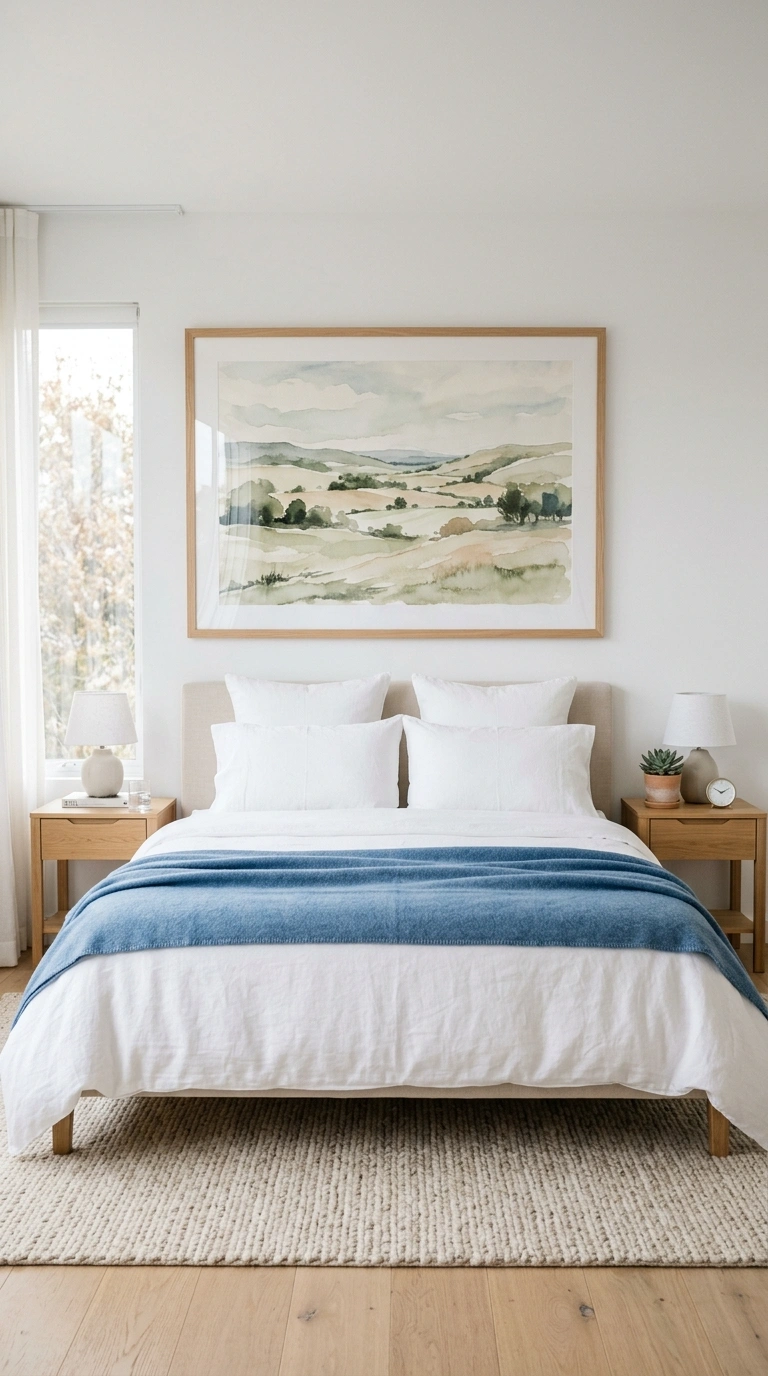
One large piece of wall art over the bed works like a headboard for the eye. Pick a frame about two thirds the width of the bed and hang it so the bottom edge sits 6 to 10 inches above the pillows. This spacing keeps the art connected to the bed instead of floating high on the wall. Soft landscapes, simple line drawings, and abstract shapes in muted colors look good in this spot. A wide frame in natural wood or black adds a strong edge, while a thin gold frame adds warmth. If one very large piece costs too much, hang two matching frames side by side with a small gap between them. Pull colors from the art into the bedding, such as a rust pillow or a blue throw. Use picture hanging strips or a strong nail, and check that the art is level before you press it in place. To test the size first, tape a sheet of paper the same size to the wall.
3. Slat Wall Panels
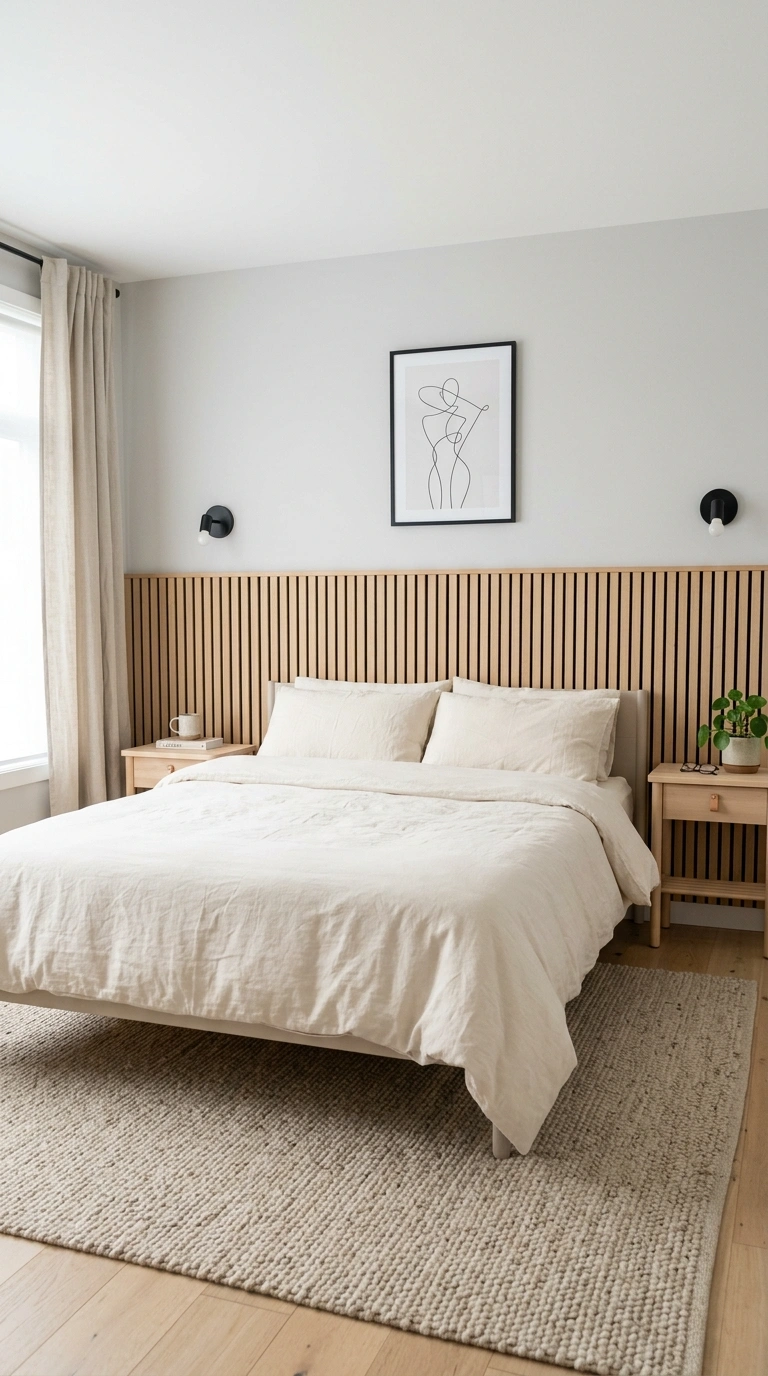
Wood slat panels behind the bed add warmth and texture where a headboard would usually sit. Use thin wood strips or ready made slat panels and mount them from just below the top of the mattress up to about 5 feet, or higher if you want a bold look. Light oak, walnut, and painted white all work well, and the vertical lines make the ceiling feel taller. Leave a gap of about half an inch between slats, and put a dark felt strip behind them so the gap reads as a clean shadow line. Many panels come on a felt backing and attach with construction glue, which is easy for a beginner. Set the bed against the wall with a simple nightstand on each side, and hang a small black or brass wall light near the edges. Since the wood is the star, keep the bedding plain, like white, cream, or soft gray. Wipe the slats with a dry cloth each week so dust does not settle in the gaps.
4. Picture Ledge Above Bed
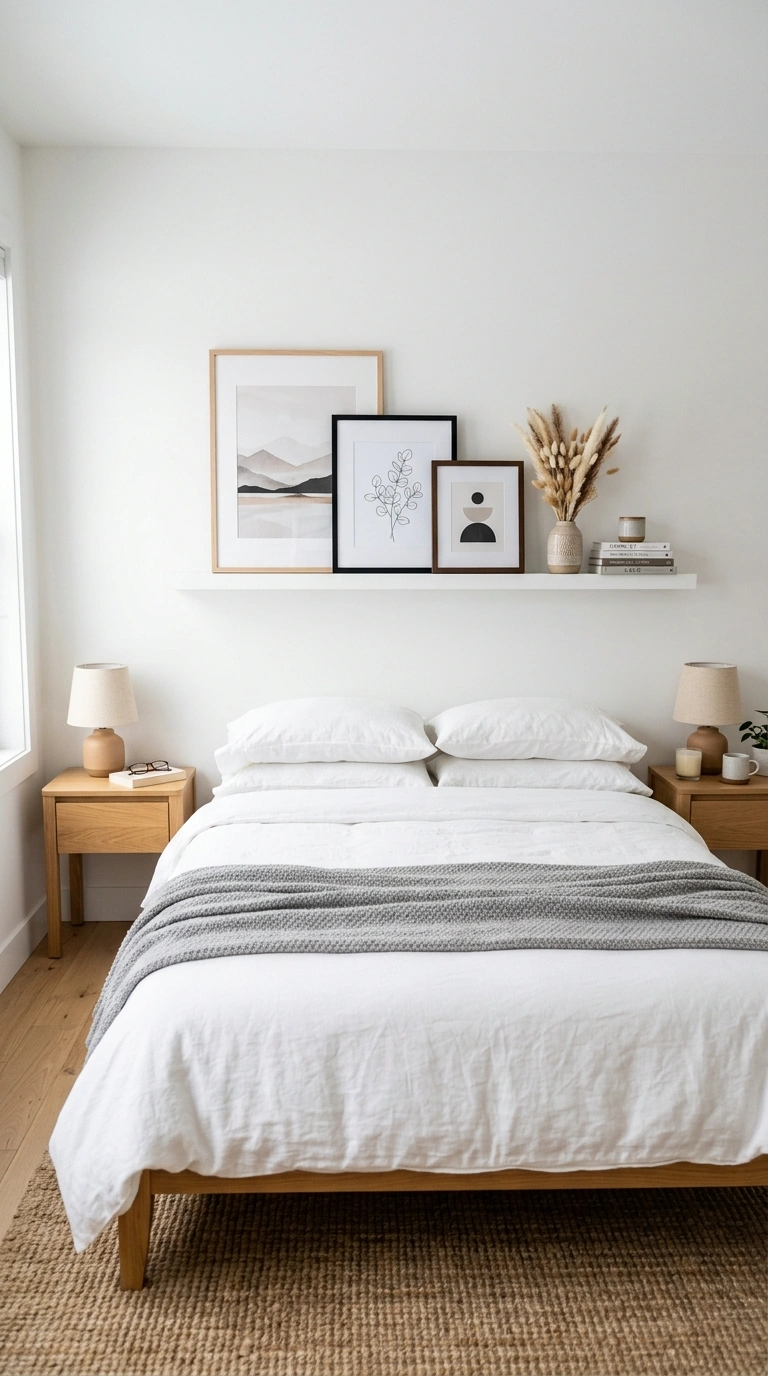
A long picture ledge above the bed is one of the easiest headboard alternatives because you can change it whenever you like. Choose a ledge about as wide as the bed and mount it about 12 inches above the mattress top, so pillows never bump it. Lean two or three framed prints on the ledge, add a small vase with dried stems, and stack a few books beside them. Let the frames overlap a little so the shelf looks relaxed instead of lined up. A white ledge on a white wall keeps things bright, while a dark wood ledge on a light wall makes a clear edge. This wall decor above the bed changes in a minute, so you can swap the art with the seasons. Keep everything light and low, and skip heavy glass frames, since one hard knock from a pillow could send them down. A small dot of museum putty under each frame holds it in place. Renters will like that only a few screws go into the wall.
5. Curtain Behind Bed
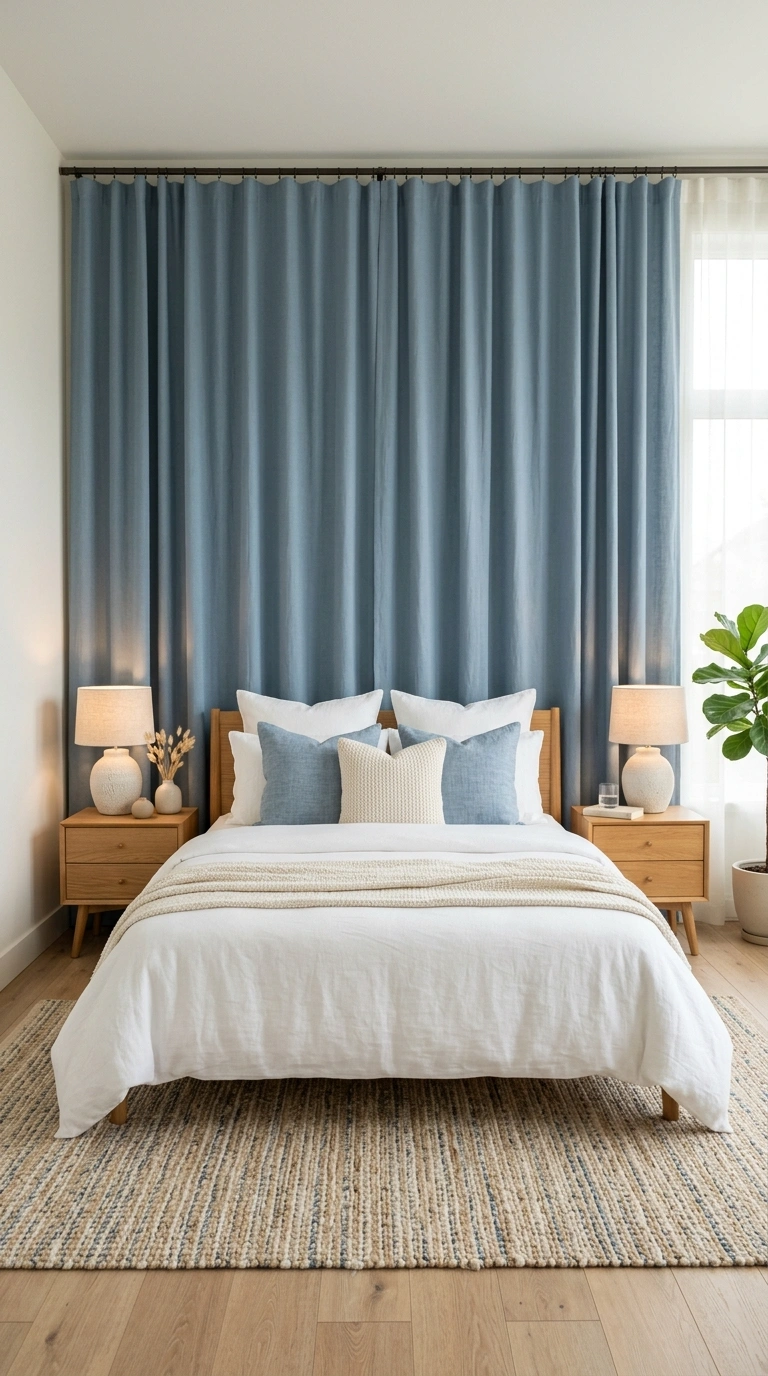
A floor length curtain hung behind the bed gives it a soft backdrop and takes no floor space. Mount a rod a few inches below the ceiling, a bit wider than the bed, and hang two panels that touch the floor. Heavy linen, cotton, or velvet in warm cream, dusty blue, or olive works best. Keep the panels closed behind the bed so the fabric forms a smooth wall of color. It also softens sound in the room and covers a plain or damaged wall. If the wall has a window on it, match the curtain to the window curtains so the room looks like one plan. Steam or press the panels before hanging so no fold lines show. Add a few pillows in the same color family, and set a lamp on each nightstand so the light bounces off the fabric. You can try this with a spare pair of curtains you already own. If you cannot drill, use a strong tension rod in an alcove.
6. Mirror Above Bed
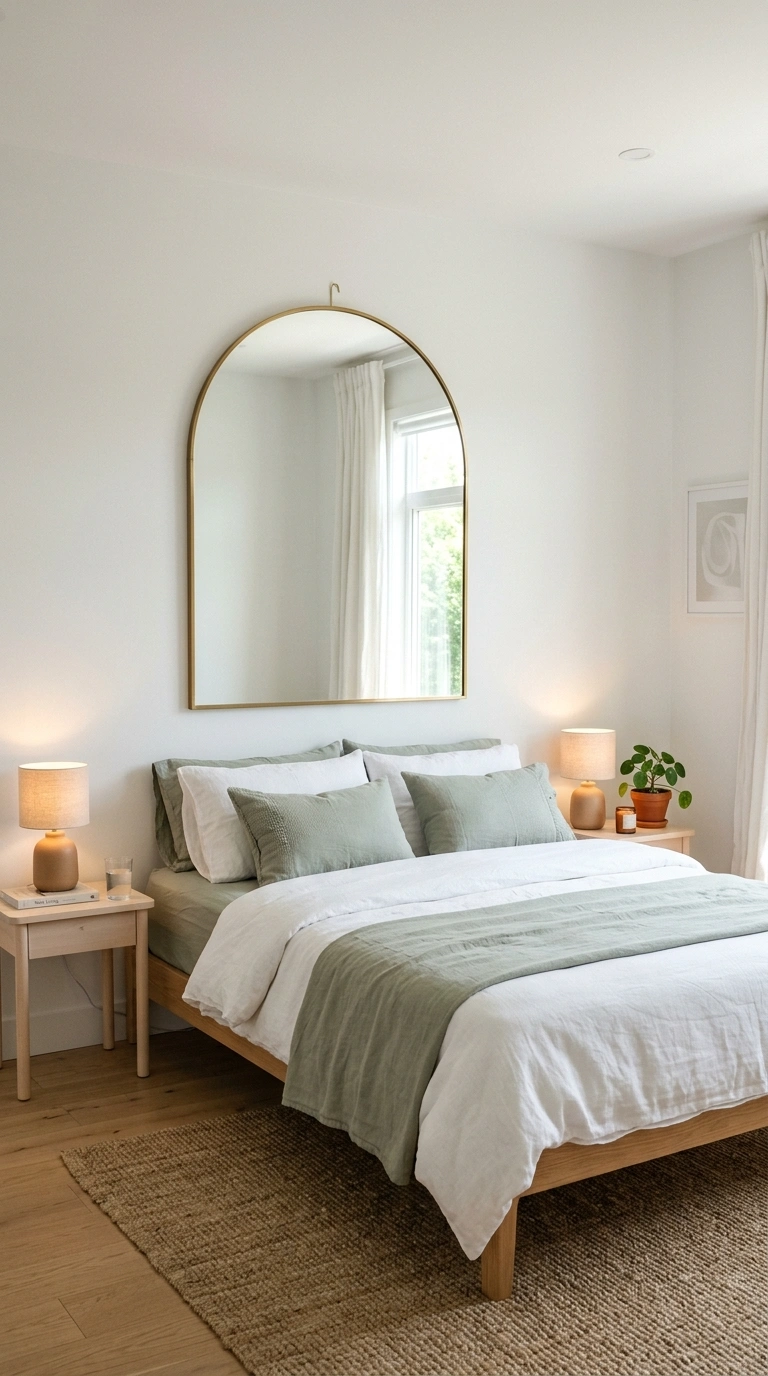
A large mirror above the bed bounces light around the room and can stand in for a headboard. Choose a rounded or arched mirror with a slim frame in black, brass, or pale wood, and hang it so the bottom edge sits about 8 inches above the pillows. Because a mirror is heavy, use two wall anchors or a French cleat rated well above its weight, and hang it into studs when you can. A lighter frame is easier and safer above a sleeping spot. Face the mirror toward a window if the layout allows, since it will pick up daylight and make the room feel larger. Check what the mirror reflects before you settle on the spot, and skip it if it shows a messy closet or a cluttered corner. Pair it with two small lamps and light bedding, such as white or soft sage, so the glass looks airy. If a mirror over the bed makes you uneasy, lean a tall floor mirror against the wall beside the bed instead.
7. Pillow Stack Backrest
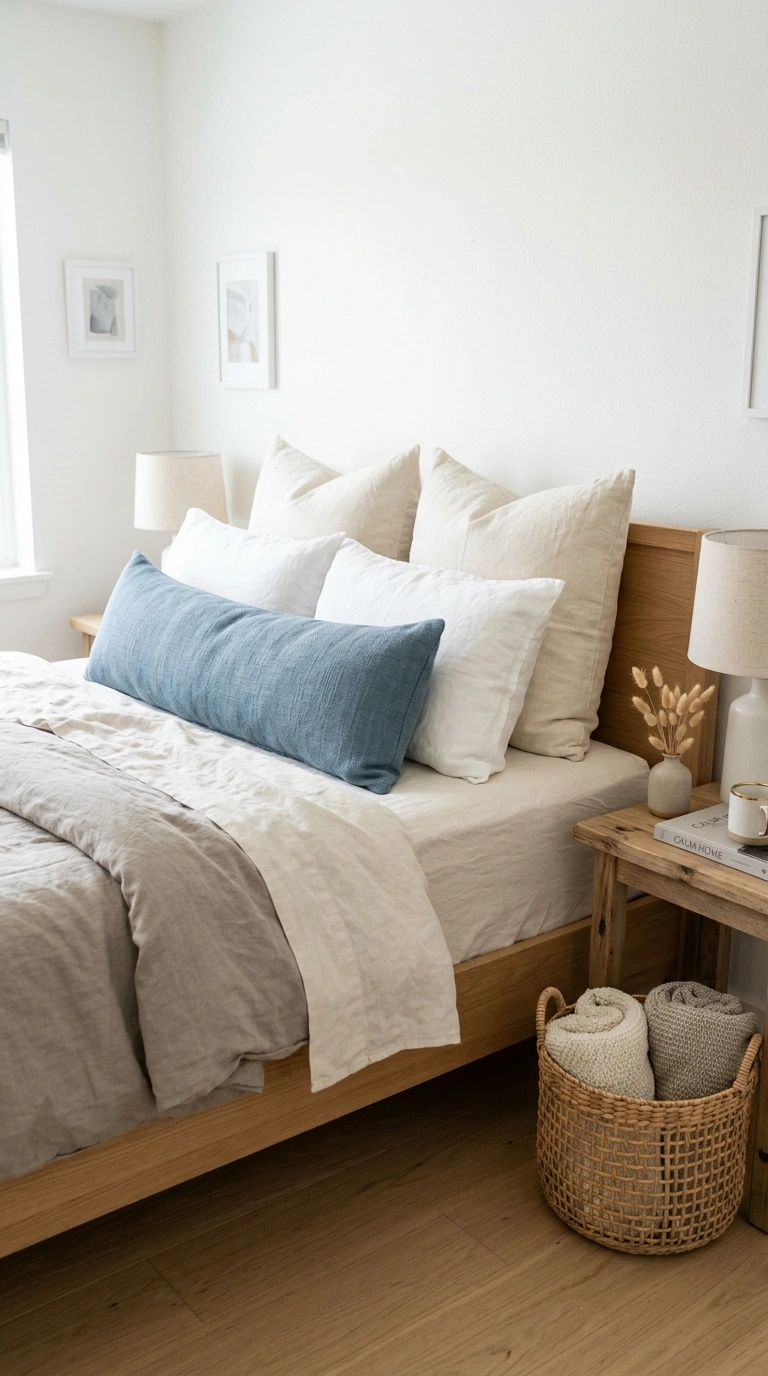
A stack of large pillows can give you the comfort of a headboard with no furniture at all. Set two or three big square pillows, about 26 inches wide, against the wall behind your sleeping pillows and tilt them slightly back. Add a row of standard pillows in front and one long lumbar pillow in the middle. These layered pillows look best in linen, cotton, or velvet covers in soft tones such as cream, greige, and dusty blue, with one thin stripe for interest. The stack gives your back a soft place to rest when you read in bed, and it hides the gap between the mattress and the wall. Choose covers with zippers so you can wash them easily. If the big pillows slump, slide a firm wedge pillow or a folded blanket behind them. Keep a small basket on the floor by the bed for the pillows you take off at night. Try this today with your couch pillows before you buy any new ones.
8. Bed Under Window
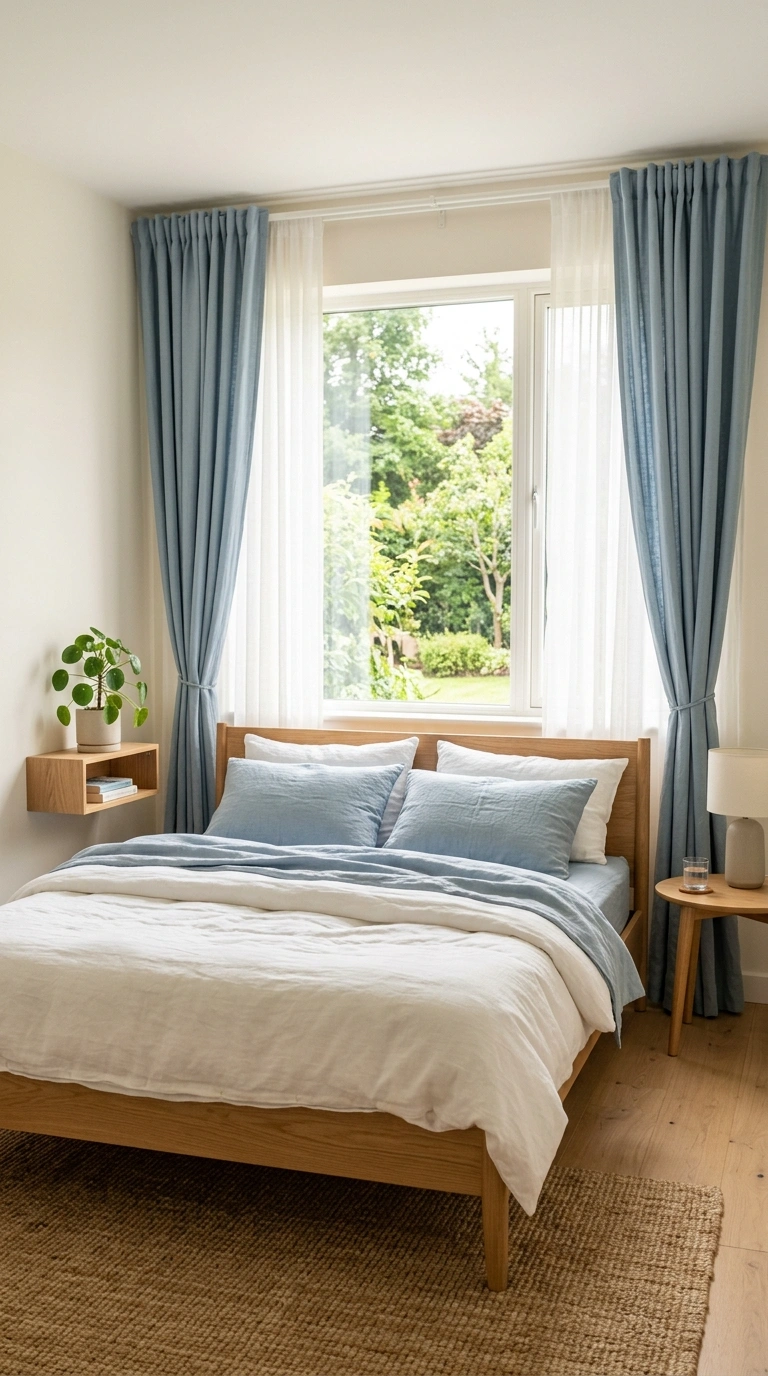
Placing the bed under a window is a smart move when the walls are short on space or the ceiling slants. The window becomes the backdrop, and the bed sits low and calm beneath it. Check first that the window is not drafty, and choose a frame lower than the sill so the glass stays clear. Hang curtains from just under the ceiling to the floor, so the window looks tall and the bed feels framed. Sheer or light linen curtains bring in bright mornings, and you can pair them with blackout panels for sleeping in. Add a small night table or wall shelf on each side, and set a lamp on one and a plant on the other. Keep the bedding light, in white or soft blue, so the window light does the work. If cold air is a concern in winter, add a thick blanket at the foot of the bed and a rug on the floor. Test the spot by sliding the bed a few feet at a time.
9. Gallery Wall Above
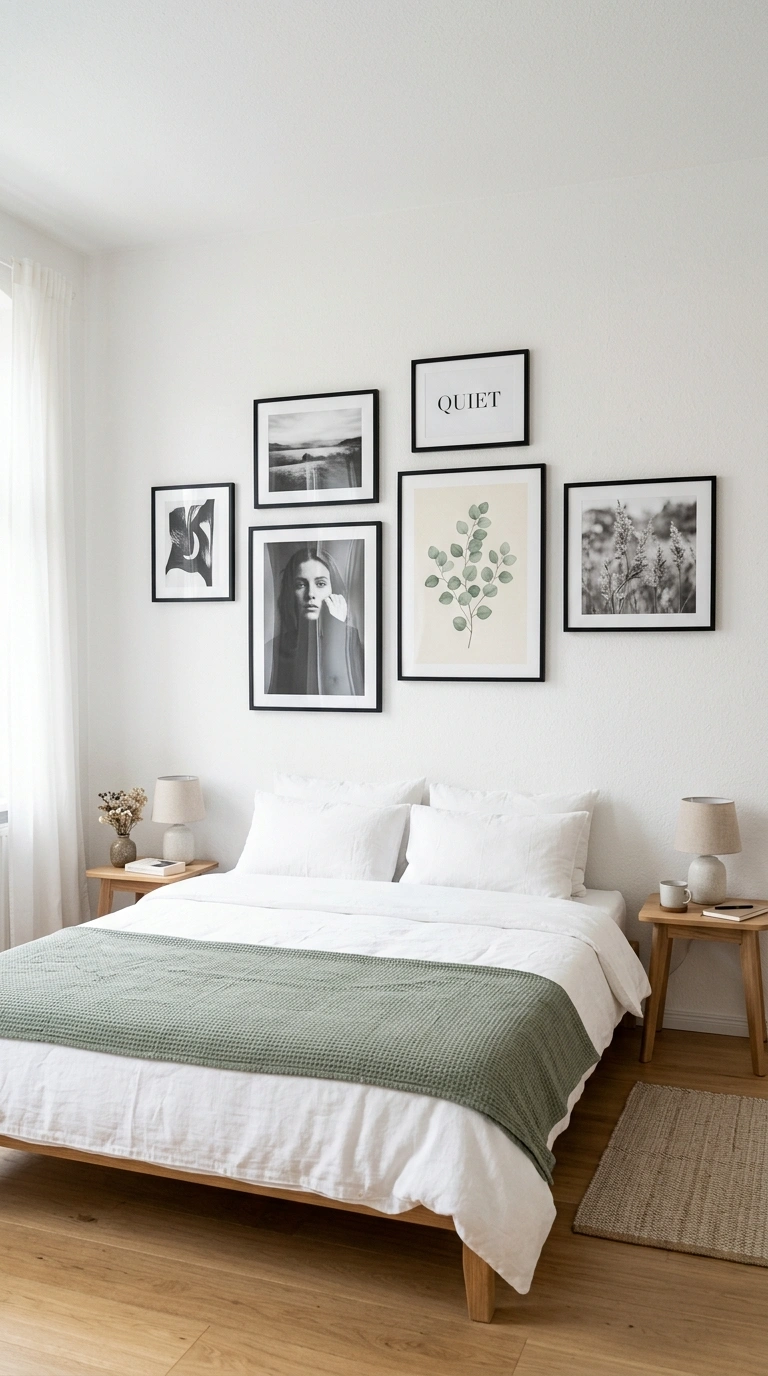
A small gallery wall above the bed fills the space where a headboard would be and shows your own taste. Start with five to seven frames in different sizes, all in the same finish, such as black, white, or natural wood. Lay them on the floor first and move them around until the group looks balanced, with about 2 inches between frames. Keep the center of the group about 8 inches above the pillows and let it spread slightly wider than the bed. Mix black and white photos, simple prints, and one or two pieces with a touch of color that matches your bedding. Cut a paper shape for each frame and tape them to the wall before you nail, so you can adjust the layout without extra holes. Choose lightweight frames with plexiglass instead of glass, which is safer above a sleeping area. A tidy set of frames makes the wall look planned even when the art comes from many places.
10. Wallpaper Behind Bed
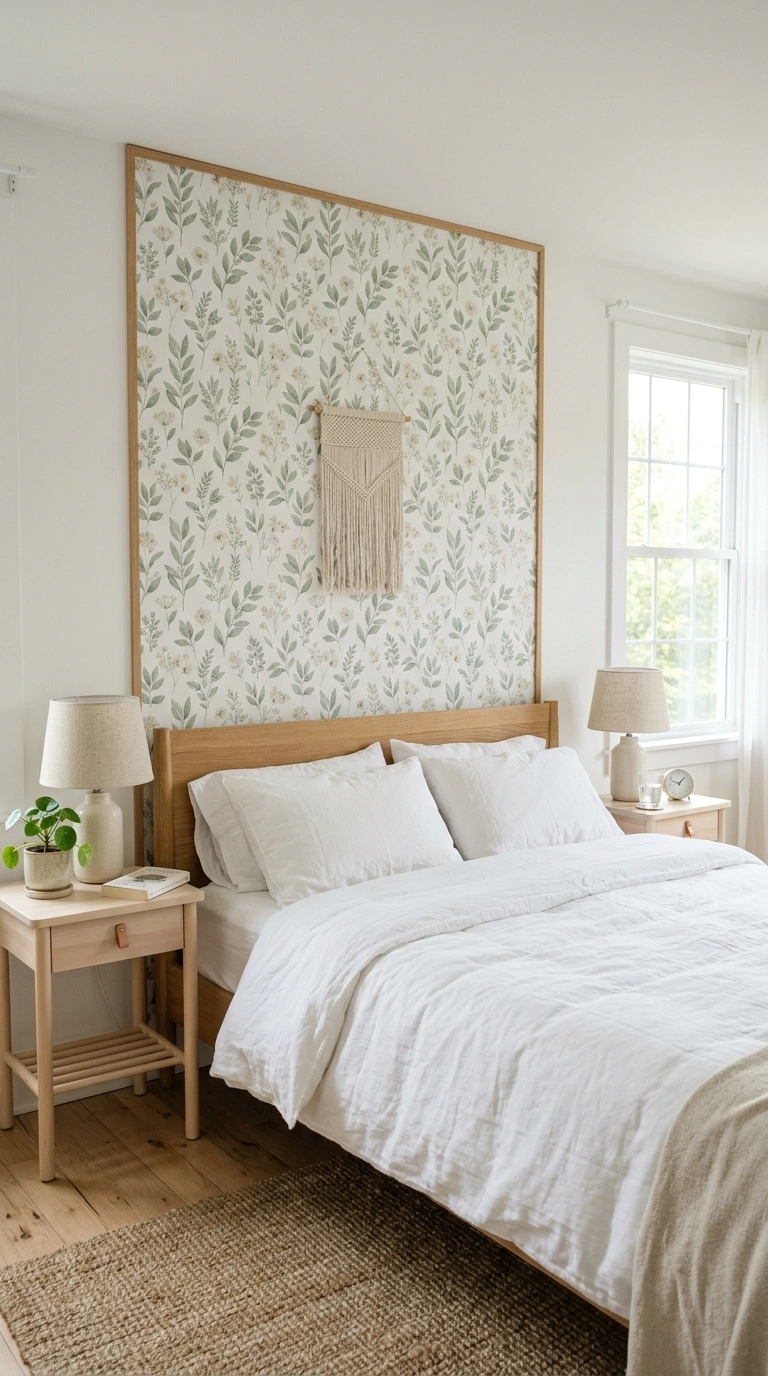
A single strip of wallpaper behind the bed gives you a headboard sized dose of pattern without covering the whole room. Measure the width of the bed, add 8 to 12 inches on each side, and hang a panel of wallpaper to that width, either up to the ceiling or just to the height of a headboard. Peel and stick paper is easy to hang alone and easy to remove, so it suits rentals. Botanical prints, soft stripes, and small florals in muted colors look classic, while big leaf shapes look fresh. Pick bedding in a plain color pulled from the paper, so the pattern stands out and the bed does not compete with it. Add a slim wood trim or paint a border around the panel to make it look like a real headboard. Smooth the paper with a plastic card as you go to press out air bubbles. You can order a single roll and finish the job in one afternoon.
11. Wall Sconces Pair
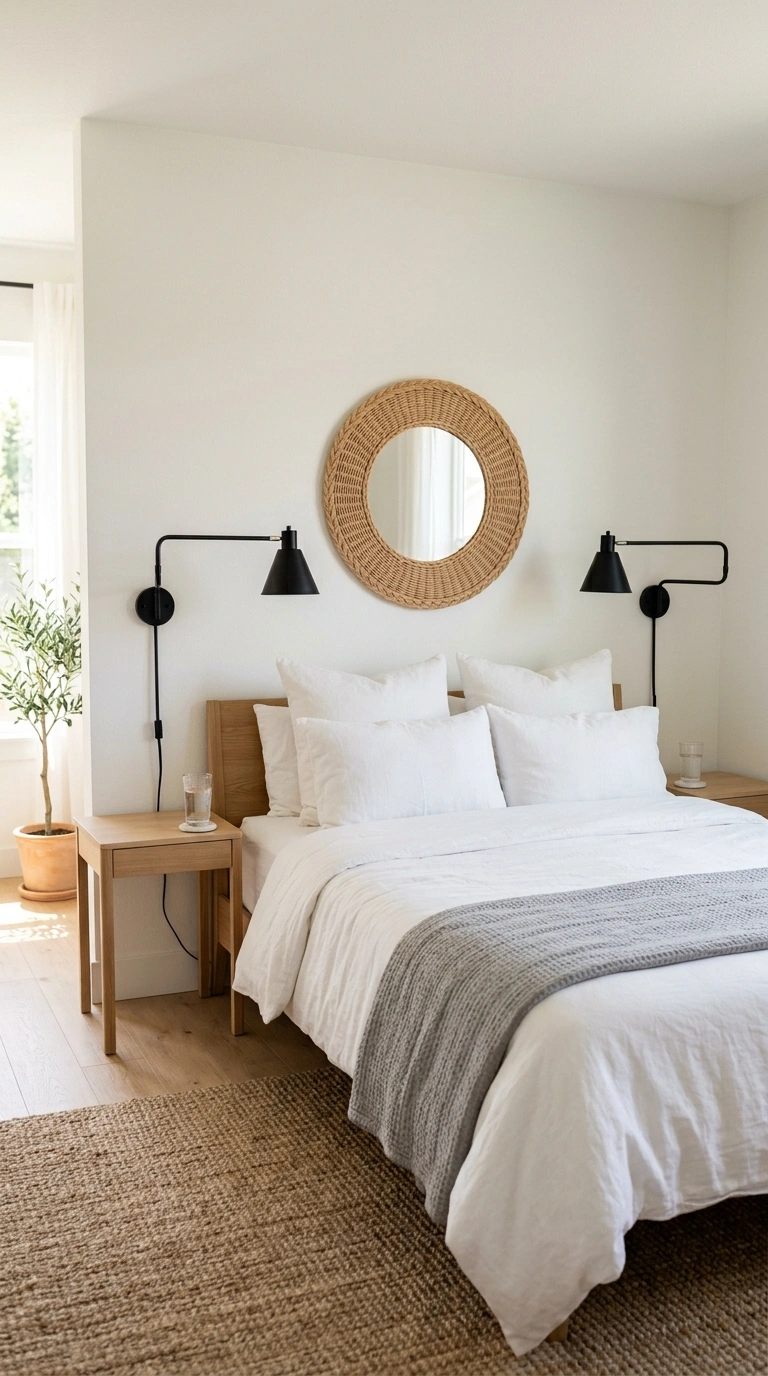
A pair of wall sconces on either side of the bed creates a balanced, finished look even without a headboard. Choose plug in sconces with a swing arm so you can install them without any wiring. Hang them about 20 to 24 inches above the mattress and about 6 inches past the edge of the pillows. Matte black, brushed brass, and white finishes all work, and a warm bulb around 2700K gives a soft glow for good bedside lighting. Run each cord down the wall inside a paintable cord cover in the same color as the wall, so it fades away. Because the lights hang on the wall, your nightstands can stay slim and hold only a glass of water and a book. Add a simple rectangular frame or a rattan mirror between the two sconces to fill the wall. A light fabric shade on each one softens the glow and makes the lamps look like decor. This setup is especially handy in small rooms, since it frees up the nightstand space.
12. Woven Wall Hanging
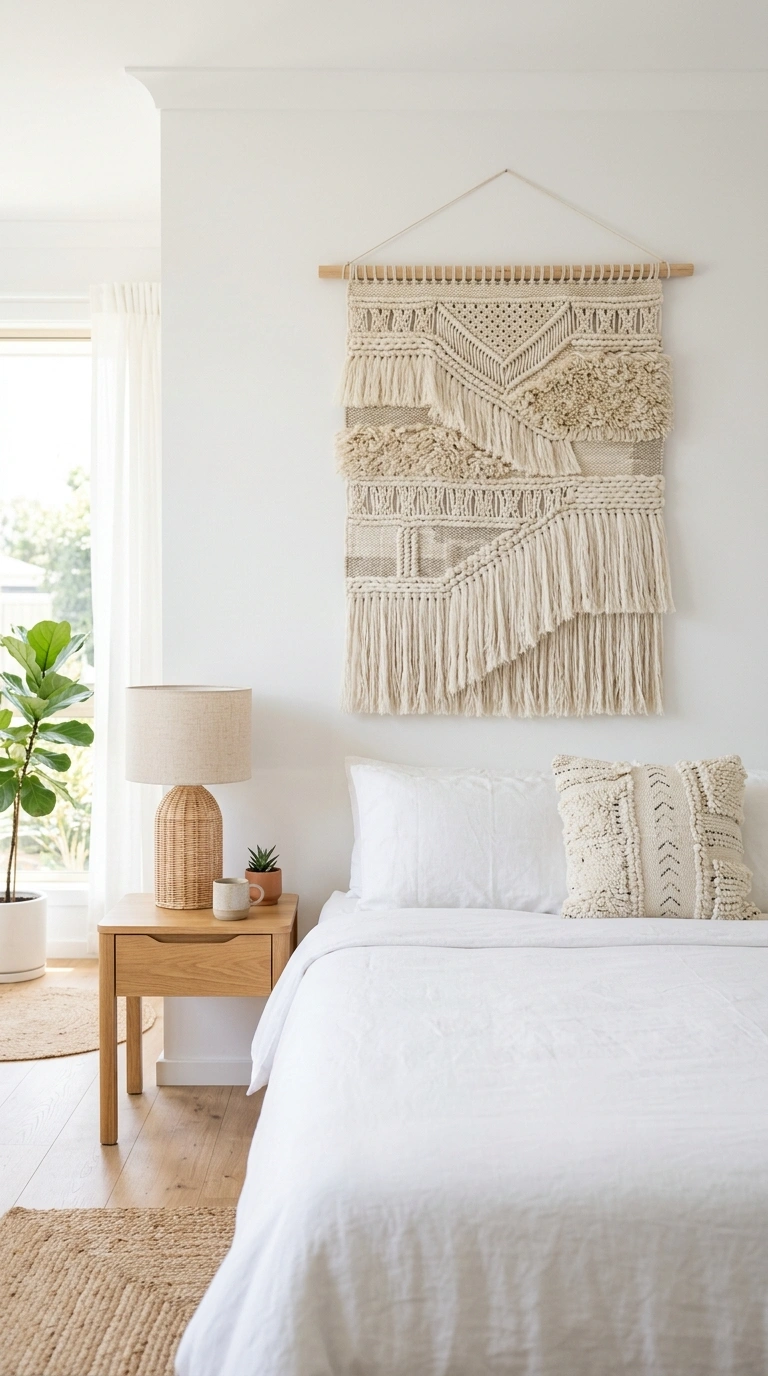
A large woven wall hanging brings texture to the wall behind a bed with no headboard. Look for a piece in natural jute, cotton, or wool that is at least two thirds the width of the bed. Hang it from a wooden dowel and two nails so it sits about 8 inches above the pillows. Neutral colors like ivory, oatmeal, and soft tan pair well with white walls and wood furniture. If you like color, choose a piece with a touch of terracotta or sage green. Keep the rest of the room calm with plain bedding and a couple of textured pillows. A fringe at the bottom sways a little and gives the room a relaxed look. You can also make one on a small loom with thick cotton rope over a weekend. Run a brush attachment over it with the vacuum each month to lift the dust. Match it with a rattan lamp or a wooden bedside table so the materials feel connected.
13. Peg Rail Above Bed
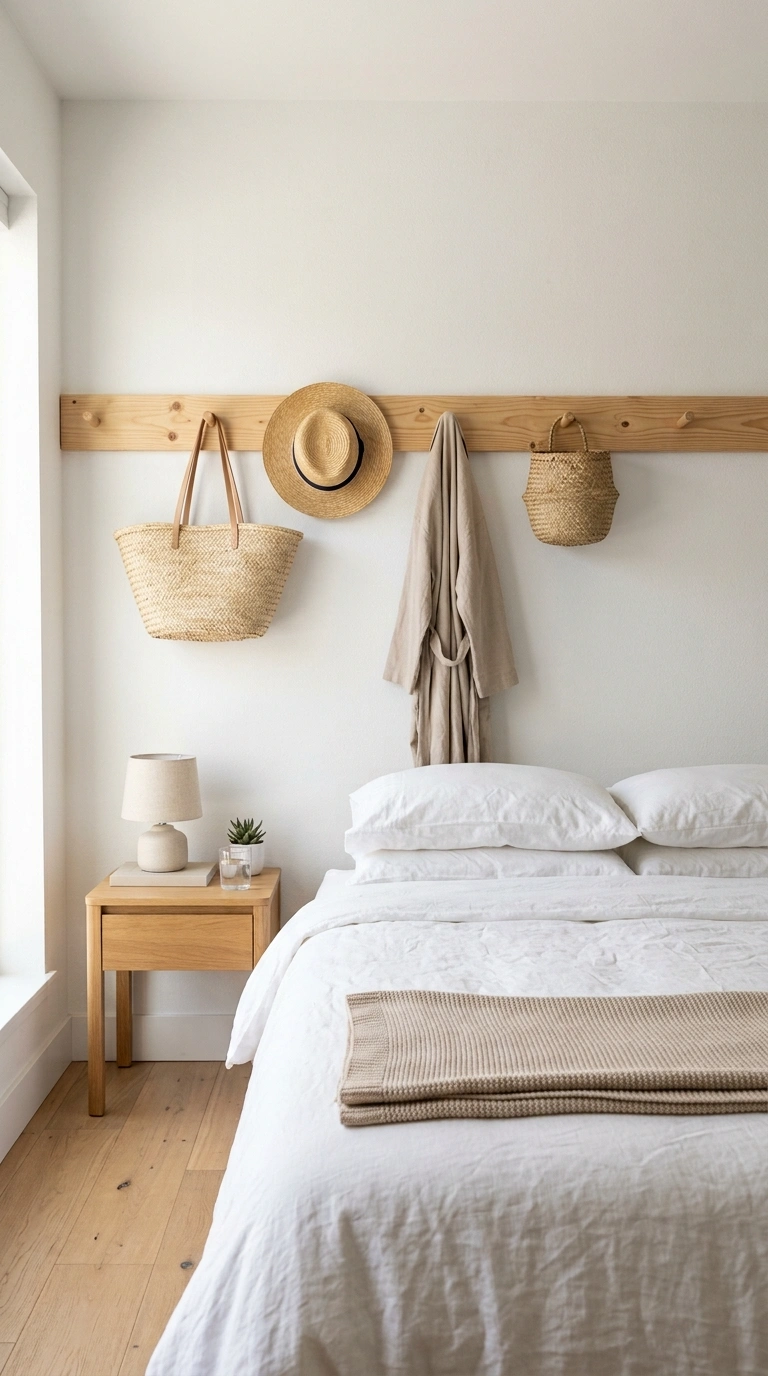
A wooden peg rail on the wall above the bed is a practical, farmhouse style way to skip the headboard. Fix a long board of pine or oak about 30 inches above the mattress and screw in four to six wooden pegs. Use the pegs for a woven bag, a straw hat, a soft robe, or a small basket that holds your book. Keep the pegs a few inches apart so each item has its own space. Paint the rail the same color as the wall for a quiet look, or leave the wood natural for warmth. This idea keeps clothes and bags off the floor and gives the wall a lived in feel. Do not hang anything heavy directly over your head, and keep the items light. Add a soft linen throw at the foot of the bed to match the casual style. Fasten the rail into wall studs or use strong anchors, and check that it is tight once a season.
14. Bookshelf Behind Bed
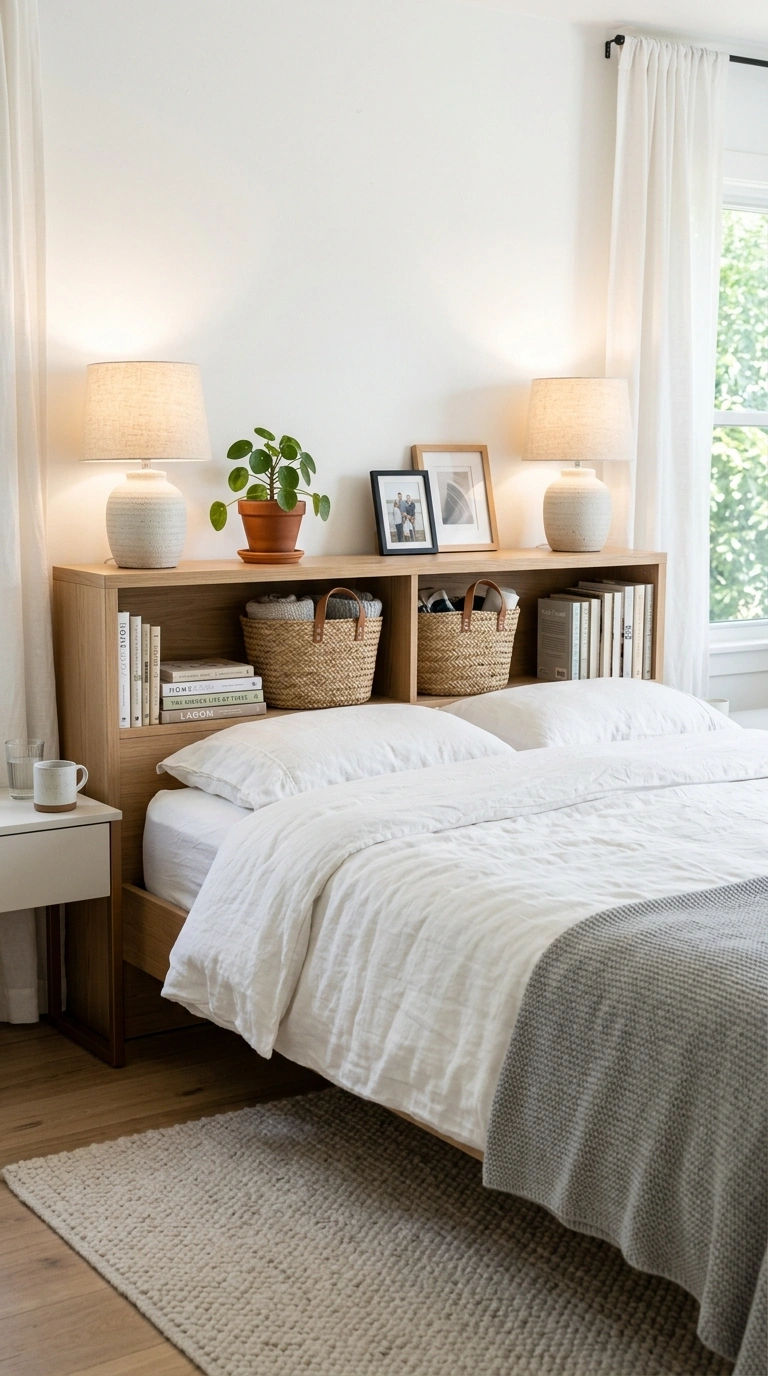
A low bookshelf behind the bed can act as both a headboard and a place to keep the things you use every night. Pick a shelf about as tall as the top of the mattress, or slightly higher, and a little wider than the bed, then push the bed against it. Use the top for a pair of lamps, a small plant, and a couple of framed photos, and use the shelves for books and baskets. Since you will reach behind you for a book or a charger, choose baskets with handles so things do not spill. A wooden shelf in light oak or a painted white one suits most rooms. Keep the top clear of heavy items, and anchor the shelf to the wall with furniture straps so it cannot tip. It is a good pick for a small room since it can replace nightstands. Fill the shelves only two thirds full, so the piece looks calm and not crowded.
15. Simple Canopy Frame
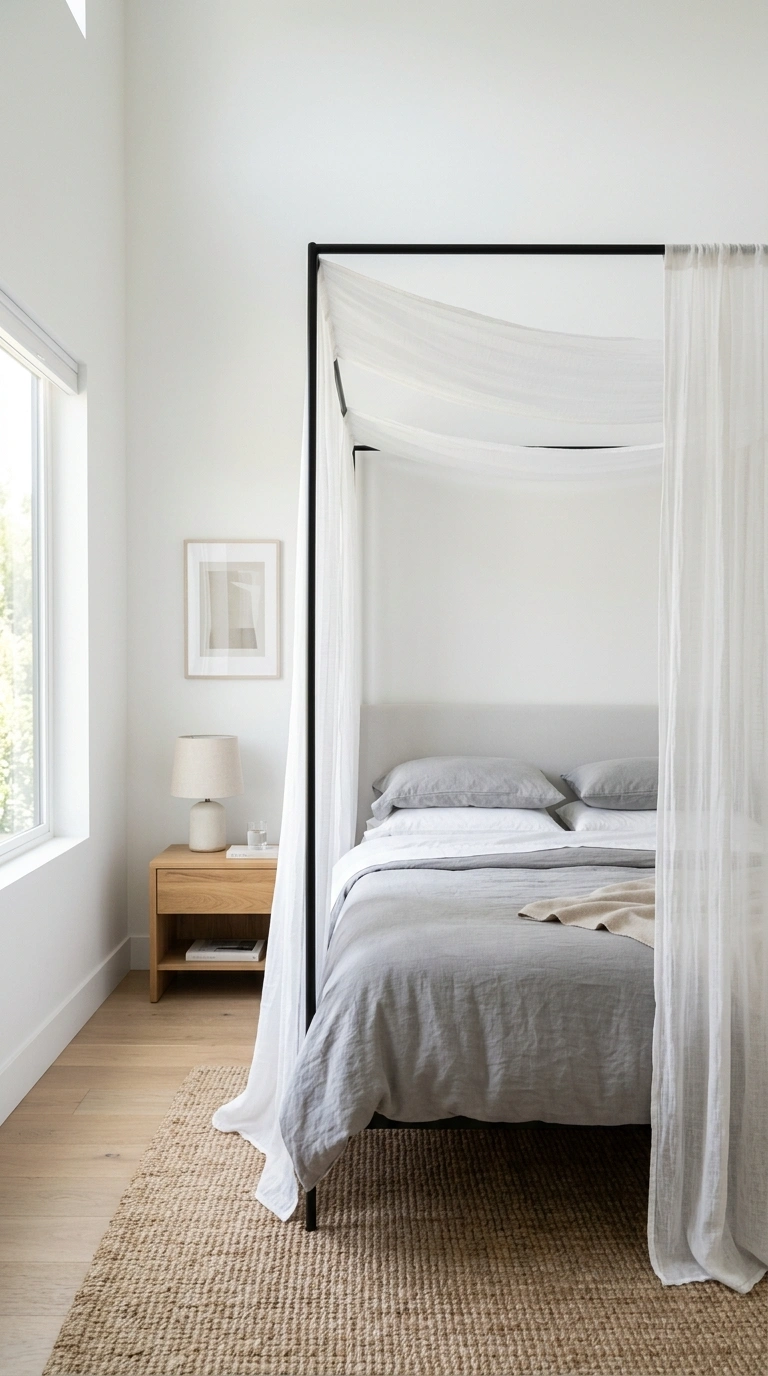
A simple canopy frame above the bed adds height and softness where a headboard would normally sit. Use a slim metal or wood frame that stands over the bed, then hang sheer white or cream fabric from the top rails. Let the fabric fall to the sides and pool a little at the wall behind the pillows, so the bed feels like a calm room within the room. Choose light cotton or linen gauze and skip heavy velvet, which can weigh the frame down. Keep at least 8 inches between the fabric and any bulb, since fabric near heat is a fire risk, and use a low lamp or battery candles on the nightstand. Iron the fabric before hanging so the folds relax. You can also skip the frame and hang fabric from a ceiling hook above the bed. Choose plain bedding in white or soft gray so the canopy stays the star. This idea suits rooms with tall ceilings, since the fabric draws the eye upward.
16. Bed in Corner
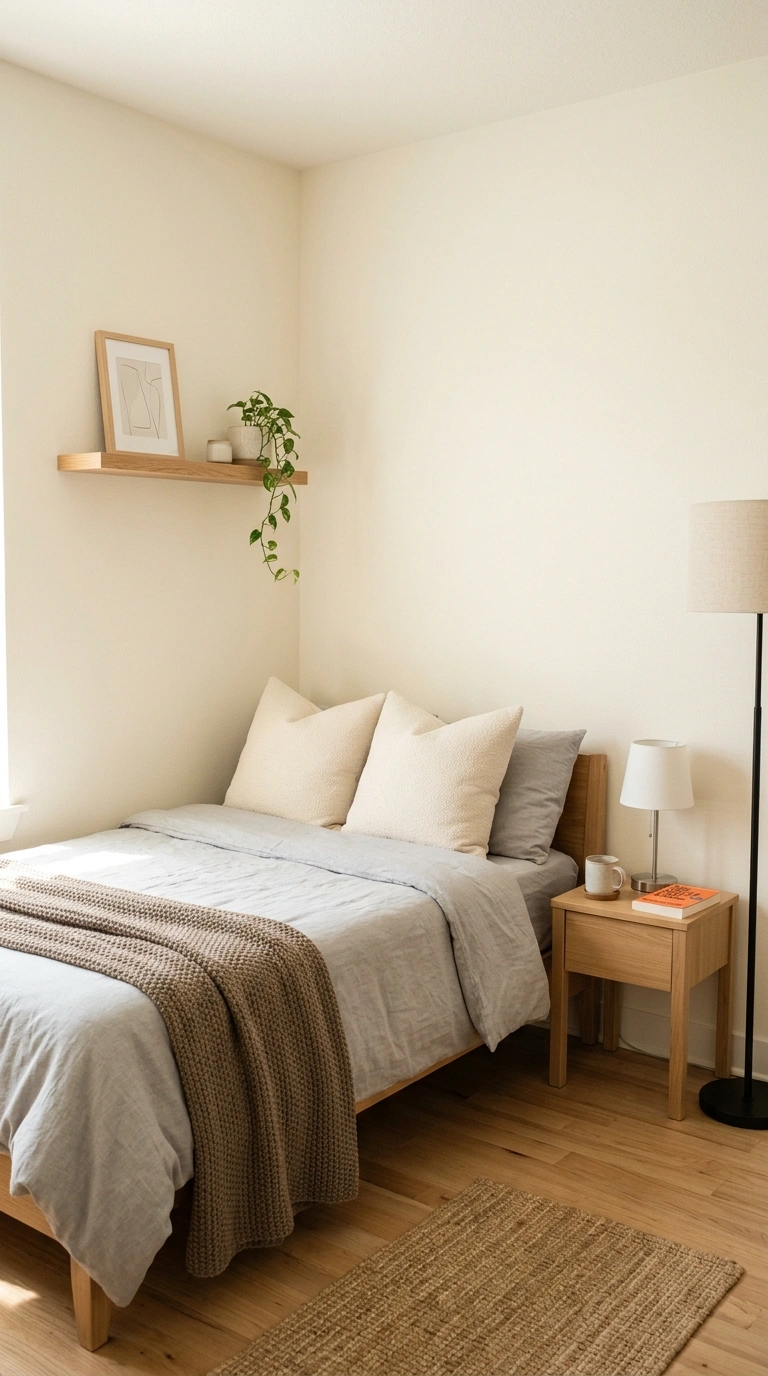
Bed placement can solve the headboard question all by itself. Push the bed into a corner so the long side touches one wall and the head touches the other, and you get two solid backs with no headboard needed. Add two big pillows against the wall for comfort. This frees up the rest of the room for a dresser, a desk, or a reading chair. Hang a shelf or a small piece of art on the side wall so the corner looks styled. Put a bedside table on the open side with a floor lamp behind it. Use a long throw or a bed skirt to cover the side that faces the wall so the bed looks finished. Remember that you will make the bed from one side only, so choose light bedding and a duvet that tucks in easily. A bed with no headboard in a corner is common in kids’ rooms and guest rooms, and it fits any small bedroom well. Slide the bed over and see how much floor you gain.
17. Low Platform Bed
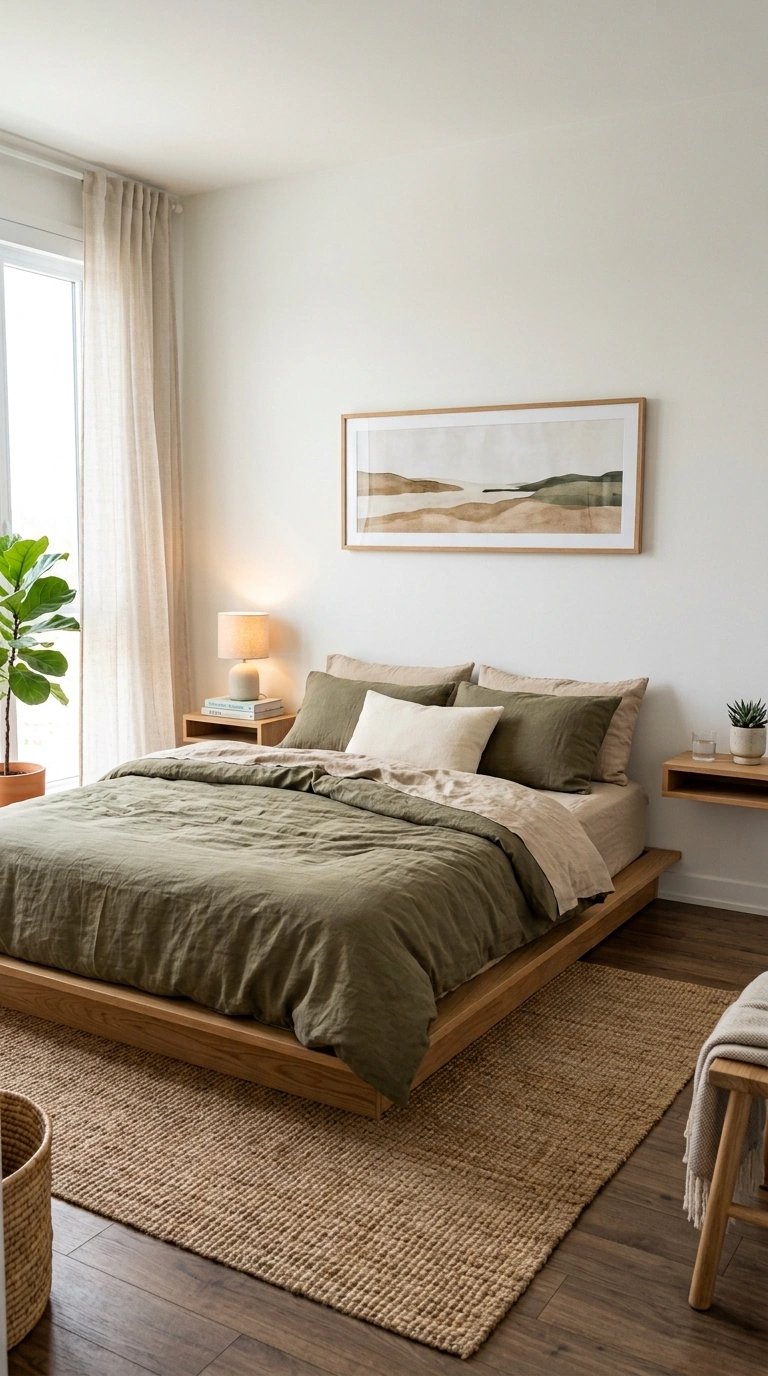
A low platform bed looks finished without a headboard because the frame itself is the star. Choose a wood or upholstered frame that sits close to the floor, about 10 to 14 inches high, with clean edges. Pair it with low nightstands or floating shelves, so everything stays near the ground and the wall above the bed feels open. A big rug that peeks out on three sides helps ground the bed. Keep the wall above it calm with a soft paint color or one long horizontal piece of art. Choose linen or cotton bedding in earthy tones, such as sand, olive, or warm gray. This style suits a minimal or Japanese inspired room. If you already have a box spring on a metal frame, remove the legs or swap to a low base to test the look. If you like to sit up in bed, add a thin wall pad or a big pillow against the wall so your back stays comfortable and the paint stays clean.
18. Two Tone Wall
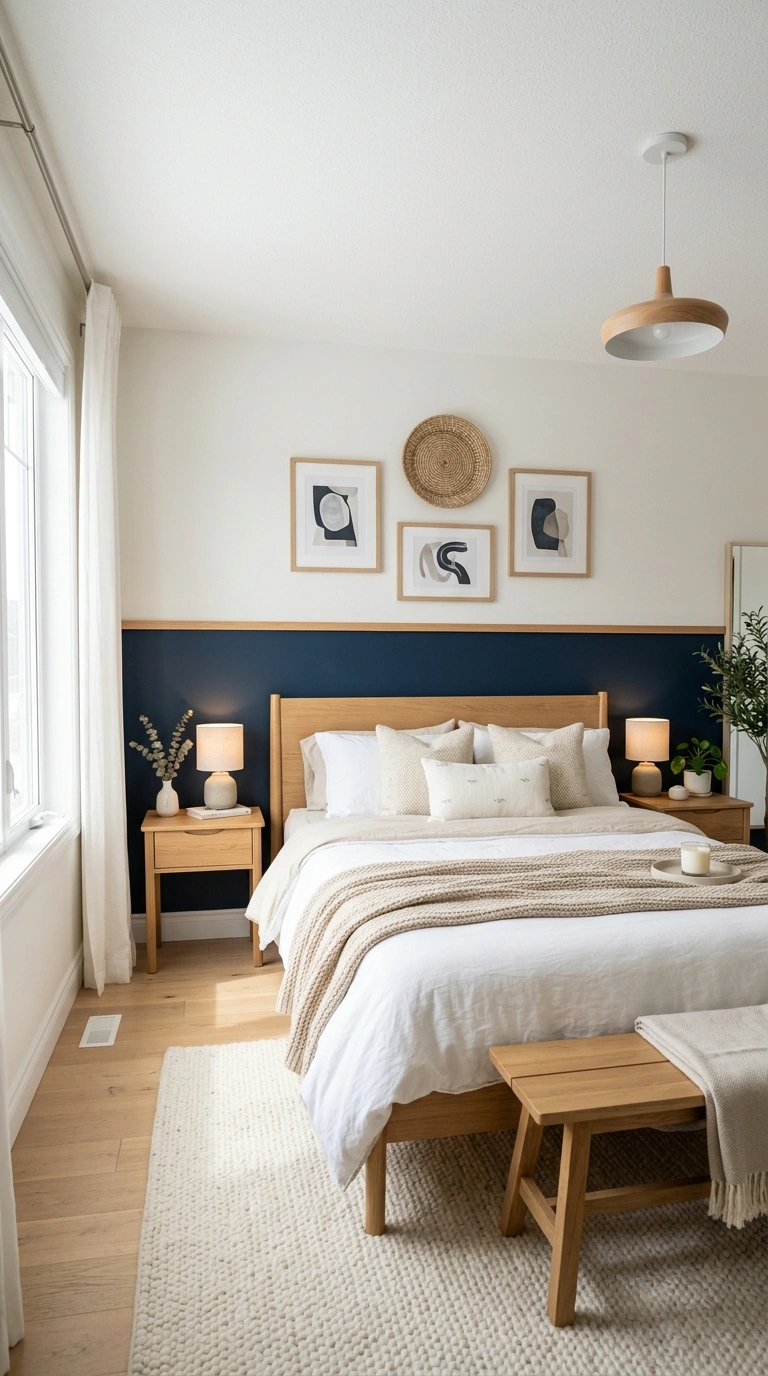
A two tone wall behind the bed can copy a tall headboard using only paint. Paint the bottom half of the wall a deep color, like navy, forest green, or charcoal, up to about 4 feet from the floor, and leave the top half a light shade. When the bed sits against it, the dark color rises behind the pillows like a headboard, and the wall becomes a strong accent wall. Use painter’s tape to mark a straight line and check it with a level. Press the tape edge down with a plastic card so paint cannot bleed under it. Apply two coats, and pull off the tape while the paint is still a little tacky for a sharp edge. Add a thin wood strip along the line for a wainscot look. Choose white or cream bedding so the dark color stands out. This works well on tall walls, since the split adds structure. It also hides scuffs from pillows, which helps in kids’ rooms.
Final Thoughts
A bedroom can feel calm and finished without a headboard. Choose the idea that fits your wall, your budget, and the way you use your bed, and start with the easiest step. You can always add another layer later.
Frequently Asked Questions
Is it okay to have a bed without a headboard?
Yes, it is fine. Many bedrooms look clean and modern without one, and a few smart touches like wall art, layered pillows, or a painted shape make the bed look complete. A headboard is a style choice, not a requirement.
What can I put behind a bed instead of a headboard?
If you are wondering what to put behind a bed instead of a headboard, there are many easy headboard alternatives, such as a large piece of art, a curtain, a picture ledge, wood slats, a mirror, or a painted arch. Pick something about as wide as the bed so the wall looks balanced.
How do I keep pillows from falling behind a bed with no headboard?
Push the bed snug against the wall and use a wedge pillow or a rolled blanket to fill the gap. A large square pillow leaned against the wall also works. Some people add a thin pad on the wall so the pillows stay put.
Will a bed with no headboard damage the wall?
It can leave scuffs or oil marks over time, especially on flat paint. Wash the wall with a mild cleaner from time to time, use a satin or washable paint, or hang a wall pad, fabric panel, or slat panel behind the pillows.
Can I skip the headboard in a small bedroom?
Yes, and it can even help. Without a headboard, you gain a few inches of floor space, and the bed sits flush against the wall. Add wall sconces or a small shelf to keep your bedside items handy.