15 L-Shaped Sofa Living Room Ideas for a Stylish, Put-Together Space
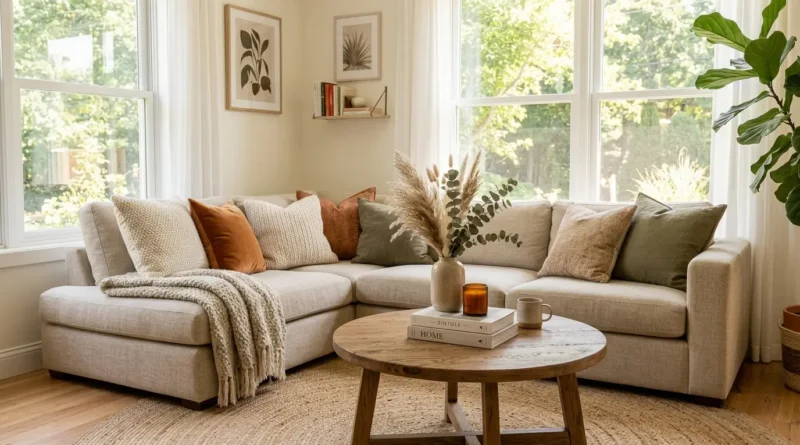
An L-shaped sofa is one of those pieces of furniture that people either love or feel a little unsure about, mostly because it takes up so much visual space that getting the rest of the room wrong feels like a bigger risk. I have rearranged mine at least four times trying to figure out where it actually belongs, and what I learned along the way is that the sofa itself is rarely the problem, it is everything placed around it. A big sectional can anchor a room beautifully once the rug, lighting, and smaller furniture pieces are working with it instead of against it. These 15 ideas cover layout, styling, and small details that help an L-shaped sofa feel like the natural centerpiece of the room rather than a bulky obstacle you are constantly working around.
1. Corner Anchor Layout
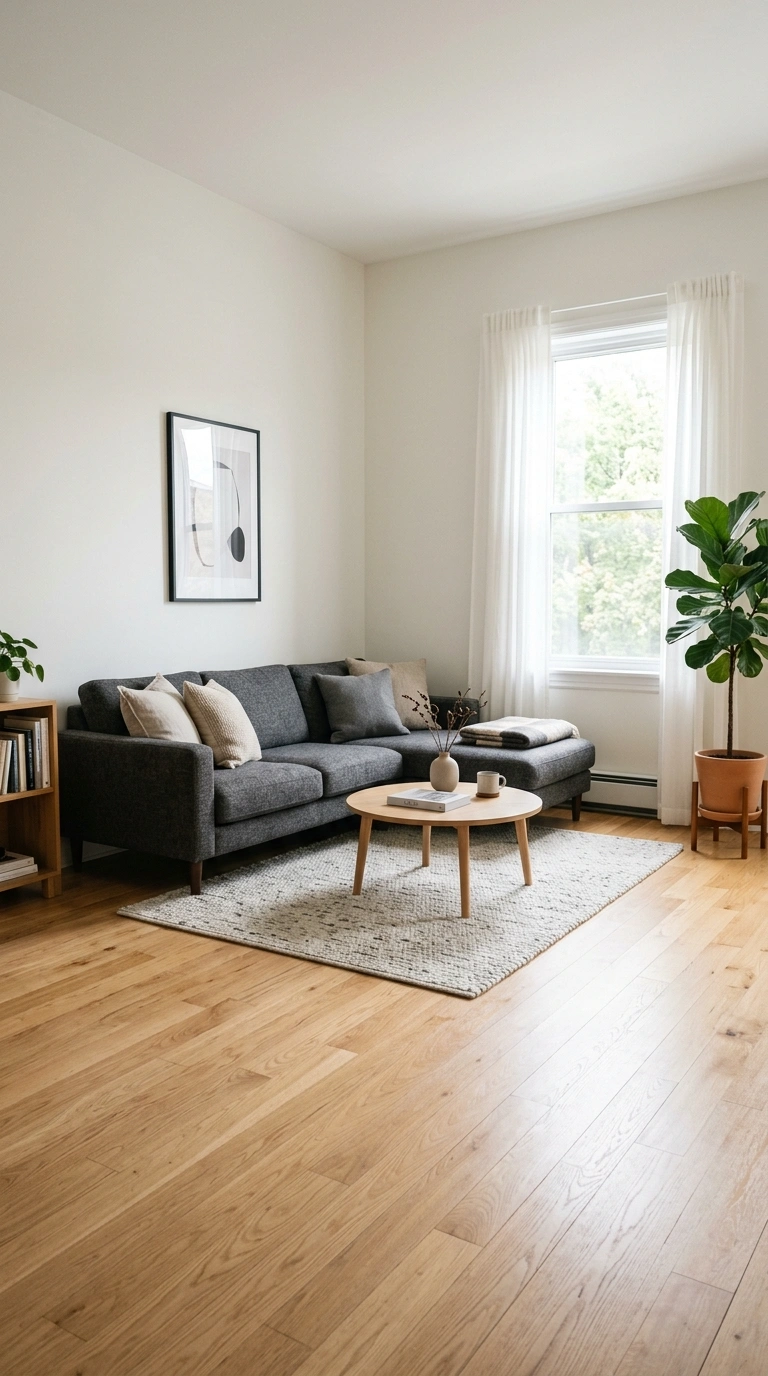
The most common and often the most effective way to place an L-shaped sofa is tucked into a corner of the room, with the long side against one wall and the short side extending out perpendicular to it. This layout works especially well in smaller living rooms, since it frees up the largest possible amount of open floor space in the center of the room. Leave at least a foot of clearance between the sofa’s outer edge and any walkway so the room does not feel cramped. Choose a sofa color that either blends softly into the wall behind it or contrasts intentionally, like a deep charcoal against a soft white wall, depending on whether you want the piece to recede or stand out. This layout is a safe, reliable starting point for almost any room shape.
2. Rug Underneath Zone
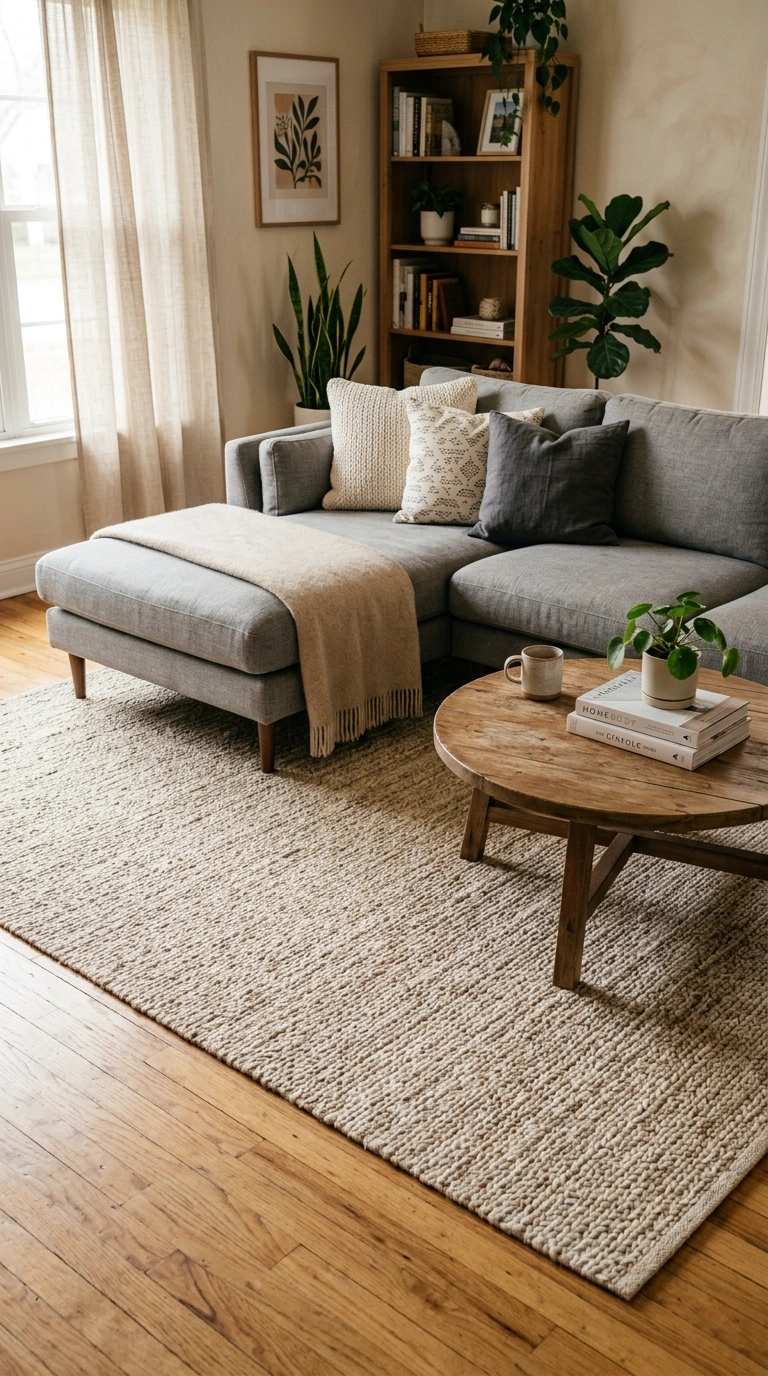
A large area rug placed so that at least the front legs of the L-shaped sofa sit on top of it helps ground the furniture and visually ties the whole seating area together, rather than leaving the sofa looking like it is floating on bare floor. Choose a rug with a soft, low pile if the room gets heavy daily use, or a plush high pile for a cozier feel in a formal living room. Size the rug generously, since a rug that is too small under a large sectional tends to make the whole layout look off balance. This idea works in nearly every living room style, and it is one of the simplest ways to make a big sofa feel intentional rather than just plopped into the room.
3. Layered Throw Pillows
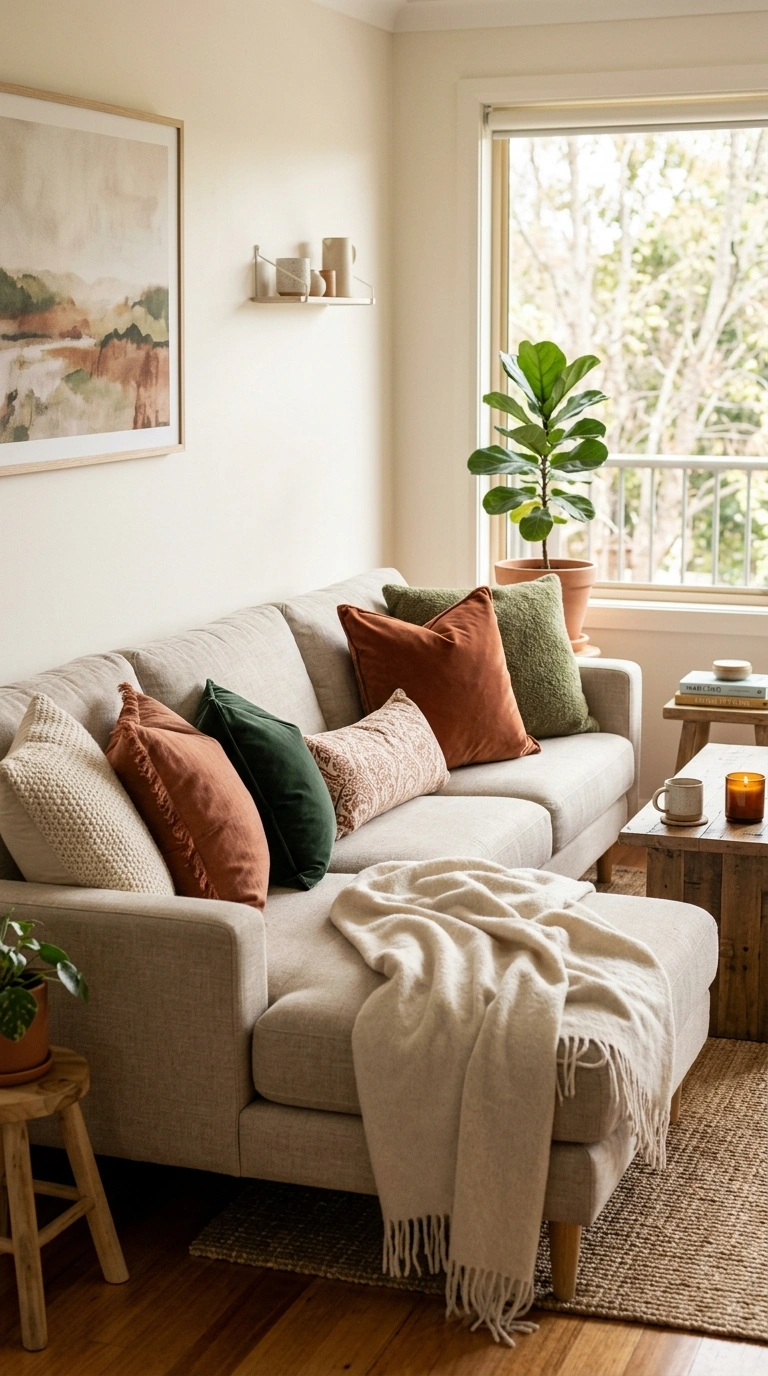
Layering pillows in varying sizes and textures along the back of an L-shaped sofa softens its bulk and adds personality without requiring any new furniture at all. Choose a mix of solid colors and one or two patterned pillows, keeping to a consistent color family like warm neutrals with a single accent tone, such as rust or deep green. Place larger pillows in the back corners of both the long and short sections, then layer one or two smaller pillows in front for depth. This idea works especially well on sofas in solid neutral fabric, since the pillows become the main source of color and pattern in the seating area. Swap the pillow covers seasonally for an easy refresh that does not involve replacing the sofa itself.
4. Coffee Table Pairing
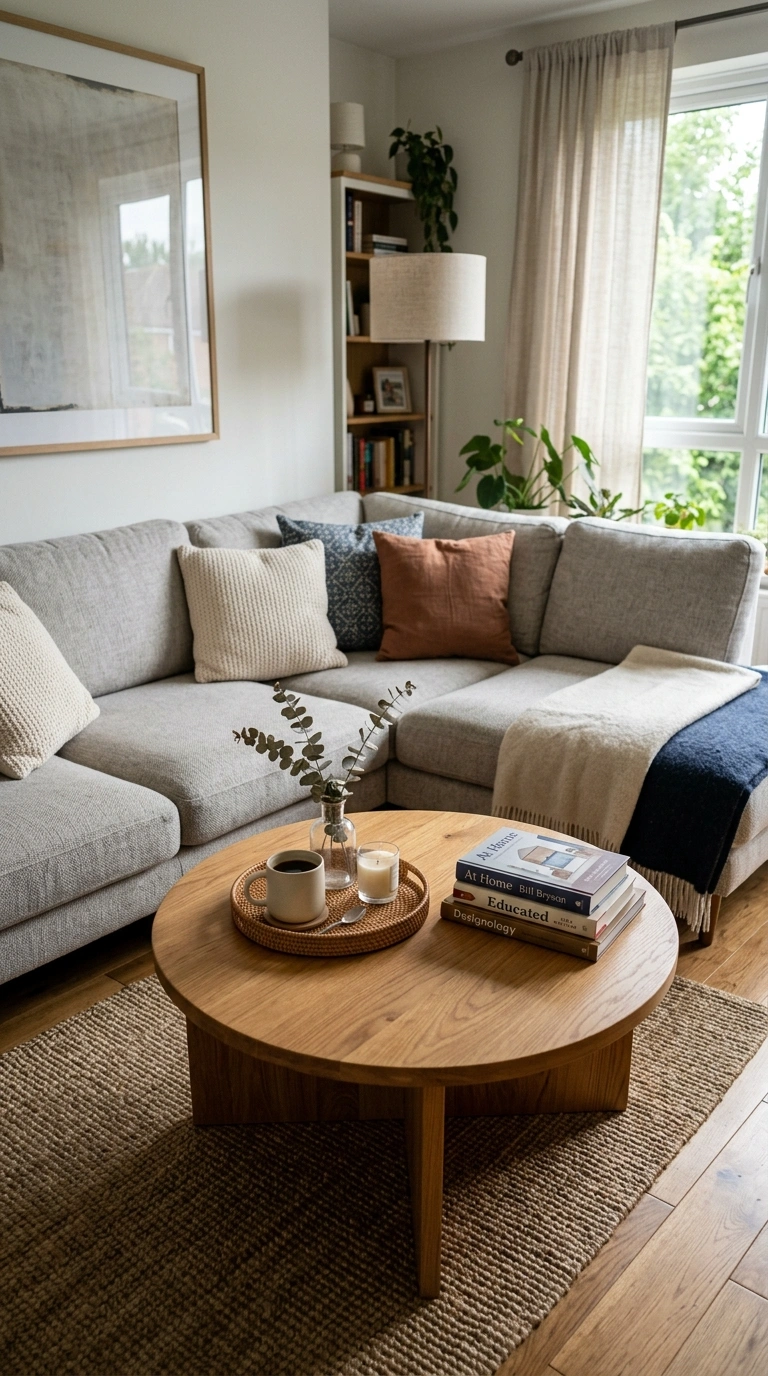
Choosing a coffee table that matches the scale of a large L-shaped sofa makes a real difference in how balanced the room feels, since a table that is too small tends to look lost in front of such a big piece of furniture. Choose a table with a low profile and a generous surface area, in a material like warm wood or a woven rattan base, positioned about eighteen inches from the front edge of the sofa for comfortable legroom. This idea works particularly well in living rooms used for everyday relaxing, since a properly sized table gives enough surface for drinks, books, and a tray without feeling crowded. A round table can also work nicely here, softening the many straight lines an L-shaped sofa naturally creates in a room.
5. Floor Lamp Corner
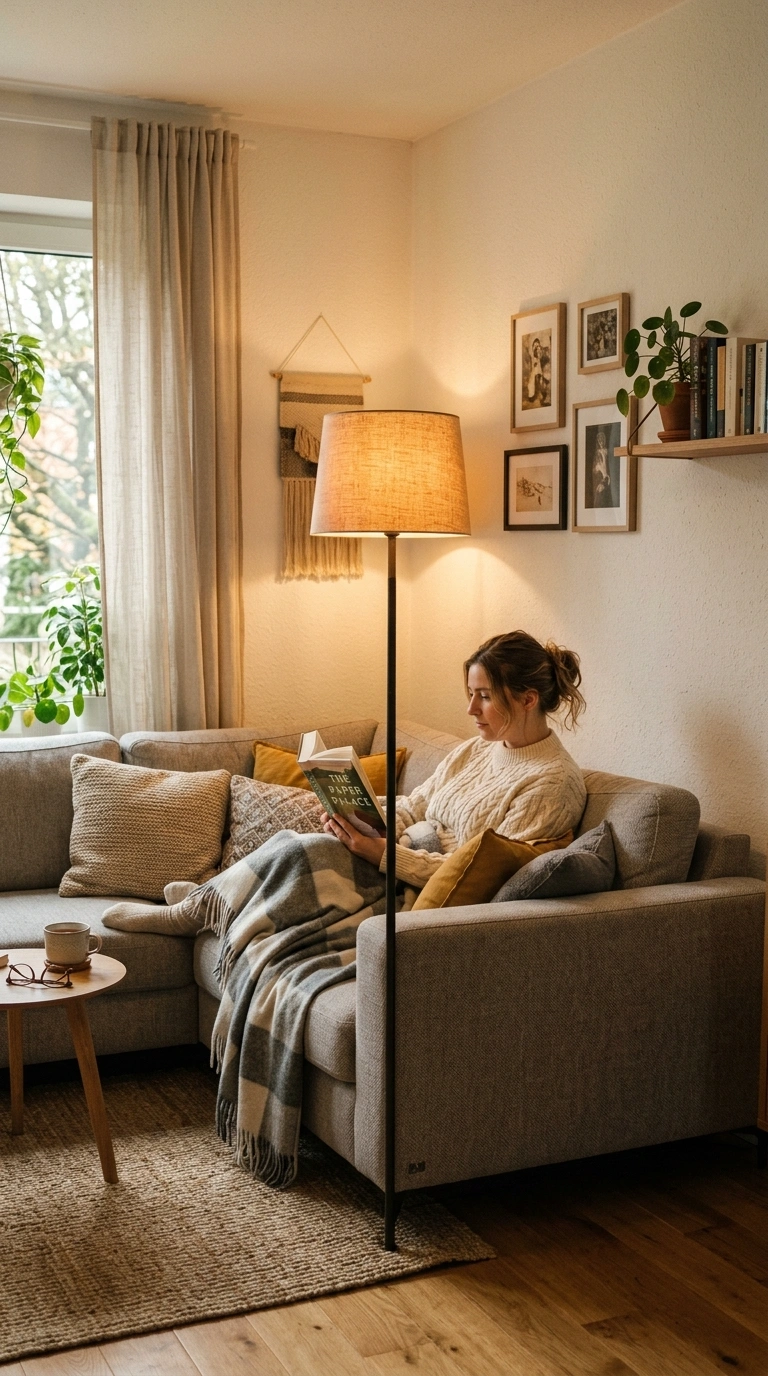
Placing a floor lamp in the corner formed by the short end of an L-shaped sofa fills a spot that often goes unused and adds warm, ambient lighting exactly where people are likely to sit and read. Choose a lamp with a tall, slim profile and a warm fabric or paper shade, since this keeps the light soft rather than harsh. This idea works especially well in the evening, when overhead lighting alone can feel too bright and flat for a relaxed living room. Position the lamp so its light falls just behind where a person’s shoulder would be while seated, making it genuinely useful for reading rather than just decorative. This small addition also helps balance the visual weight of a large sofa by adding height nearby.
6. Bookshelf Backdrop
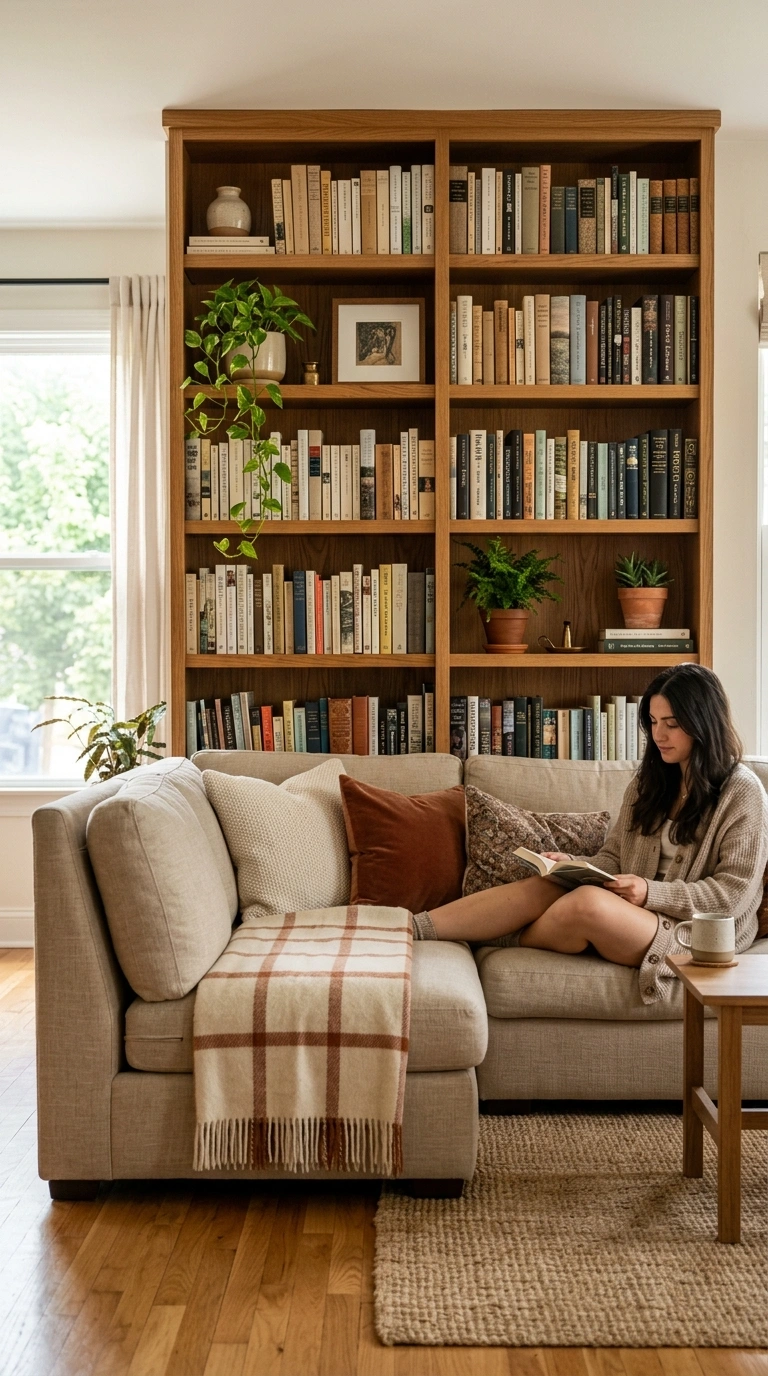
Placing a tall bookshelf or a pair of shorter shelving units behind the short end of an L-shaped sofa creates a natural backdrop that fills vertical space the sofa itself does not reach. Choose open shelving in a warm wood tone, and style it with a mix of books, a few plants, and one or two decorative objects, keeping the arrangement a bit loose rather than perfectly symmetrical. This idea works especially well in a living room with high ceilings, where the extra height above a low sofa can otherwise feel empty and unfinished. The shelves also add practical storage in a room that might not have another obvious spot for books or display items. Keep the shelving a few inches shorter than the ceiling for the most balanced proportion.
7. Gallery Wall Behind
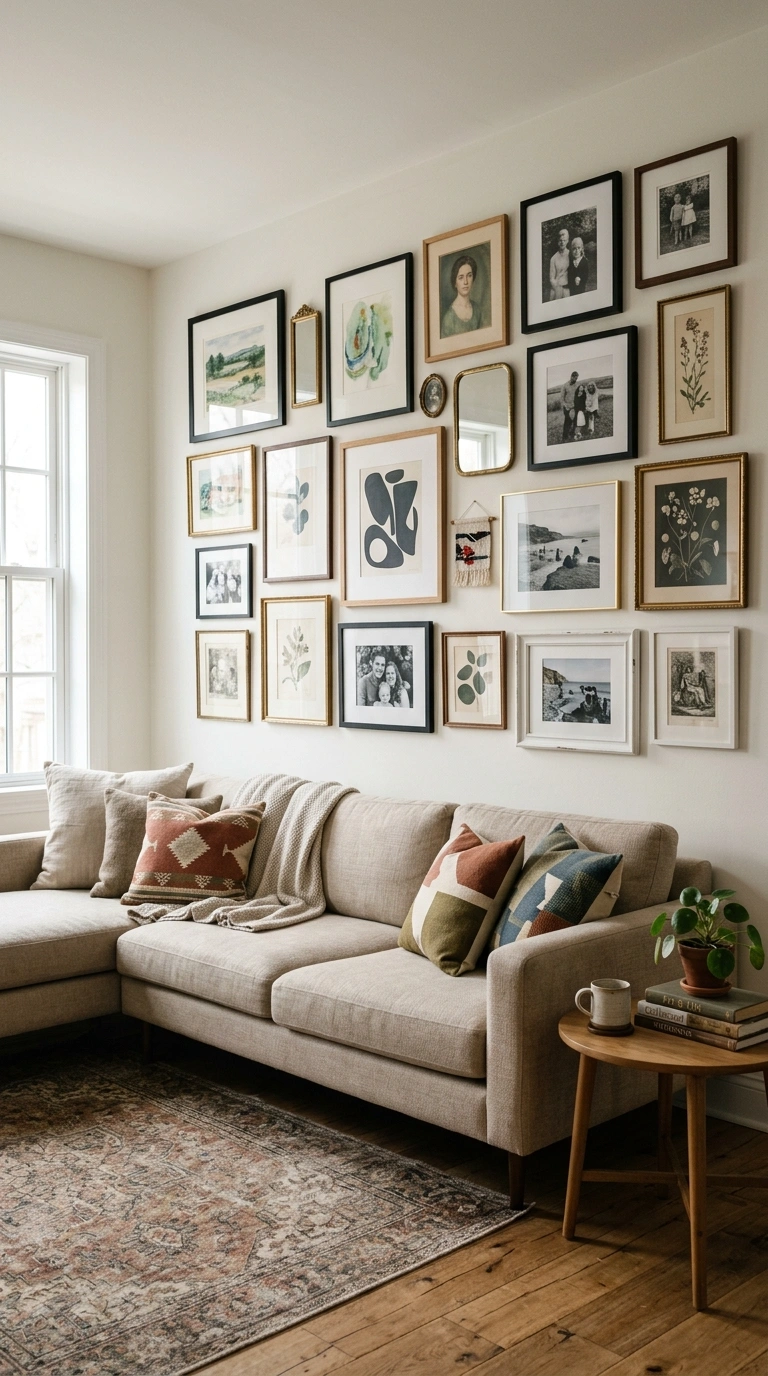
Hanging a gallery wall of framed art directly above the long side of an L-shaped sofa fills the wall space the sofa’s back naturally faces, giving the whole seating area a finished, intentional look. Choose frames in a mix of sizes, keeping the overall arrangement roughly the same width as the sofa section below it so the two elements feel connected rather than randomly placed. This idea works especially well when the sofa itself is a solid, simple color, since the art on the wall becomes the main visual interest in the seating area. Leave about six to eight inches of space between the top of the sofa cushions and the bottom of the frames for the most balanced, proportional look.
8. Woven Pouf Accent
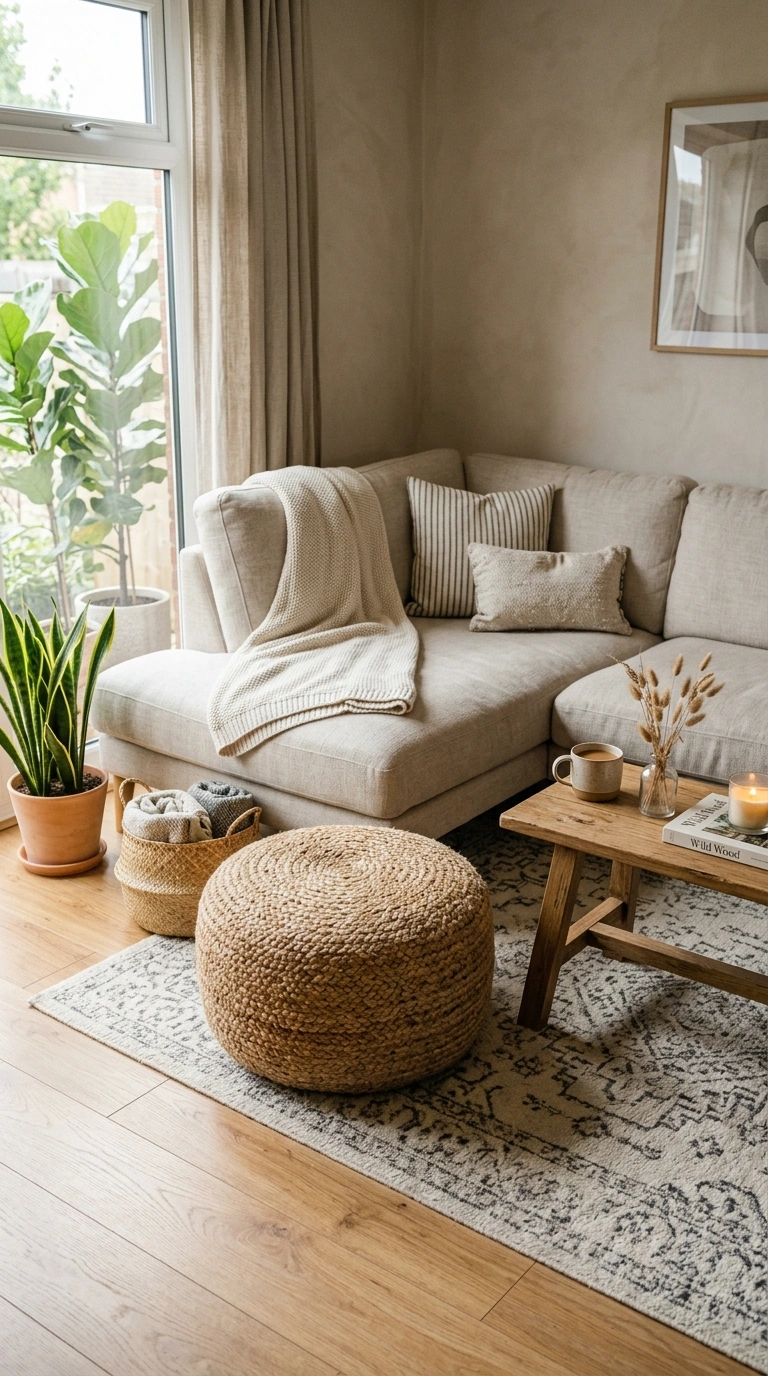
A small woven pouf placed near the corner of an L-shaped sofa adds extra flexible seating or a footrest, and its round, textured shape offers a nice contrast to the sofa’s many straight lines and hard angles. Choose a pouf in a natural jute or leather material, in a warm tan or cognac tone that pairs well with most sofa colors. This idea works particularly well in living rooms that host guests often, since the pouf can be pulled closer to the coffee table for extra seating when needed and pushed back into the corner otherwise. It also adds a bit of low, casual texture to a room that might otherwise feel a little too formal or matched.
9. Window Facing Angle
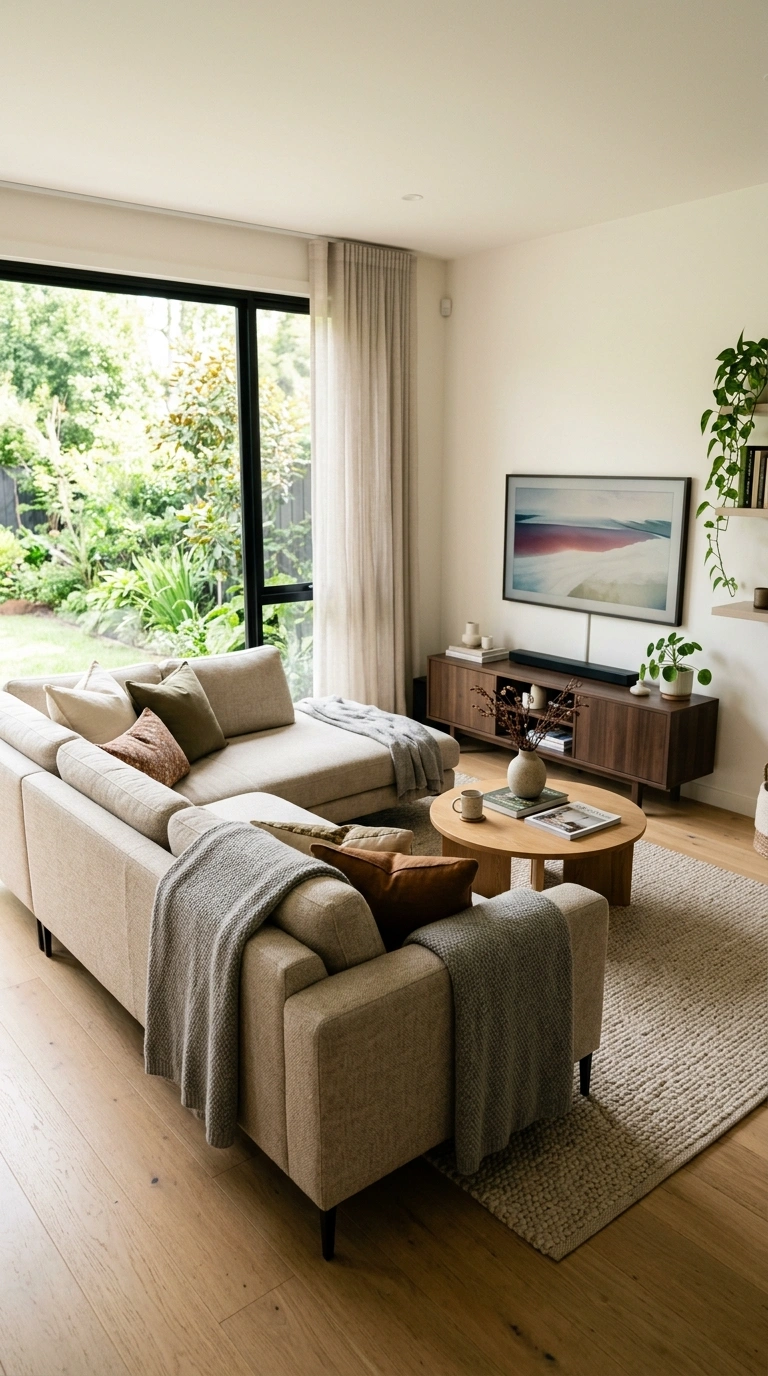
Positioning an L-shaped sofa so that one section faces a window takes advantage of natural light and a view, if you have one, while the other section still faces the main focal point of the room, like a television or fireplace. This layout works especially well in living rooms with a window wall or a particularly nice outdoor view, since it lets the sofa serve two functions instead of always facing the same direction. Keep the short end nearest the window a few inches back from the glass so morning sun does not fade the fabric too quickly over time. This idea also naturally creates a slightly more relaxed, lounge-like feel in the corner nearest the window, perfect for reading or having coffee.
10. Media Console Opposite
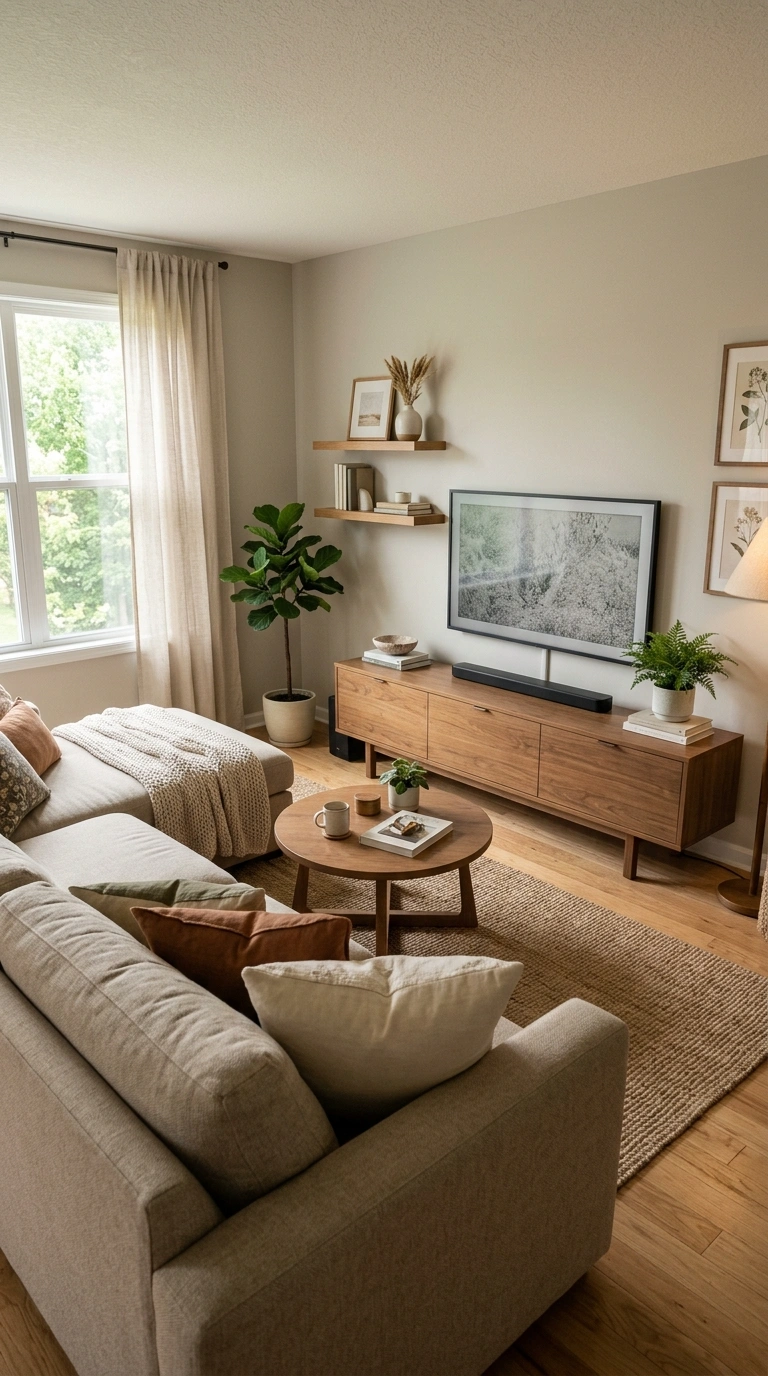
Placing a low media console directly across from the long side of an L-shaped sofa creates a clear, simple focal point for the room and gives the seating area an obvious direction to face. Choose a console in a warm wood tone or a matte painted finish, keeping the top surface fairly clear aside from a television and one or two small decorative objects. This idea works especially well in family living rooms where the television is used daily, since the layout keeps the whole seating area oriented toward one comfortable sightline. Leave enough distance between the console and the sofa for comfortable viewing, generally about seven to ten feet depending on the screen size. This is one of the most straightforward, functional layouts for an L-shaped sofa.
11. Plant Corner Fill
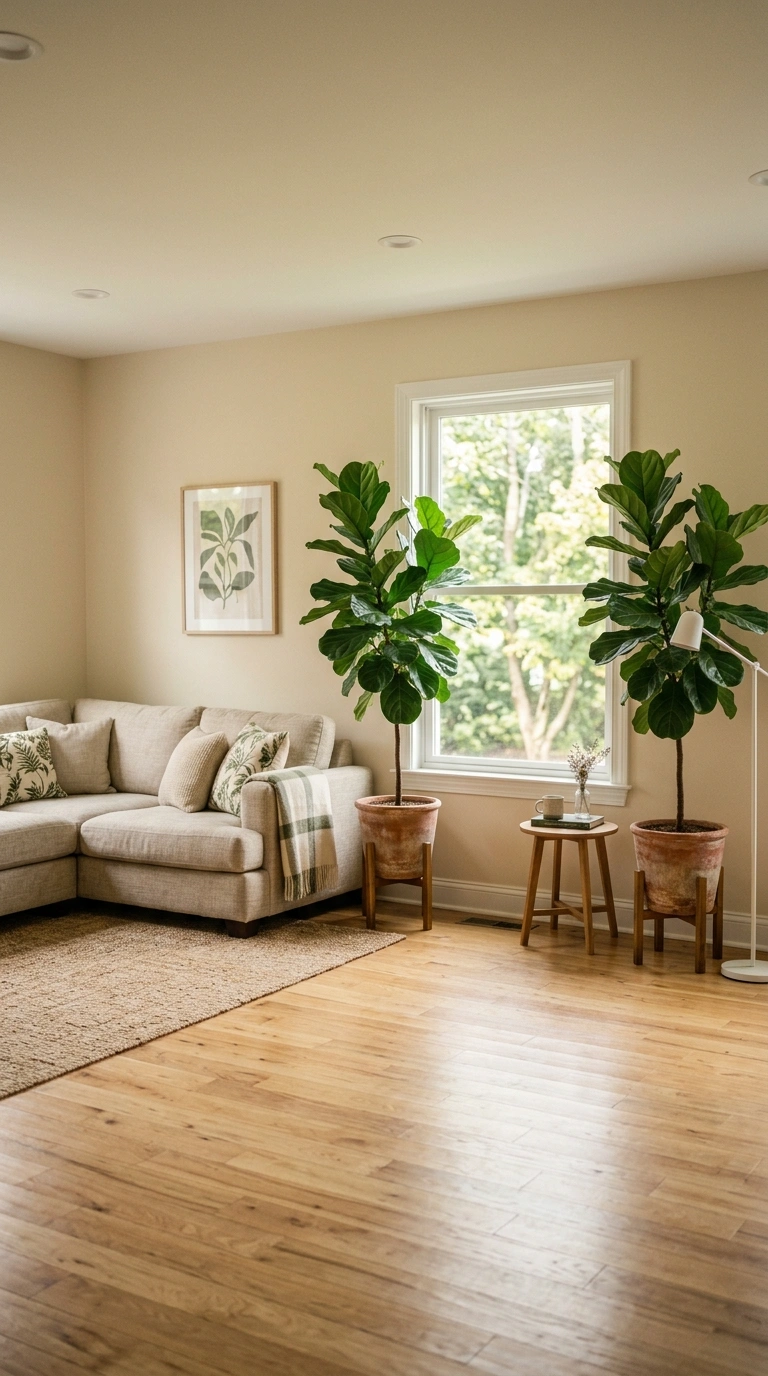
A tall potted plant placed in the empty corner opposite an L-shaped sofa’s short end fills a spot that often goes bare and adds a soft, natural element to balance out the sofa’s straight, structured lines. Choose a plant with height, like a fiddle leaf fig or an olive tree, in a simple woven or ceramic planter that matches the room’s other materials. This idea works especially well in living rooms with a fair amount of empty floor space near a window, since the plant also benefits from the natural light. Position it so it does not block a walkway or the view from the sofa, ideally in a spot that is visible but out of the main traffic flow through the room.
12. Two Tone Cushions
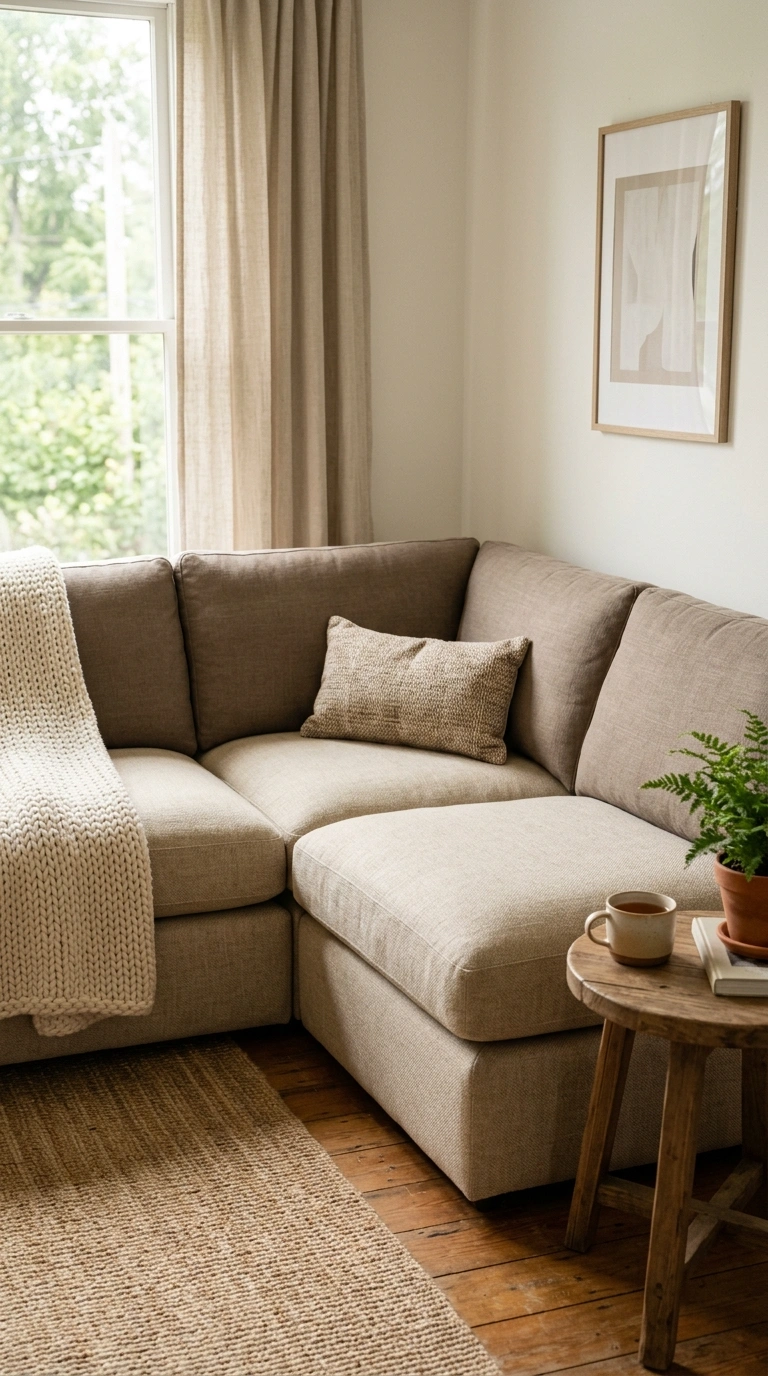
Choosing seat cushions and back cushions in two slightly different tones, rather than one uniform color throughout, adds subtle depth to an L-shaped sofa without requiring a bold pattern or a lot of extra styling. Choose a base fabric in a warm neutral, then select cushion covers just one or two shades darker or lighter for the back cushions specifically. This idea works especially well on large, plain sectionals, where the sheer size of the piece can otherwise feel a bit flat and one dimensional in photos and in person. The subtle tonal shift reads as intentional and considered, rather than mismatched, as long as the two tones stay within the same warm or cool color family throughout the piece.
13. Chaise Extension Style
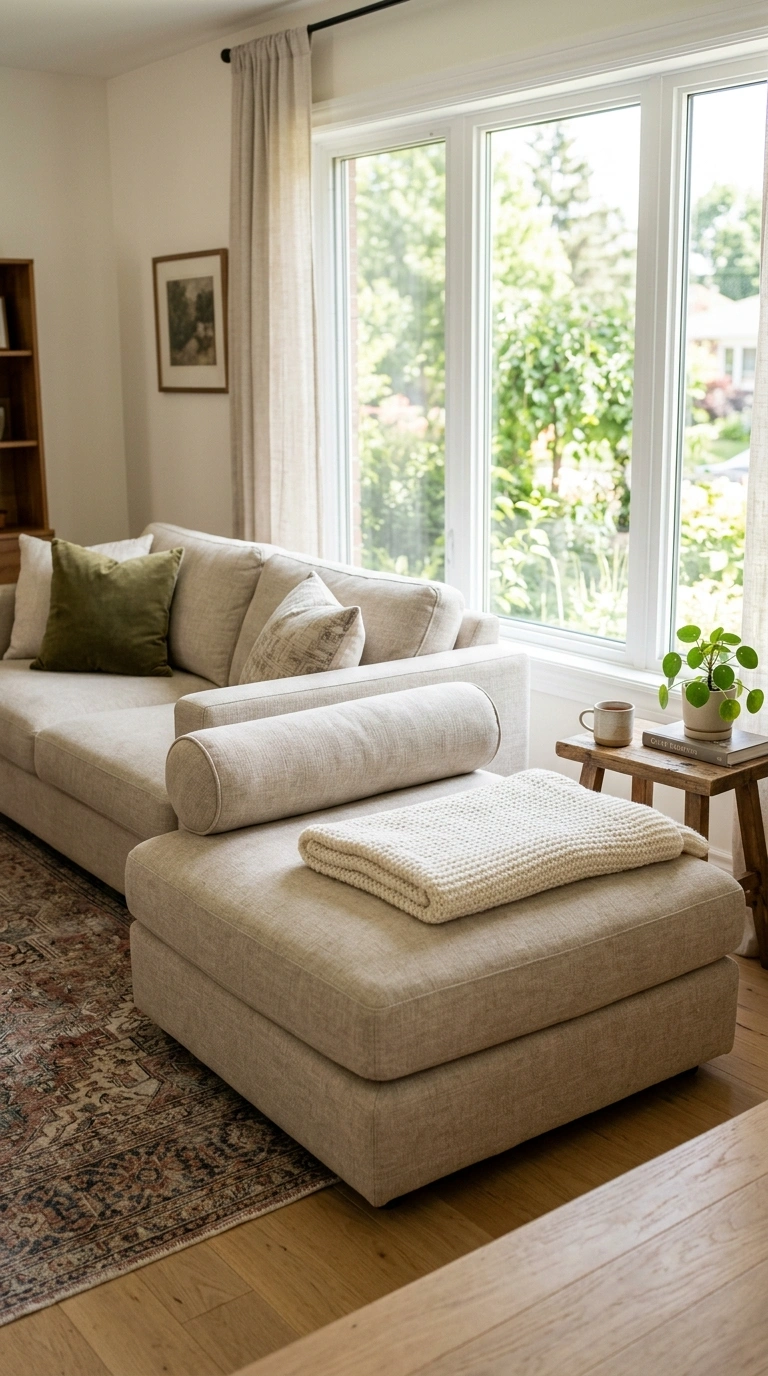
Choosing an L-shaped sofa with a chaise style extension, where the short end is wider and lower than a standard sofa arm, creates a dedicated lounging spot that feels a bit more like a daybed than a regular sofa section. This layout works especially well for households that love stretching out to watch a movie or read, since the chaise end naturally invites lying down rather than just sitting upright. Style this end with one long bolster pillow and a folded throw blanket draped over the low arm, making it clear this is the designated relaxing spot in the room. Position the chaise end facing a window or the television for the most functional, comfortable use of the space.
14. Open Floor Plan Divider
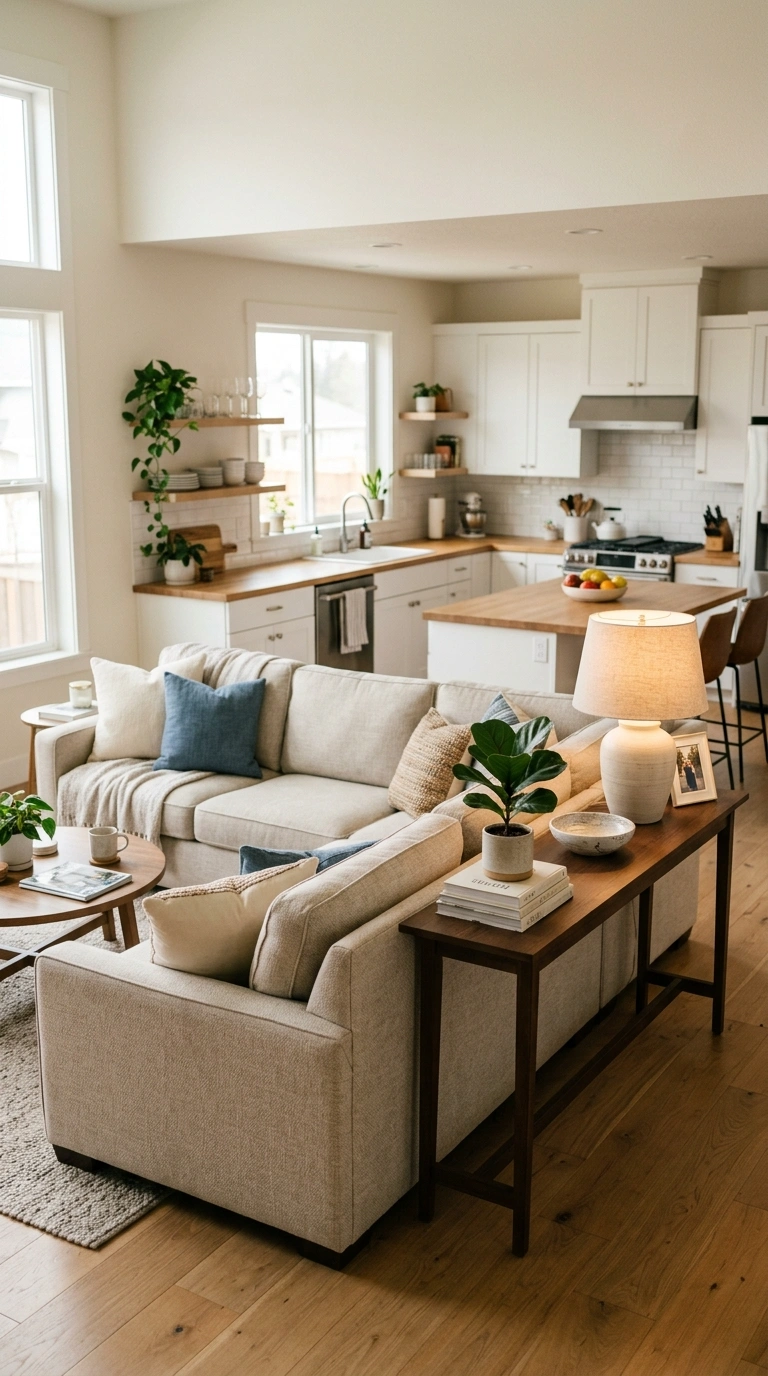
In an open concept living space, positioning an L-shaped sofa so its back faces the kitchen or dining area lets the sofa itself act as a soft, furniture-based divider between two zones without needing an actual wall. This layout works especially well in modern homes with an open floor plan, since it defines the living room area clearly while still keeping the overall space feeling open and connected. Choose a sofa in a fabric that looks finished from both the front and back, since the back of the sofa will be visible from the kitchen or dining side. Add a thin console table behind the sofa’s long side to fill the gap and give the kitchen side a spot for a lamp or a small tray of decor.
15. Layered Area Rugs
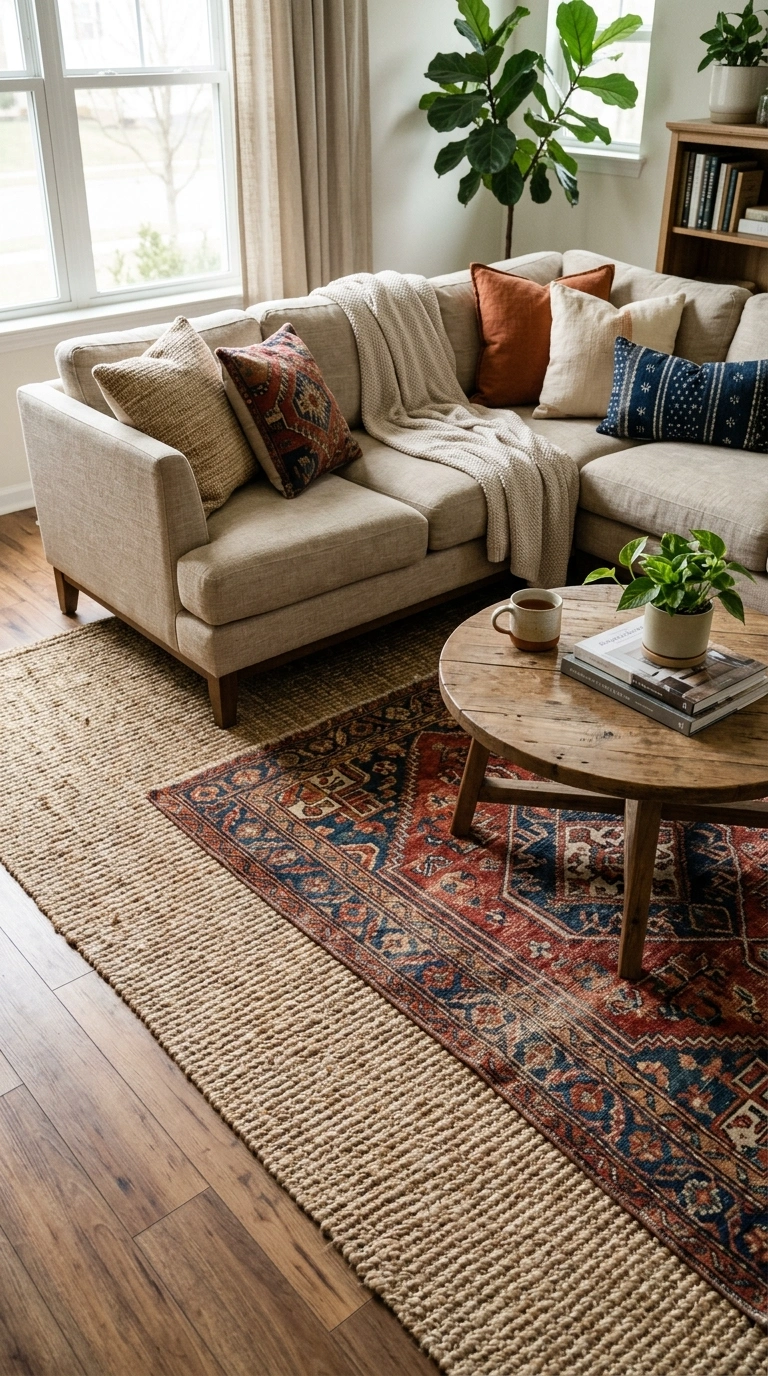
Layering a smaller patterned rug on top of a larger neutral jute or sisal rug beneath an L-shaped sofa adds texture and visual interest to the floor, which matters more than usual when a large sofa is taking up so much of the room’s visual attention elsewhere. Choose a natural fiber rug as the base layer, sized generously enough to extend a few inches beyond the sofa’s front edge, then add a smaller printed or textured rug centered in front of the coffee table. This idea works especially well in living rooms with hardwood or tile floors, where the layered texture softens the hard surface underfoot. Keep the pattern on the top rug fairly simple if the sofa fabric or pillows already carry a lot of color or pattern elsewhere in the room.
An L-shaped sofa does not have to dominate a room in a way that feels heavy or hard to work around. A well placed rug, a bit of thoughtful lighting, and a few pillows in the right tones can turn even the biggest sectional into the cozy, put-together centerpiece your living room has been missing. Try rearranging just one or two elements this week and see how much easier the whole room starts to feel.